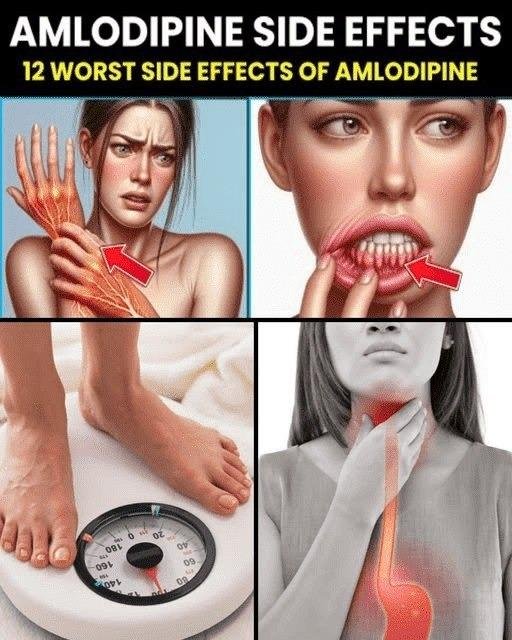
12 Side Effects of Amlodipine You Should Not Ignore
Amlodipine is commonly prescribed to treat high blood pressure and chest pain. Most people tolerate it well, but like any medication, it can cause side effects. Some are mild, while others may signal a more serious issue that needs medical attention.
1. Swelling in the Legs or Ankles
One of the most common side effects is fluid buildup (edema), especially in the lower legs and feet.
If the swelling becomes severe or uncomfortable, it should be evaluated.
2. Dizziness or Lightheadedness
Because the medication lowers blood pressure, it can sometimes cause dizziness, especially when standing up quickly.
3. Rapid or Irregular Heartbeat
A fast or pounding heartbeat may occur in some individuals and should not be ignored if persistent.
4. Severe Fatigue
Unusual or extreme tiredness could indicate that your blood pressure is dropping too low or that your body is not tolerating the medication well.
5. Chest Pain (Worsening Angina)
Although used to treat chest pain, in rare cases it can initially worsen angina symptoms or trigger discomfort.
6. Shortness of Breath
Difficulty breathing may be linked to fluid retention or heart-related effects and requires prompt attention.
7. Nausea or Abdominal Pain
Digestive discomfort can occur, but persistent or severe symptoms should be discussed with a doctor.
8. Flushing (Warmth and Redness)
Some people experience redness or warmth in the face due to blood vessel dilation.
9. Gum Swelling or Overgrowth
A lesser-known side effect is gum enlargement, which can affect oral health over time.
10. Skin Rash or Itching
Allergic-type reactions, including rash or itching, may occur and should be monitored.
11. Low Blood Pressure (Hypotension)
Symptoms include fainting, blurred vision, or confusion. This can be serious if untreated.
12. Liver-Related Symptoms
Though rare, watch for:
- Yellowing of the skin or eyes
- Dark urine
- Persistent fatigue
These may indicate liver involvement and need immediate medical care.
When to Seek Medical Help
Contact a healthcare professional right away if you experience:
- Severe swelling or breathing difficulty
- Fainting or severe dizziness
- Chest pain that is new or worsening
- Signs of an allergic reaction
Final Thoughts
Amlodipine is effective and widely used, but staying aware of potential side effects helps you respond early if something feels off. Never stop or adjust your medication without consulting your doctor, as sudden changes can affect your blood pressure control.