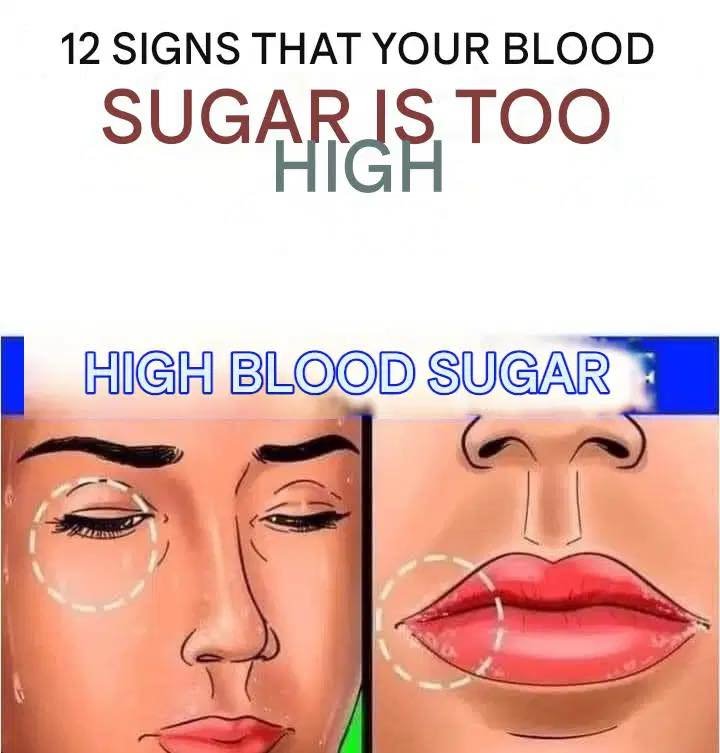
The “High-Sugar Alert” — what it really means
That headline refers to symptoms of high blood sugar, but it is usually written in an exaggerated way. There is no sudden “alert system” in the body—these symptoms can develop gradually and vary from person to person.Diabetes Mellitus is the main condition linked with chronically high blood sugar levels.
12 possible signs of high blood sugar
1. Frequent urination
The body tries to remove excess sugar through urine.
2. Excess thirst
Caused by fluid loss from frequent urination.
3. Fatigue
Cells cannot properly use glucose for energy.
4. Increased hunger
Even after eating, the body feels low on usable energy.
5. Blurred vision
High sugar can affect fluid balance in the eyes.
6. Slow healing wounds
Cuts and injuries take longer to recover.
7. Dry mouth
Linked to dehydration from fluid loss.
8. Unexplained weight loss
The body starts using fat and muscle for energy.
9. Tingling or numbness
Often in hands or feet (nerve irritation over time).
10. Frequent infections
Higher sugar levels can weaken immune response.
11. Skin problems
Itching, dryness, or darkened patches in some cases.
12. Headaches or difficulty concentrating
Fluctuating glucose levels can affect brain function.
Important clarification
- Having one or two symptoms does NOT confirm diabetes
- Symptoms can overlap with dehydration, stress, or other conditions
- Diagnosis requires a blood sugar test (fasting or HbA1c)
When to take action
You should get checked if you notice:
- Persistent thirst and urination
- Fatigue with weight changes
- Blurred vision or slow healing wounds
Early detection is important to prevent complications.
Bottom line
The “high-sugar alert” idea is a simplified way of describing real symptoms of high blood glucose, but it is not a sudden warning system. Only medical testing can confirm whether blood sugar is truly high.
If you want, I can give you a simple guide to normal vs prediabetes vs diabetes symptoms with real blood sugar ranges.