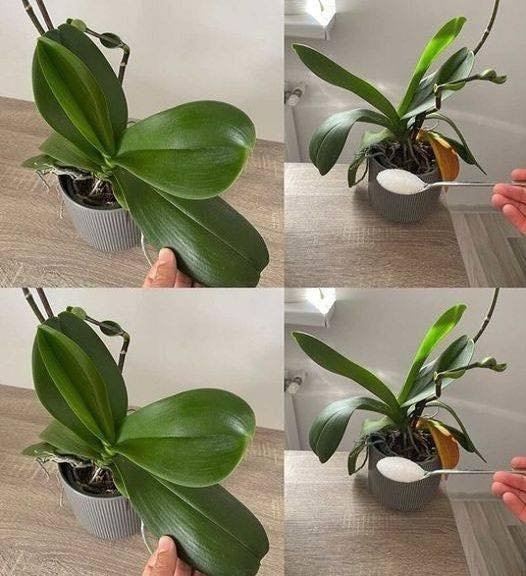
That claim is not accurate. There is no single “1 tablespoon” ingredient that will make orchids bloom nonstop. Orchids are slow, light-sensitive plants, and flowering depends on overall care, not a quick fertilizer trick.
🌸 What orchids actually need to bloom
Orchids (such as Phalaenopsis) bloom based on:
- Proper light (bright, indirect light)
- Temperature changes (cooler nights help trigger blooms)
- Healthy roots and leaves
- Balanced nutrition over time
🧪 About “1 tablespoon miracle fertilizers”
Social media often promotes mixtures like:
- Sugar water
- Rice water
- Banana peel water
- Coffee or tea solutions
These may:
- Provide small nutrients temporarily
- Encourage microbial growth in soil (often harmful for orchids in pots)
- Sometimes lead to root rot if overused
But they do not reliably trigger continuous flowering.
🌿 What actually helps orchids bloom properly
1. Proper orchid fertilizer (balanced and diluted)
Orchid fertilizer
- Use a balanced formula (like 20-20-20 or orchid-specific mix)
- Apply weak dilution (often 1/4 strength)
- Feed every 1–2 weeks during growth season
2. Correct watering
Epiphytic plant care
- Water only when roots turn silvery/white
- Avoid keeping roots constantly wet
- Ensure good drainage
3. Light exposure
- Bright but indirect sunlight
- Too little light = no flowers
- Too much direct sun = burned leaves
4. Temperature difference
- A drop of about 5–10°C at night can encourage blooming
- Mimics natural tropical environment cycles
🚫 Common mistakes with orchids
- Overwatering (most common cause of death)
- Using kitchen scraps as fertilizer excessively
- Keeping them in dark rooms
- Heavy, soil-like potting mix instead of bark-based media
🌸 Simple truth
- Orchids do not bloom continuously on command
- They bloom in cycles when conditions are right
- “One tablespoon miracle fertilizers” are marketing myths
🧠 Key takeaway
Healthy orchid blooming comes from consistent care over time, not a single ingredient or shortcut. The best “fertilizer” is a combination of correct light, watering, airflow, and properly diluted orchid food.
If you want, I can give you a step-by-step orchid blooming schedule or a safe homemade orchid feeding plan that actually works without damaging roots.