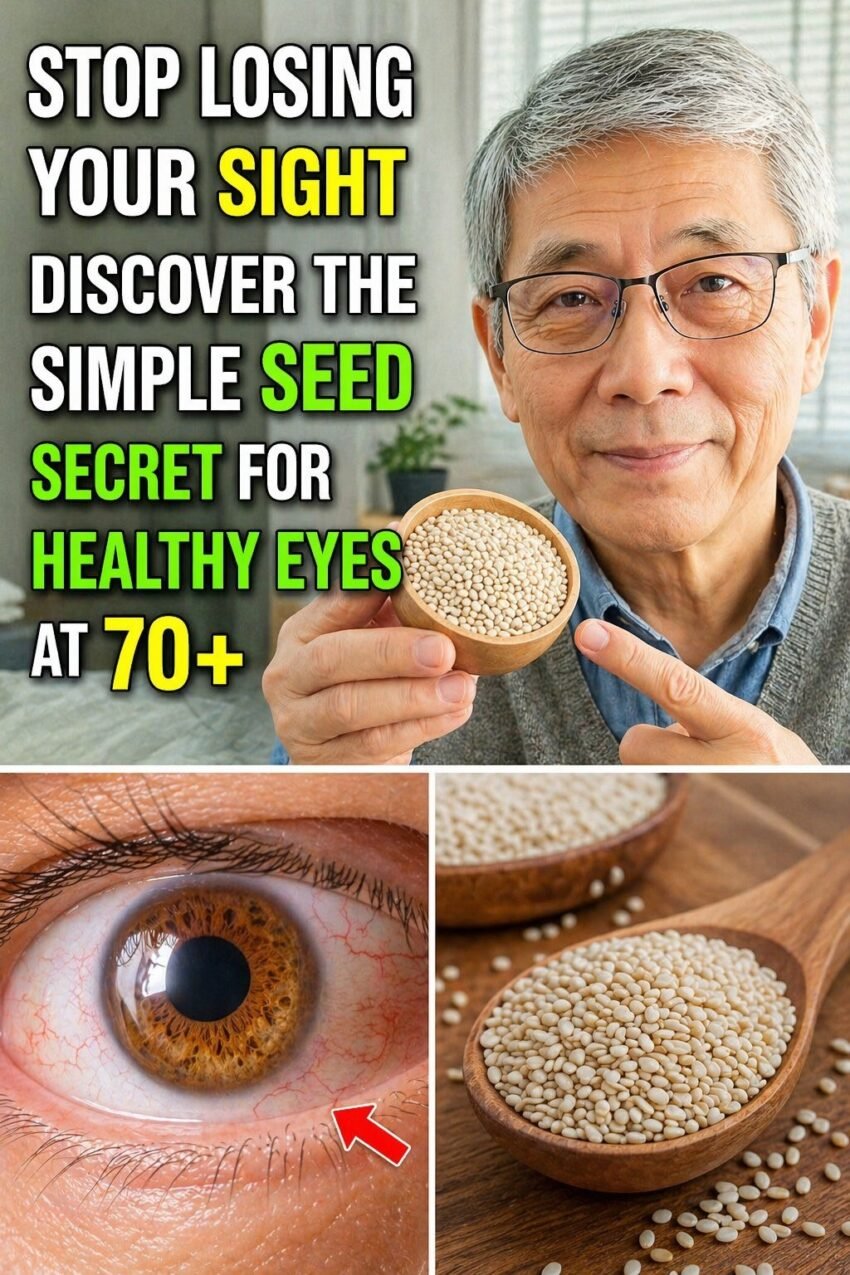
That kind of headline is very common online, but it’s overselling the effect of any single seed on eyesight.
No seed can “sharpen your eyes” or “repair the retina naturally” on its own. However, some seeds do contain nutrients that support eye health as part of an overall balanced diet.
What actually supports eye and retina health
Your eyes—especially the retina—depend on several key nutrients:
- Vitamin A (retinal function)
- Omega-3 fatty acids (retinal cell health)
- Lutein and zeaxanthin (protect against light damage)
- Zinc (supports vitamin A metabolism)
Conditions affecting vision, such as Age-related macular degeneration, are influenced by long-term nutrition, genetics, and aging—not one food.
Seeds that are actually helpful (in moderation)
1. Flaxseeds
- High in omega-3 fatty acids
- Support overall retinal health
- Must be ground for better absorption
2. Chia seeds
- Provide omega-3s and antioxidants
- Support general inflammation control
3. Sunflower seeds
- Rich in vitamin E and zinc
- Help protect eye cells from oxidative stress
4. Pumpkin seeds
- Good source of zinc
- Supports vitamin A function in the body
Important reality check
Even though these seeds are healthy:
- They do not improve eyesight overnight
- They do not reverse vision loss or “repair the retina”
- They work only as part of long-term nutrition
Vision problems usually require proper diagnosis and sometimes medical treatment, not just dietary changes.
What actually protects vision long-term
- Regular eye exams
- Wearing UV-protection sunglasses
- Controlling blood sugar and blood pressure
- A diet rich in vegetables, fruits, and healthy fats
Bottom line
Seeds like flax, chia, sunflower, and pumpkin can support eye health, but no single “miracle seed” will sharpen vision or repair the retina.
Healthy vision depends on overall lifestyle—not viral food claims.
If you want, I can give you a real evidence-based diet plan for protecting eyesight after age 40 or 60, which is much more effective than single-food advice.