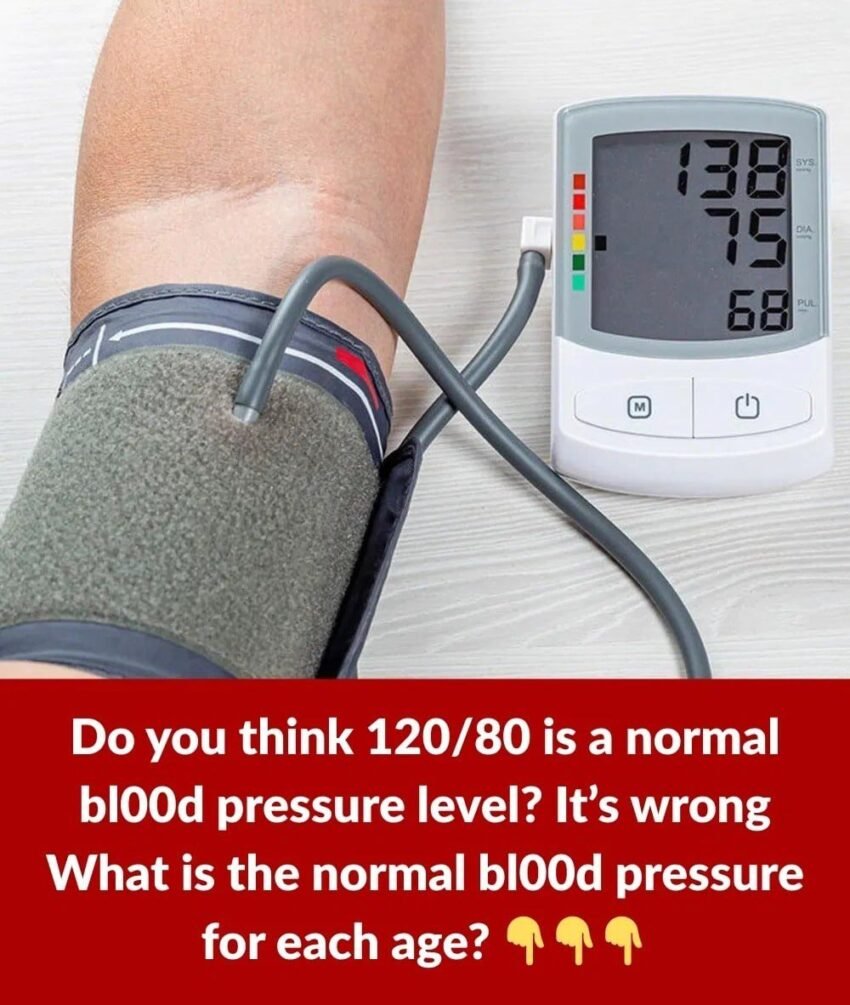
“Normal” blood pressure doesn’t change as much by age as people think. The bigger mistake is assuming higher numbers are okay just because someone is older. In reality, healthy targets stay fairly consistent.
What’s considered normal
Blood pressure is measured in mmHg and written as systolic/diastolic (top/bottom number).
- Normal: less than 120/80
- Elevated: 120–129 / less than 80
- High (hypertension): 130/80 or higher
(this is classified as Hypertension)
By age group (practical ranges)
Children (1–12 years)
- Varies by height, age, and sex
- Roughly: 90–110 / 55–75
Teenagers (13–18 years)
- Similar to adults
- Around: 110–120 / 65–80
Adults (18–59 years)
- Ideal: below 120/80
- Anything consistently ≥130/80 is considered high
Older adults (60+ years)
- Target is still generally below 130/80, though doctors may individualize goals
- Slightly higher systolic (e.g., 130–139) may be tolerated depending on overall health
The key misconception
A common belief is: “140/90 is normal for older people.”
That’s outdated. While it used to be accepted, current guidelines aim for lower numbers to reduce risk of heart disease and stroke.
When to be concerned
- Readings consistently above 130/80
- Sudden spikes (e.g., 180/120) — this is a medical emergency
- Symptoms like dizziness, chest pain, or headaches alongside high readings
If you want, tell me your age and recent readings—I can help you interpret them more precisely.