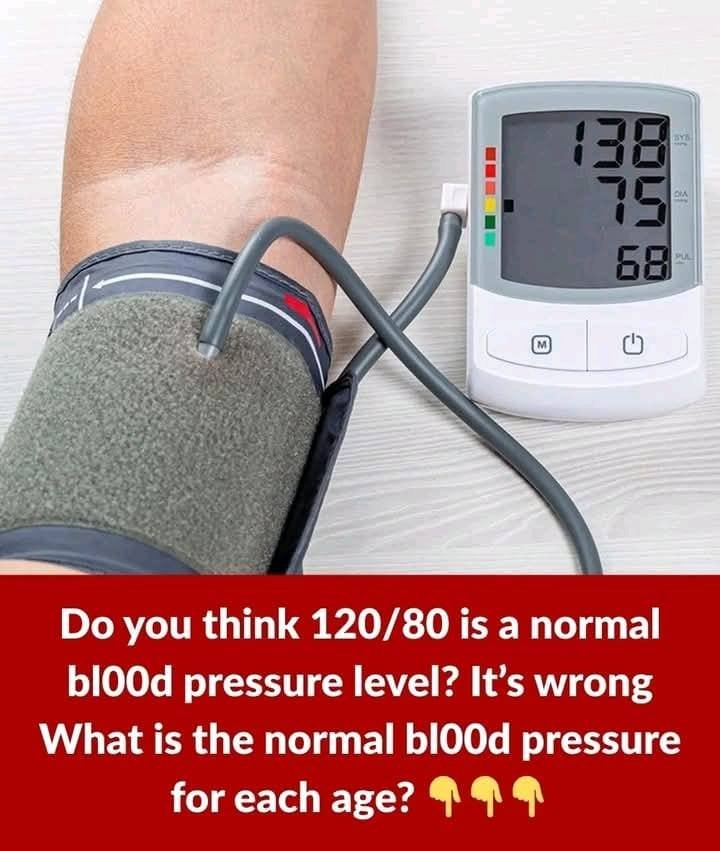
What Is the Normal Blood Pressure for Each Age?
Important point first
In modern medicine, there is no separate “normal blood pressure” for each adult age group. Doctors mostly use one standard healthy target for adults, while children have age-based ranges.
Blood pressure is written as:
Systolic / Diastolic (e.g., 120/80 mmHg)
1. Normal blood pressure in adults (18+)
Standard classification (used for all adults)
- Normal: less than 120 / 80 mmHg
- Elevated: 120–129 / less than 80
- High BP Stage 1: 130–139 / 80–89
- High BP Stage 2: 140 / 90 or higher
- Emergency: 180 / 120 or higher
Age trend (not official limits, just common patterns)
- 18–29 years: ~110–120 / 70–80
- 30–39 years: ~110–125 / 70–80
- 40–59 years: ~115–130 / 75–85
- 60+ years: often up to ~130–140 / 80–90 may be seen
Note: Even in older adults, doctors still aim for around 120/80 when possible, depending on health conditions.
2. Normal blood pressure in children
Children do NOT have fixed numbers like adults. It depends on age, height, and gender, but typical ranges are:
| Age | Approximate normal BP |
|---|---|
| Newborn (0–1 month) | 60–90 / 20–60 |
| Infant (1–12 months) | 80–100 / 50–65 |
| Toddler (1–3 years) | 90–105 / 55–70 |
| Child (4–12 years) | 95–110 / 60–75 |
| Teen (13–17 years) | 100–120 / 65–80 |
3. What affects blood pressure with age?
Blood pressure tends to rise with age because of:
- stiffening of arteries
- reduced elasticity of blood vessels
- lifestyle factors (diet, salt intake, inactivity)
- weight gain
- stress
4. When blood pressure is a concern
You should pay attention if:
- readings are consistently above 130/80
- you have dizziness, headaches, chest pain, or shortness of breath
- readings suddenly become very high or very low
5. Key takeaway
- Adults: ideal is around 120/80 mmHg regardless of age
- Children: normal varies by age and growth
- Slight increases with age are common, but not “ideal”
If you want, I can also explain:
- how to check blood pressure correctly at home
- or what foods naturally help control high BP in daily life