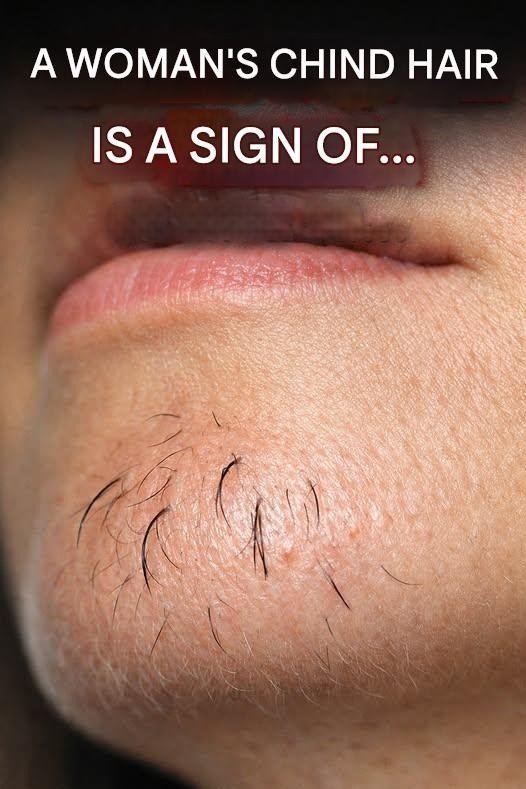
That type of line is another clickbait setup. A woman having chin hair is not automatically a sign of a specific disease, and in many cases it is completely normal.
What chin hair in women can mean
Facial hair growth in women exists on a spectrum, and causes vary:
1. Normal genetics (most common)
- Some women naturally grow a few coarse chin or jaw hairs
- This is influenced by genetics and ethnicity
- It can increase slightly with age, especially after menopause
2. Hormonal sensitivity (common, not always a disease)
Hair follicles can be more sensitive to androgens (male-type hormones that women also naturally have).
This can lead to:
- A few thicker chin hairs
- Gradual increase over time
This does not necessarily mean a medical problem.
3. Polycystic Ovary Syndrome (PCOS)
In some cases, increased facial hair can be part of a broader hormonal condition such as PCOS.
Other signs may include:
- Irregular or missed periods
- Acne
- Thinning scalp hair
- Weight changes
- Fertility issues
Important point: chin hair alone is not enough to suggest PCOS.
4. Age-related hormonal changes
- After menopause, estrogen levels drop
- Androgen effects may become more noticeable
- This can lead to new or thicker facial hair
5. Less common medical causes
Rarely, excessive sudden hair growth can be linked to:
- Adrenal or ovarian hormone disorders
- Certain medications (like steroids)
These usually come with other strong symptoms, not just chin hair.
When to pay attention
It may be worth checking with a doctor if:
- Hair growth is sudden and rapidly increasing
- There are other hormonal symptoms (irregular periods, acne, voice changes)
- There are signs of endocrine imbalance
Bottom line
- A few chin hairs in women is very common and often harmless
- It is usually related to genetics or normal hormonal variation
- On its own, it is not a reliable sign of disease
If you want, I can explain what actually distinguishes normal hair growth from hormonal conditions like PCOS in a simple checklist.