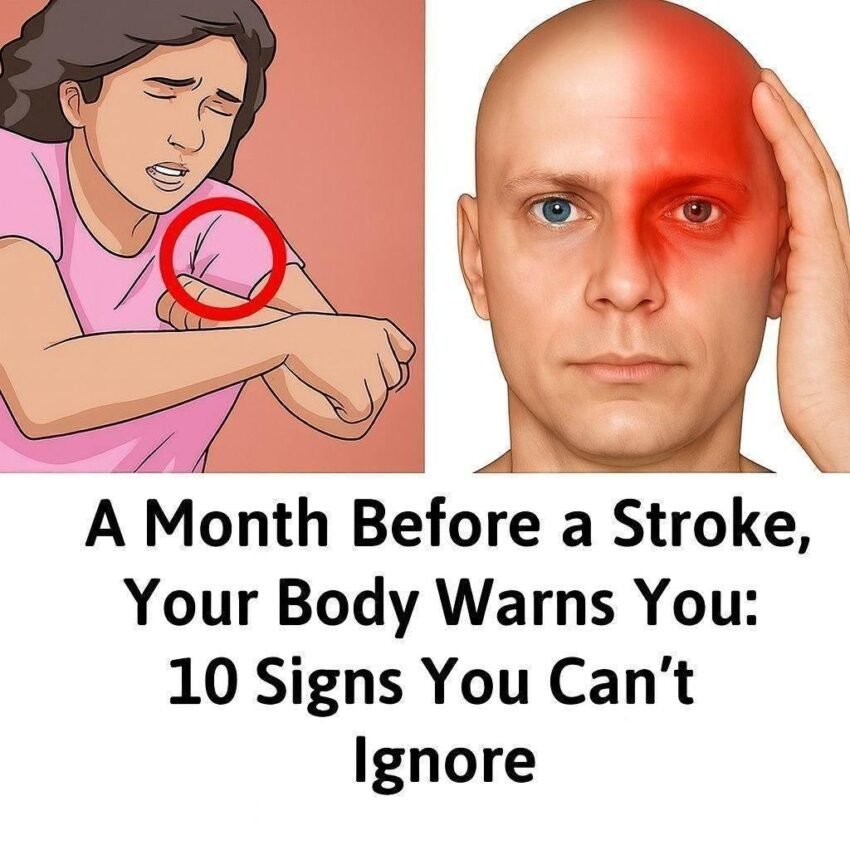
A Month Before a Stroke: What the Medical Evidence Actually Says
Headlines claiming “10 warning signs a month before a stroke” are not supported by medical research. Stroke symptoms are often sudden, and when early warning signs do occur, they are usually short-term events rather than a predictable month-long pattern.
Below is a clear, medically accurate explanation of what is known.
Understanding Stroke
A stroke happens when blood flow to part of the brain is interrupted or when a blood vessel in the brain bursts. This leads to brain cell damage due to lack of oxygen.
There are two main types:
- Ischemic stroke: caused by a blockage (most common)
- Hemorrhagic stroke: caused by bleeding in the brain
Is There a “One Month Warning” for Stroke?
There is no medically established set of symptoms that reliably appears one month before a stroke.
What can happen instead:
- Some people experience a Transient Ischemic Attack (TIA), sometimes called a mini-stroke
- A TIA can occur minutes, hours, or days before a stroke
- It is unpredictable and does not follow a fixed timeline like “one month before”
A TIA is a serious warning sign and requires immediate medical evaluation.
Real Warning Signs of Stroke (Sudden Onset)
The most important stroke warning signs are sudden and require emergency care immediately:
- Sudden weakness or numbness in the face, arm, or leg (especially on one side)
- Sudden confusion or trouble speaking or understanding speech
- Sudden vision problems in one or both eyes
- Sudden loss of balance, dizziness, or coordination problems
- Sudden severe headache with no known cause
Why “10 Signs a Month Before” Lists Are Misleading
Many online articles list vague symptoms such as:
- fatigue
- mild headaches
- anxiety
- sleep disturbances
- dizziness
These are not specific to stroke and can be caused by many conditions, including:
- stress
- dehydration
- low blood pressure
- infections
- sleep disorders
Because they are so common, they cannot be used to predict a stroke.
Proven Stroke Risk Factors
While stroke cannot be predicted a month in advance through symptoms, risk can build over time due to:
- high blood pressure
- diabetes
- smoking
- high cholesterol
- obesity
- physical inactivity
- atrial fibrillation (irregular heartbeat)
- family history of stroke
Managing these factors significantly reduces stroke risk.
What to Do If Stroke Is Suspected
If any sudden stroke symptoms occur:
- Seek emergency medical help immediately
- Do not wait to see if symptoms improve
- Time is critical; early treatment reduces brain damage
The “FAST” approach is widely used:
- Face drooping
- Arm weakness
- Speech difficulty
- Time to call emergency services
Conclusion
There is no scientifically proven set of “10 warning signs one month before a stroke.” Stroke is usually sudden, though some cases may be preceded by a TIA or short-term warning symptoms.
Reliable prevention focuses on managing long-term health risks, not relying on symptom lists from viral articles.