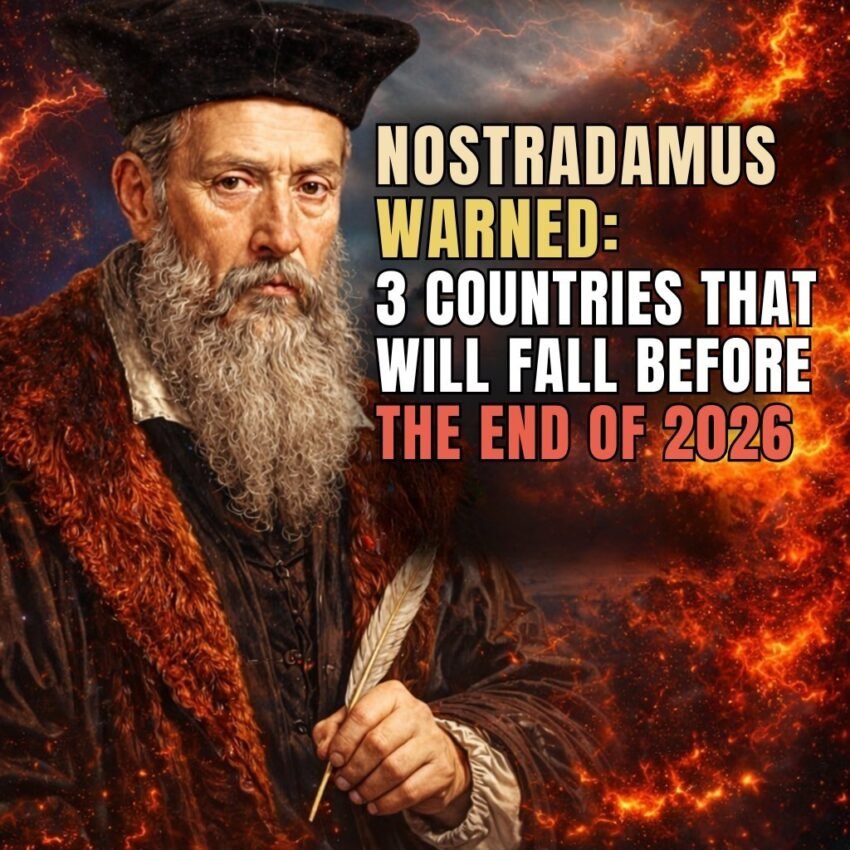
Nostradamus and His Predictions: Three Interpretations Often Linked to the Near Future
The 16th-century French apothecary and astrologer Michel de Nostredame, better known as Nostradamus, remains one of history’s most famous figures associated with prophecy. His book Les Prophéties (1555) contains hundreds of four-line verses called quatrains, written in symbolic and ambiguous language.Because of this vagueness, his writings have been reinterpreted repeatedly over centuries—especially during times of uncertainty. However, it is important to note that there is no scientific or historical evidence that his predictions reliably forecast the future. Most interpretations are made after events occur.Below are three common modern interpretations often linked to “near-future” predictions.
1. Global Conflict and Geopolitical Tensions
One of the most frequently cited interpretations of Nostradamus involves verses believed to describe wars or large-scale conflicts.
Common claims:
- Rising global tensions or “great wars”
- Conflicts between major powers
- Shifting alliances and instability
Reality check:
Historians note that Nostradamus wrote during a time of wars, plagues, and religious conflict in Europe. His language is poetic and symbolic, allowing later readers to match it to almost any major war in history—including both World Wars.
2. Climate Events and Natural Disasters
Another popular interpretation links his quatrains to environmental upheaval.
Common claims:
- Floods, droughts, and extreme weather
- Earth changes or rising seas
- “Fire from the sky” or natural catastrophes
Reality check:
These interpretations often reflect modern concerns about climate change. However, the original texts do not clearly describe scientific or geographical specifics. The flexibility of the language allows events like hurricanes, earthquakes, or wildfires to be retrofitted into the verses.
3. Technological Change and Human Transformation
Some modern readers interpret Nostradamus as predicting technological or societal shifts.
Common claims:
- Advances in artificial intelligence or machines
- Changes in human behavior or society
- Medical or scientific breakthroughs
Reality check:
Nostradamus lived in the 1500s, so he had no concept of modern technology. Any references to “machines” or “artificial beings” are highly symbolic and open to interpretation rather than literal prediction.
Why Nostradamus Is So Widely Interpreted
Several factors explain his enduring popularity:
- His writing style is deliberately vague and metaphorical
- He used a mix of French, Latin, and symbolic language
- Translations and interpretations vary widely
- People tend to connect predictions to events after they happen (a cognitive bias called hindsight interpretation)
Scholarly Viewpoint
Most historians and linguists agree:
- Nostradamus did not provide accurate, testable predictions
- His quatrains are better understood as poetic reflections of his time
- Modern “predictions” are largely reinterpretations rather than foresight
Bottom Line
Nostradamus continues to fascinate people because his writings are flexible enough to be applied to many events. However, the idea that he accurately predicted specific near-future events is not supported by evidence.
His legacy is more cultural and literary than prophetic.
If you want, I can also show you the most famous Nostradamus quatrains and how they were later reinterpreted in history.