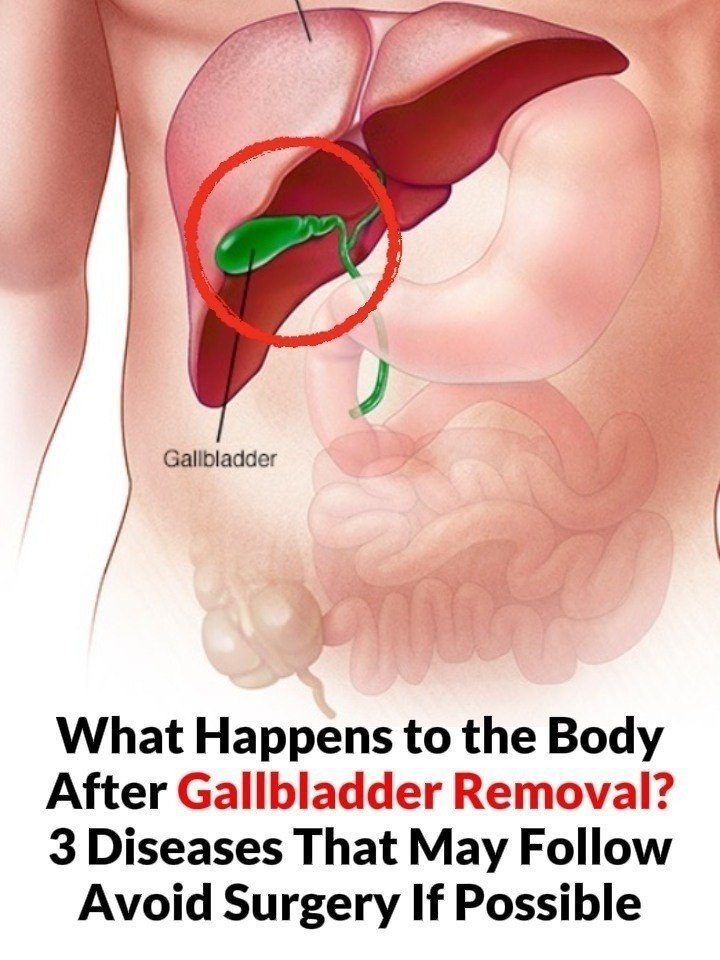
That said, removing the gallbladder can change how bile flows, and a minority of people do develop ongoing digestive issues. Here’s a balanced, medically accurate view.
First: what the gallbladder actually does
The gallbladder stores and concentrates bile, which helps digest fat. After removal, bile flows continuously into the intestine instead of being released in controlled amounts.
This change is what causes most post-surgery symptoms—not “damage,” but adaptation.
3 conditions or issues that can occur after removal
1. Post-cholecystectomy diarrhea
Some people experience frequent or urgent bowel movements.
Why it happens:
- Continuous bile entering the intestines can irritate the colon
What helps:
- Low-fat diet (especially early on)
- Fiber supplements (like psyllium)
- Bile acid binders if prescribed
2. Bile reflux or gastritis-like symptoms
A small number of patients develop:
- Upper abdominal burning
- Nausea
- Reflux-like discomfort
This is due to bile flowing backward into the stomach or irritating the digestive tract.
3. Functional digestive discomfort (“post-cholecystectomy syndrome”)
Some people report:
- Bloating
- Fatty food intolerance
- Abdominal discomfort
This is not a single disease but a collection of symptoms that can have multiple causes, including:
- bile flow changes
- pre-existing digestive issues
- or unrelated conditions like IBS
Important reality check: risks of NOT removing the gallbladder
Avoiding surgery when it is medically needed can be more dangerous. Untreated gallbladder disease can lead to:
- Recurrent painful gallstone attacks
- Infection of the gallbladder (cholecystitis)
- Blockage of bile ducts
- Pancreatitis (potentially serious)
Who actually needs surgery most often?
Doctors usually recommend removal when there are:
- Repeated gallstone attacks
- Infection or inflammation
- Blockage of bile ducts
- Pancreatic complications
In these cases, the benefits of surgery generally outweigh the risks.
Bottom line
Gallbladder removal is not something to “avoid when possible” in a blanket sense. It is recommended when the disease itself poses greater risk than the surgery.
While a small number of people do develop digestive symptoms afterward, most adapt well and return to normal life.
If you want, I can explain:
- how to manage digestion after gallbladder removal
- what to eat in the first 2–4 weeks post-surgery
- or signs that gallbladder problems actually do require urgent surgery