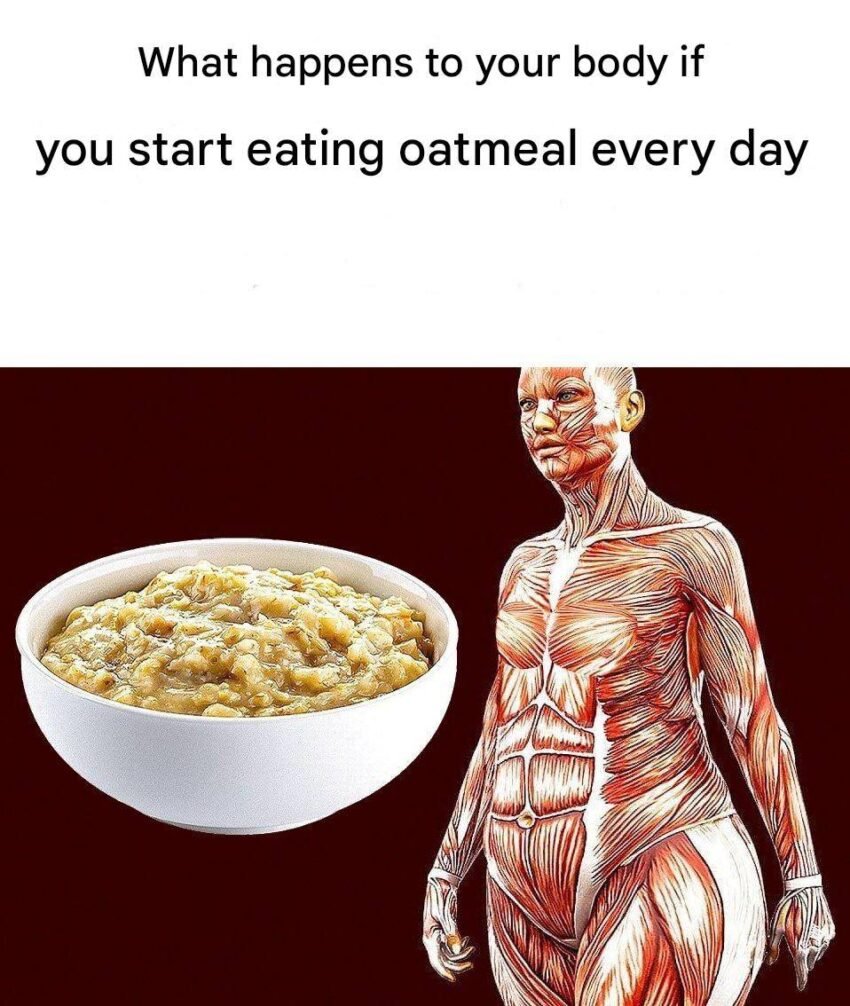
Eating oatmeal every day can be a very healthy habit for most people, but the effects depend on your overall diet and health. Here’s what typically happens in the body when oatmeal becomes a daily food:
👍 Possible benefits
1. Better heart health
Oats contain beta-glucan (a type of soluble fiber), which can:
- Help lower LDL (“bad”) cholesterol
- Support healthier blood vessels over time
This is one of the most well-established benefits of oats.
2. Improved digestion
- High fiber helps regulate bowel movements
- Can reduce constipation
- Supports a healthier gut microbiome (beneficial bacteria)
3. More stable blood sugar
- Oats digest slowly (especially steel-cut or rolled oats)
- Help prevent sharp spikes in blood sugar after meals
- May improve insulin response over time
4. Longer-lasting fullness (weight control support)
- Fiber + slow digestion keeps you fuller longer
- May reduce snacking and overeating naturally
5. Nutrient support
Oats provide:
- Magnesium
- Iron
- Manganese
- B vitamins
These support energy production and metabolism
⚠️ Possible downsides (in some cases)
1. Not ideal for everyone with gut sensitivity
- Some people with IBS may feel bloating or gas at first
2. Can become unhealthy depending on toppings
Oatmeal itself is healthy—but adding:
- Too much sugar
- Flavored syrups
- Sweetened creamers
can cancel the benefits.
3. Not a complete diet on its own
- Lacks enough protein and fat by itself
- Needs balance (eggs, yogurt, nuts, fruit, etc.)
🧠 Bottom line
Eating oatmeal daily usually leads to:
- Better cholesterol
- Improved digestion
- More stable energy and appetite
But it works best as part of a balanced diet, not as a “superfood cure.”
If you want, I can show you the healthiest way to prepare oatmeal for weight loss, diabetes control, or muscle gain.