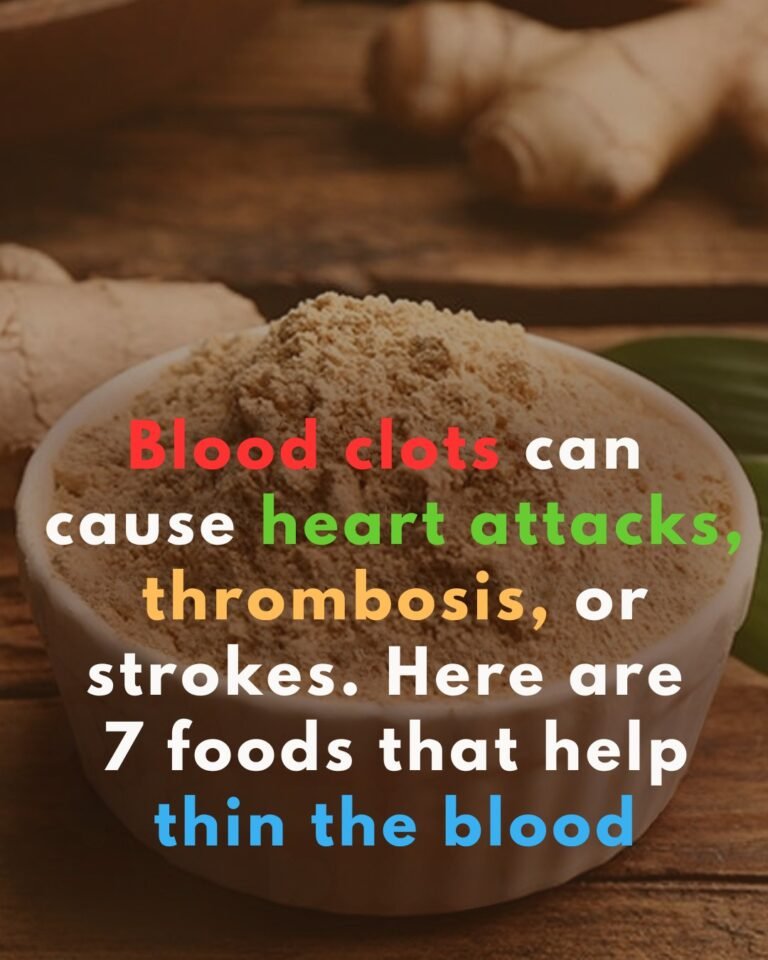
7 Powerful Blood-Thinning Foods You Should Know About
Before listing foods, it’s important to clarify something: there are no foods that “thin the blood” like prescription anticoagulant medications. However, some foods may have mild natural effects on blood clotting, circulation, or platelet activity, especially when eaten regularly.
If you are already taking blood-thinning medication, these foods can sometimes increase bleeding risk, so medical guidance matters.
1. Garlic
Garlic contains sulfur compounds (like allicin) that may slightly reduce platelet aggregation.
It is often associated with improved circulation and heart health when included in a balanced diet.
2. Ginger
Ginger may have mild antiplatelet effects and is traditionally used for inflammation and digestion.
It is commonly consumed as tea or in meals, but high supplement doses can have stronger effects than food amounts.
3. Turmeric
Turmeric contains curcumin, which has been studied for its anti-inflammatory properties.
It may mildly affect blood clotting pathways, especially in concentrated supplement form.
4. Cinnamon
Cinnamon contains compounds that may influence circulation and blood sugar regulation.
Its blood-thinning effect is generally mild and not clinically significant at normal dietary levels.
5. Fatty Fish (Salmon, Mackerel, Sardines)
These fish are rich in omega-3 fatty acids, which can reduce platelet stickiness and support cardiovascular health over time.
This is one of the most well-supported dietary effects related to blood flow.
6. Grapes and Berries
Berries and grapes contain polyphenols like resveratrol, which may support vascular health and reduce platelet aggregation in laboratory studies.
Their effect is subtle and works best as part of a consistent diet.
7. Cayenne Pepper
Cayenne contains capsaicin, which may support circulation and reduce clotting tendency in small amounts.
It is often used in traditional herbal practices for cardiovascular support.
Important Safety Note
Even though these foods are generally healthy:
- They do not replace anticoagulant medications (such as warfarin or aspirin when prescribed)
- Combining large amounts with blood-thinning drugs may increase bleeding risk
- Effects vary widely between individuals
When to be cautious
You should be careful with high intake if you:
- Take prescribed blood thinners
- Have bleeding disorders
- Are preparing for surgery or dental procedures
Conclusion
These foods may support cardiovascular health and have mild effects on blood clotting, but they should be viewed as part of a healthy diet rather than natural “blood thinners.” Balanced nutrition and medical supervision remain essential for anyone with clotting or heart-related conditions.