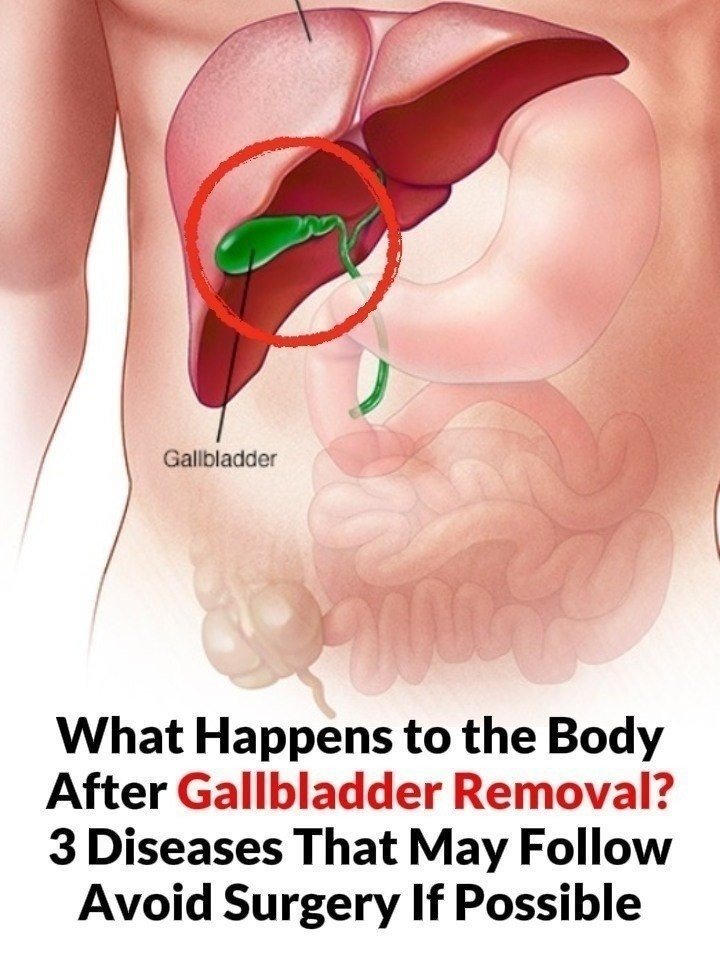
Let’s break down the facts clearly.
After Gallbladder Removal: What Can Actually Happen
The gallbladder stores bile. After removal, bile flows directly from the liver into the intestine. Most people adapt well, but a minority may experience changes.
1. Post-Cholecystectomy Diarrhea
Some people develop loose stools after surgery.
Why it happens
Bile flows continuously into the intestine instead of being stored and released in controlled amounts.
How common
- Mild and temporary in most cases
- Persistent in a small percentage of patients
Management
- Low-fat diet initially
- Fiber supplements
- Bile acid-binding medications if needed
2. Bile Reflux Gastritis
A small number of people experience bile flowing back into the stomach.
Symptoms
- Burning sensation in upper abdomen
- Nausea
- Bloating
Management
- Dietary changes
- Medications that reduce irritation
- Rarely requires further treatment
3. Persistent Abdominal Discomfort (Post-Cholecystectomy Syndrome)
A minority of patients continue to have symptoms similar to gallbladder pain.
Possible causes
- Bile duct issues
- Sphincter of Oddi dysfunction
- Digestive sensitivity not related to gallbladder
Important note
This does not mean surgery “failed”—it means another condition may be present.
Why the “Avoid Surgery When Possible” Claim Is Misleading
Gallbladder removal is recommended when benefits outweigh risks, such as:
- Recurrent gallstones causing pain
- Gallbladder inflammation (cholecystitis)
- Blocked bile ducts
- Pancreatitis caused by gallstones
If untreated, these conditions can become serious or life-threatening.
Risks of NOT Removing the Gallbladder (When Needed)
Avoiding surgery when it is indicated can lead to:
- Severe infection
- Gallbladder rupture
- Pancreatitis
- Bile duct obstruction
- Emergency surgery under worse conditions
In many cases, delaying surgery increases risk rather than reducing it.
Who Actually Does Well Without Surgery?
Some people with:
- Mild, infrequent gallstones
- No inflammation or complications
may manage with: - Diet changes
- Weight management
- Monitoring
But this must be decided medically, not based on general advice.
Bottom Line
Gallbladder removal is not something to “avoid when possible” in a general sense. It is a highly effective treatment for specific conditions, and most people recover well with minimal long-term issues.
The real message is:
- Surgery is recommended when medically necessary
- Most side effects are mild and manageable
- Untreated gallbladder disease can be more dangerous than surgery
If you want, I can explain:
- Natural ways people manage gallstones early on
- What recovery actually feels like week by week
- Or whether surgery is usually needed for your specific symptoms