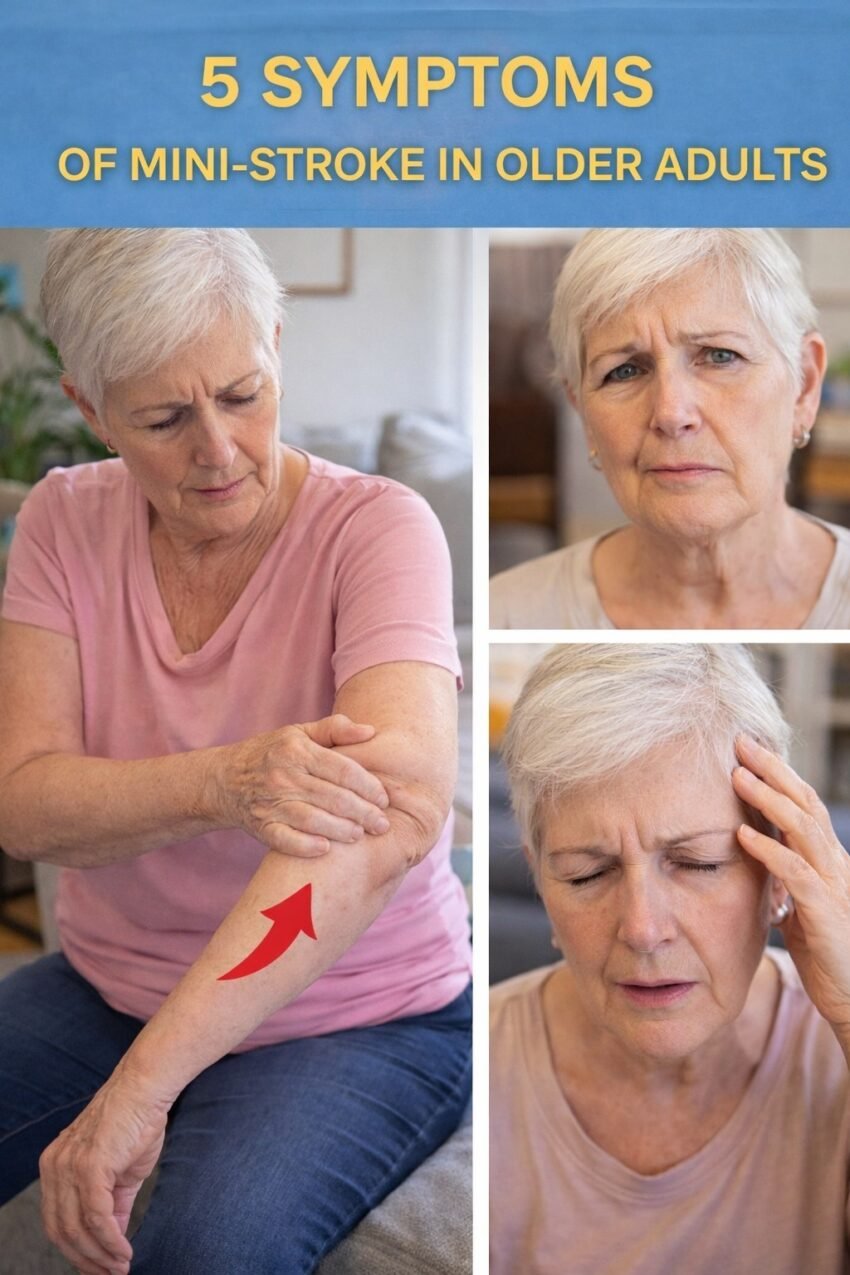
5 Symptoms of a Mini-Stroke in the Elderly That Should Not Be Ignored
Introduction
A “mini-stroke,” medically known as a transient ischemic attack, is a temporary blockage of blood flow to the brain. Symptoms may last only minutes to hours, but they are a serious warning sign of a possible future stroke. Recognizing these symptoms early can save a life.
1. Sudden Weakness or Numbness
One of the most common signs is sudden weakness or numbness, especially on one side of the body.
- Face drooping
- Arm or leg weakness
- Difficulty lifting one arm
Why it matters:
This can indicate reduced blood flow to a specific part of the brain.
2. Trouble Speaking or Understanding
A person may suddenly:
- Slur their words
- Struggle to form sentences
- Have difficulty understanding simple speech
Why it matters:
Speech problems are a key warning sign of brain involvement.
3. Vision Problems
Sudden vision changes can occur, such as:
- Blurred or double vision
- Loss of vision in one or both eyes
Why it matters:
This may signal disruption in areas of the brain responsible for vision.
4. Dizziness or Loss of Balance
Unexplained dizziness, trouble walking, or loss of coordination can be early signs.
- Feeling unsteady
- Sudden falls
- Difficulty maintaining balance
Why it matters:
These symptoms can increase the risk of injury and indicate neurological issues.
5. Sudden Severe Headache
A sudden, intense headache—especially without a known cause—can be a warning sign.
Why it matters:
While more common in major strokes, it can still appear in a mini-stroke and should not be ignored.
When to Act Immediately
Even if symptoms go away quickly, treat it as an emergency. A transient ischemic attack is often a precursor to a full stroke, which can cause permanent damage.
Use the FAST method:
- Face drooping
- Arm weakness
- Speech difficulty
- Time to seek help immediately
Conclusion
Mini-stroke symptoms can be brief, but their impact is serious. Recognizing these five warning signs and acting quickly can help prevent a more severe stroke and protect long-term health.