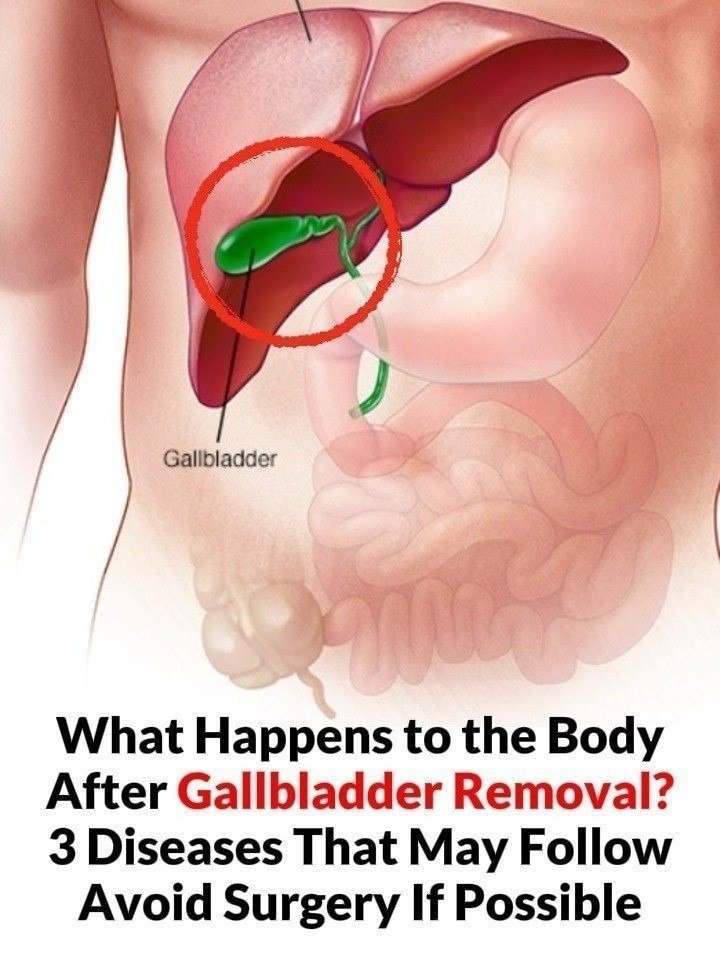
Gallbladder removal (cholecystectomy) is a very common and generally safe surgery, and for many people (especially with gallstones causing pain or infection), it is the recommended treatment, not something to avoid “when possible.”
There is no strong medical guidance that says people should avoid it if it is truly needed.
🧠 What the gallbladder does
The gallbladder stores bile, which helps digest fats. When it is removed, bile flows directly from the liver into the intestine.
Most people adjust well over time.
⚠️ Possible long-term effects after gallbladder removal
1) Post-cholecystectomy diarrhea
- Some people get loose stools after fatty meals
- Usually improves over weeks or months
2) Bile reflux or indigestion
- Mild burning, bloating, or discomfort
- Often managed with diet changes
3) Fat digestion sensitivity
- Heavy, oily foods may cause discomfort
- Not a disease, but a dietary adjustment issue
🟡 Less common issues (not guaranteed)
- Persistent abdominal pain (rare)
- Vitamin absorption changes (usually mild)
- “Post-cholecystectomy syndrome” (small percentage of patients)
❗ Important reality check
Gallbladder surgery is usually done because of:
- Painful gallstones
- Infection (cholecystitis)
- Blocked bile ducts
- Risk of complications
👉 Leaving a diseased gallbladder untreated can be far more dangerous than surgery.
🧠 Key truth
- The gallbladder is not essential for survival
- Most people live normal lives without it
- Complications are usually mild and manageable
👍 How to live well after surgery
- Eat smaller, lower-fat meals
- Avoid very greasy foods early on
- Gradually return to normal diet
- Stay hydrated
🧾 Bottom line
👉 Gallbladder removal is not something to “avoid when possible”
👉 It is often the best and safest treatment when medically needed
👉 Most side effects are temporary and manageable
If you want, I can explain what symptoms actually mean you might need gallbladder surgery vs when you don’t.