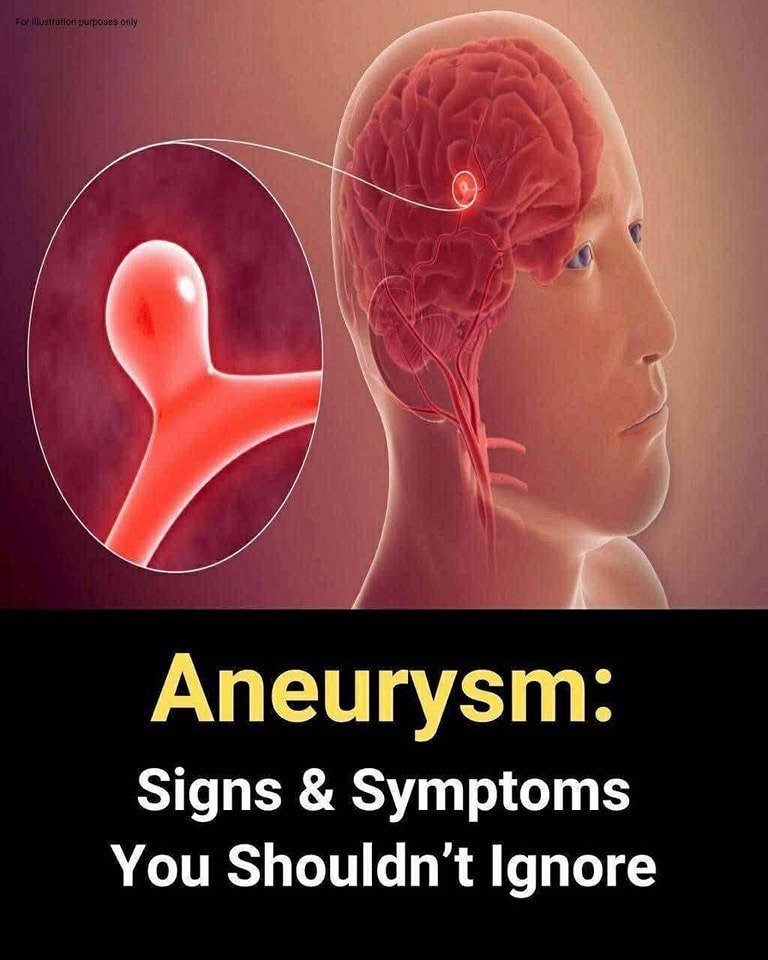
Aneurysm: Signs You Shouldn’t Ignore
An aneurysm is a bulge or weakening in the wall of a blood vessel. It can occur in the brain, aorta (main artery), or other blood vessels. Many aneurysms cause no symptoms until they become large or rupture, which is a medical emergency.
Here are the key warning signs doctors say you should never ignore.
Brain Aneurysm (Cerebral Aneurysm)
Warning signs before rupture (sometimes none, but may include):
- Sudden severe headache (“worst headache of your life”)
- Pain above or behind the eye
- Blurred or double vision
- Drooping eyelid
- Numbness or weakness on one side of the face
If it ruptures (emergency):
- Sudden, explosive headache
- Loss of consciousness
- Nausea or vomiting
- Neck stiffness
- Seizures
- Confusion or difficulty speaking
Aortic Aneurysm (Chest or Abdomen)
Abdominal aortic aneurysm symptoms:
- Deep, constant pain in abdomen or back
- Pulsating feeling near the belly
- Sudden severe abdominal or back pain (possible rupture)
Thoracic (chest) aneurysm symptoms:
- Chest pain or pressure
- Back pain
- Shortness of breath
- Hoarseness or difficulty swallowing
Emergency Warning Signs (Call for Help Immediately)
- Sudden, severe pain in head, chest, back, or abdomen
- Collapse or fainting
- Sudden weakness or paralysis
- Signs of stroke (face drooping, arm weakness, speech trouble)
These may indicate a ruptured aneurysm, which is life-threatening.
Who Is at Higher Risk
- High blood pressure
- Smoking history
- Family history of aneurysms
- Older age
- Atherosclerosis (blocked arteries)
- Certain genetic conditions
Can Aneurysms Be Prevented or Treated?
Yes, depending on size and location:
- Blood pressure control
- Smoking cessation
- Monitoring with imaging tests
- Surgical repair or stent placement in high-risk cases
Bottom Line
Most aneurysms have no symptoms until they become dangerous, which is why sudden severe pain or neurological symptoms should never be ignored.
Early detection and emergency response can be life-saving.
If you want, I can also explain:
- Early warning signs vs stroke symptoms (easy comparison)
- Foods and habits that support artery health
- Or how doctors detect aneurysms before they rupture