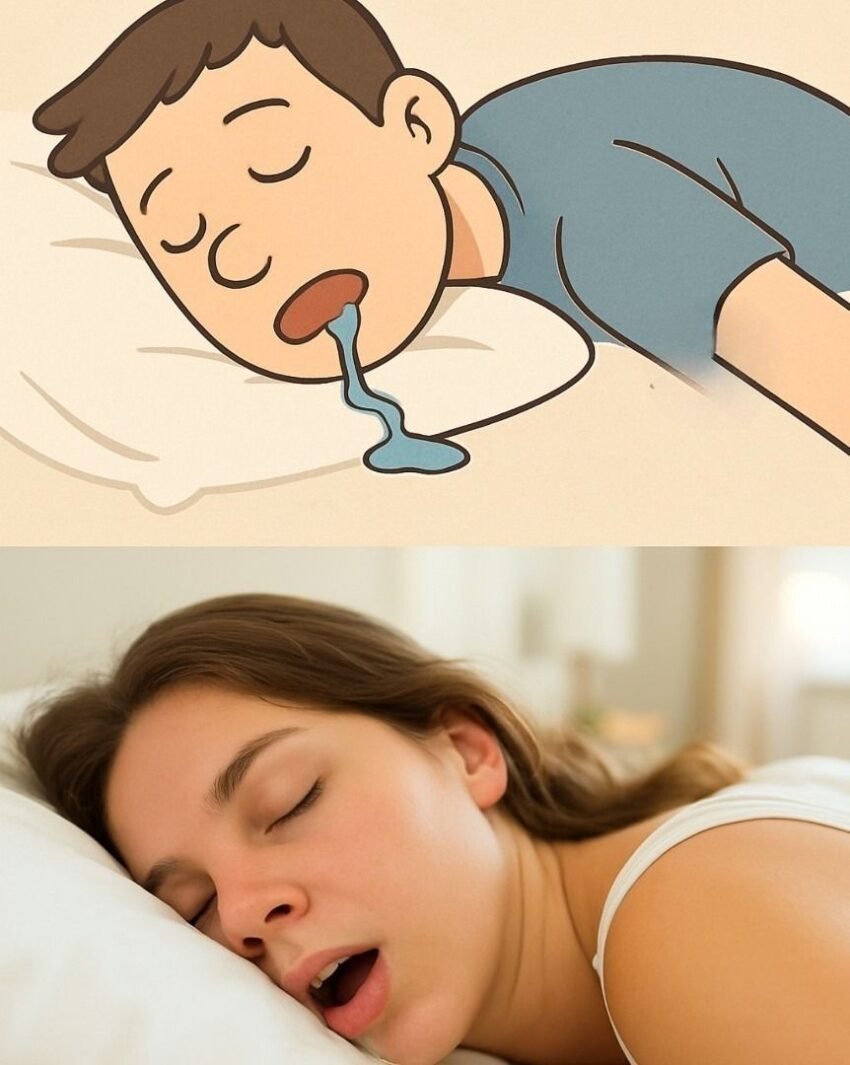
That “If you drool while you sleep, it’s a sign that your brain…” line is another clickbait hook. The full statement is usually trying to sound scary or mysterious, but the reality is simple and mostly harmless.
What Drooling During Sleep Actually Means
Drooling (sleep salivation) happens when saliva escapes the mouth during sleep. It has nothing to do with your brain “failing” or anything dangerous in most cases.
Common Reasons You Drool While Sleeping
1. Sleeping position
This is the most common cause.
If you sleep:
- On your side or stomach
gravity can let saliva escape more easily.
2. Deep sleep
During deep sleep, your swallowing reflex slows down, so saliva can build up in the mouth.
3. Mouth breathing
Blocked nose from:
- Allergies
- Cold
- Sinus issues
can force you to breathe through your mouth, increasing drooling.
4. Excess saliva production
Can happen due to:
- Acid reflux
- Certain foods
- Some medications
5. Relaxed jaw muscles
In deeper sleep stages, jaw muscles relax, making it easier for saliva to leak out.
What It Does NOT Mean
Drooling while sleeping does NOT mean:
- Brain damage or brain disease
- Low intelligence
- Serious neurological problems (in most cases)
When It Could Be Worth Checking
See a doctor if drooling is:
- Sudden and severe
- Combined with choking during sleep
- Linked with difficulty swallowing while awake
- Associated with neurological symptoms
Bottom Line
Drooling during sleep is usually a normal, harmless result of sleep position, breathing patterns, and muscle relaxation—not a sign that something is wrong with your brain.
If you want, I can also explain:
- How to stop drooling at night
- Or what sleep positions are best for better breathing and sleep quality