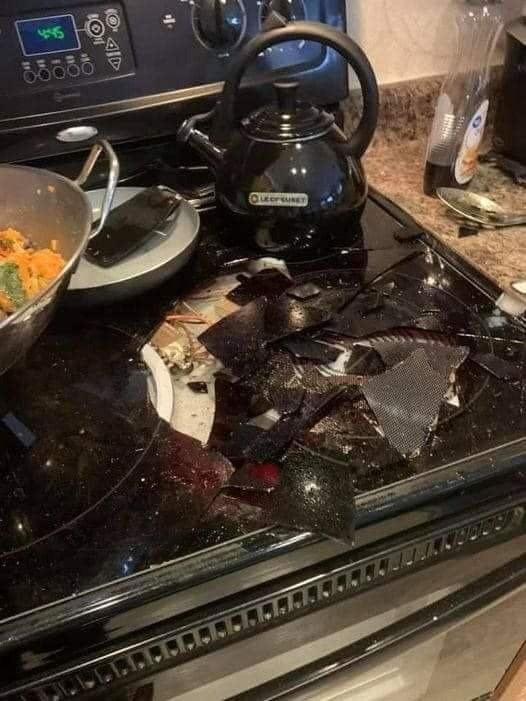
Here are 9 dangerous glass stovetop habits you should avoid to prevent cracks, fire hazards, and costly damage.
🔥 1. Dragging heavy pots and pans
Sliding cookware across a glass cooktop can cause scratches and micro-cracks that weaken the surface over time.
🍳 2. Using rough or warped cookware
Pans with uneven or rough bottoms don’t sit properly, leading to hot spots and possible glass damage.
💧 3. Spilling sugary foods and not cleaning immediately
Sugar-based spills (like syrup or jam) can burn into the glass and permanently stain or pit the surface if left too long.
🔪 4. Using the stovetop as a cutting board
Cutting or chopping on the glass surface can cause deep scratches or even shattering risk under pressure.
🧼 5. Cleaning when the surface is hot
Spraying cold cleaner or wiping a hot surface can cause thermal shock, which may crack the glass.
🍲 6. Using oversized cookware over heating zones
Pots that extend far beyond burner areas trap heat unevenly and may overheat edges of the glass surface.
⚡ 7. Turning on empty burners
Heating an empty stovetop zone can cause extreme localized heat buildup, stressing the glass.
🧂 8. Letting salt or sand accumulate
Tiny abrasive particles act like sandpaper and slowly scratch the glass every time you move cookware.
🧯 9. Ignoring hairline cracks or chips
Even small cracks can expand suddenly when heated, increasing the risk of complete stovetop failure or shattering.
⭐ Bonus safety tips
- Always lift cookware instead of sliding it
- Clean spills quickly but only when cool
- Use flat-bottom, heavy-quality pots
- Avoid dropping anything heavy on the surface
If you want, I can also give you a guide on how to properly clean a glass stovetop without damaging it or the best cookware types for glass cooktops.