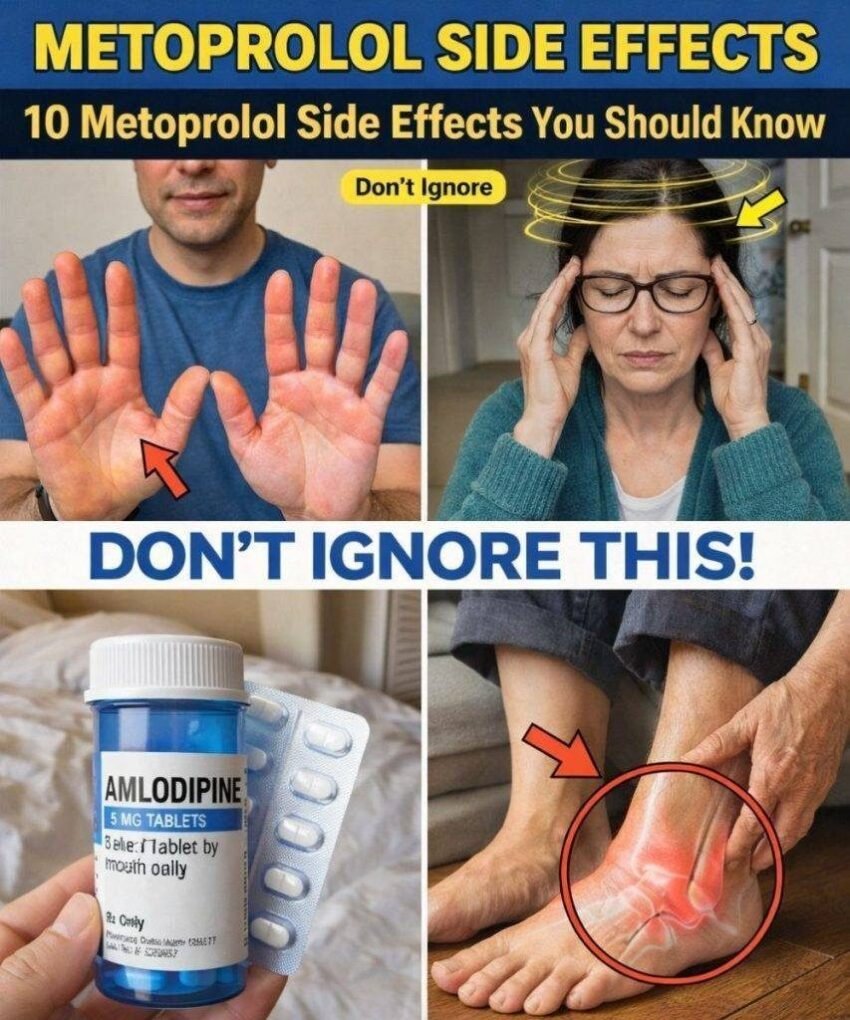
Metoprolol is a widely used and well-studied heart medicine. Its side effects are not hidden or secret—they are already well known, listed in medical guidelines, and routinely monitored by doctors.
🧠 What metoprolol actually does
It works by:
- slowing heart rate
- lowering blood pressure
- reducing strain on the heart
This is why it’s commonly prescribed for:
- high blood pressure
- angina (chest pain)
- heart rhythm issues
⚠️ Common side effects (well known)
These are the real, expected side effects:
- Fatigue or tiredness
- Slow heart rate
- Dizziness (especially when standing)
- Cold hands and feet
- Reduced exercise tolerance
- Sleep disturbances or vivid dreams
- Mild shortness of breath in sensitive people
🚨 Less common but important effects
These require medical attention if severe:
- Very low heart rate (bradycardia)
- Low blood pressure
- Swelling in legs or ankles
- Mood changes or depression (rare)
- Worsening asthma symptoms (in some people)
🧠 Important reality check
- These are not secret effects
- Doctors already inform patients about them
- Most people tolerate the medication well
- Benefits often outweigh risks in heart conditions
Stopping suddenly can be dangerous and may worsen heart problems.
❌ Why the article is misleading
It implies:
- doctors are hiding risks (false)
- side effects are shocking or unknown (false)
- most people will have serious problems (false)
This is not how evidence-based medicine works.
🧾 Bottom line
Metoprolol has known, well-documented side effects, most of which are manageable. Sensational headlines exaggerate normal medical information into fear.
If you want, I can explain:
- how to reduce metoprolol side effects safely
- or when doctors choose to switch medications