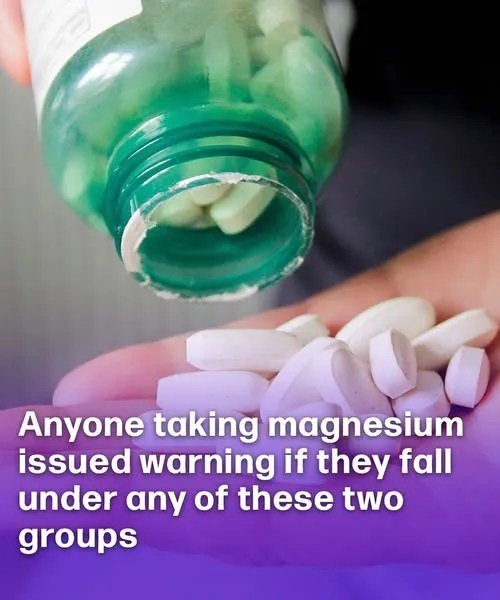
The headline “Health experts issue new warning about magnesium supplements — especially for these two high-risk groups” reflects a real and well-established medical caution, but it is often exaggerated in viral posts.
🧠 What the warning is actually about
Magnesium is generally safe for most people when taken in normal dietary amounts. However, supplement form magnesium can cause problems in specific groups, especially when taken in high doses or without medical supervision.
⚠️ The two main high-risk groups
1. People with kidney disease
- The kidneys normally remove excess magnesium
- If kidney function is weak, magnesium can build up in the blood
This can lead to a dangerous condition called:
Hypermagnesemia
Possible symptoms include:
- low blood pressure
- confusion or drowsiness
- muscle weakness
- irregular heartbeat in severe cases
📌 This is the most important risk group
2. Older adults (especially with reduced kidney function)
- Kidney function naturally declines with age
- Older adults are more likely to:
- take multiple medications
- use magnesium-containing laxatives or antacids
- have hidden kidney issues
This increases the risk of magnesium buildup even with “normal” supplement doses.
🧪 Other important risk situations (often mentioned by experts)
Even outside those two groups, caution is advised if you:
- take certain heart or blood pressure medications
- use magnesium-based laxatives frequently
- take very high-dose supplements
💊 What experts actually recommend
- Magnesium from food is safe for almost everyone
- Supplements should only be used when:
- deficiency is suspected or confirmed
- a doctor recommends it
- Standard upper limit from supplements is often around 350 mg/day for adults (unless prescribed)
🧾 Bottom line
The “new warning” is not about magnesium being dangerous in general. It is about over-supplementation in people with kidney problems and older adults, where the body may not clear excess magnesium properly.
For most healthy people, magnesium from diet or normal doses is considered safe.
If you want, I can explain:
- signs of magnesium deficiency vs overdose
- or whether magnesium is actually helpful for sleep, cramps, or anxiety (with real evidence)