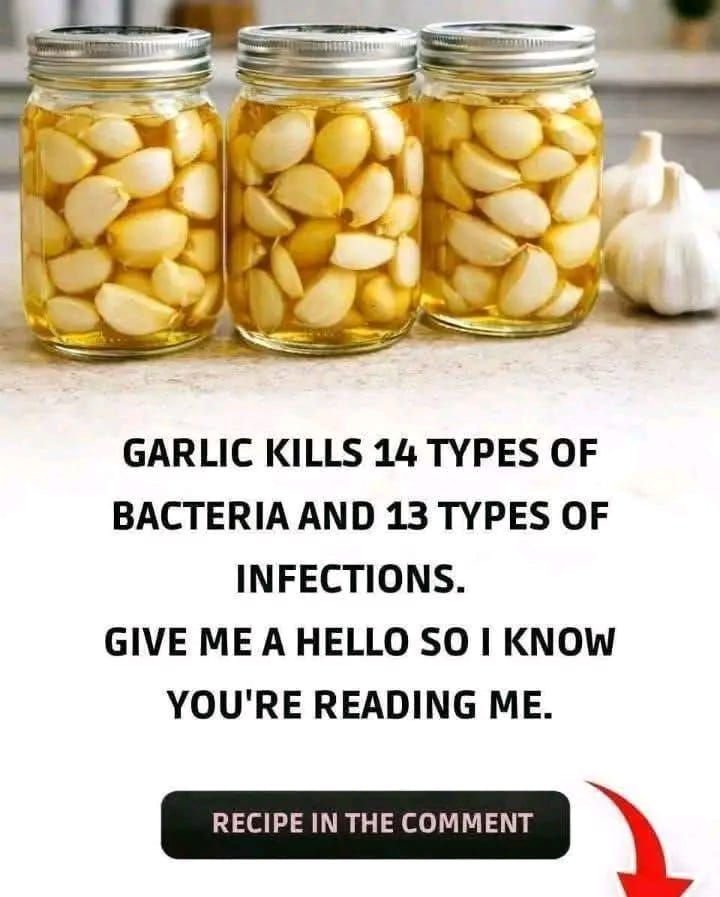
Garlic definitely has a strong reputation as a “natural antibiotic,” and there’s some truth behind the hype—but it’s important to keep expectations realistic.
🧄 What makes garlic special?
Garlic contains a compound called Allicin, which is released when garlic is crushed or chopped.
Allicin has been shown in lab studies to have:
- Antibacterial effects
- Antiviral activity
- Antifungal properties
That’s why garlic has been used in traditional medicine for centuries.
🧠 What it can (and can’t) do
✔️ Potential benefits:
- May help support the immune system
- Can slightly reduce severity of mild infections (like colds)
- Supports heart health and may lower blood pressure
❌ Limitations:
- It does not replace medical antibiotics for serious bacterial infections
- Effects in the human body are much weaker than in lab studies
- Eating garlic won’t “cure” infections like pneumonia, UTIs, or severe wounds
🍽️ How to use garlic effectively
To get the most benefit:
- Crush or chop garlic and let it sit for 5–10 minutes (this helps form allicin)
- Add it raw or lightly cooked to food
- Don’t overcook—it destroys the active compounds
⚠️ When to be careful
- Large amounts can irritate the stomach
- May interact with blood-thinning medications
- Raw garlic can cause burning if applied directly to skin
🧾 Bottom line
Garlic is a healthy, supportive food with mild antimicrobial properties—but calling it a “natural antibiotic that conquers infections” is an exaggeration. It’s best used as part of a balanced diet, not as a substitute for proper medical treatment.
If you want, I can list other foods that genuinely support immunity without the hype.