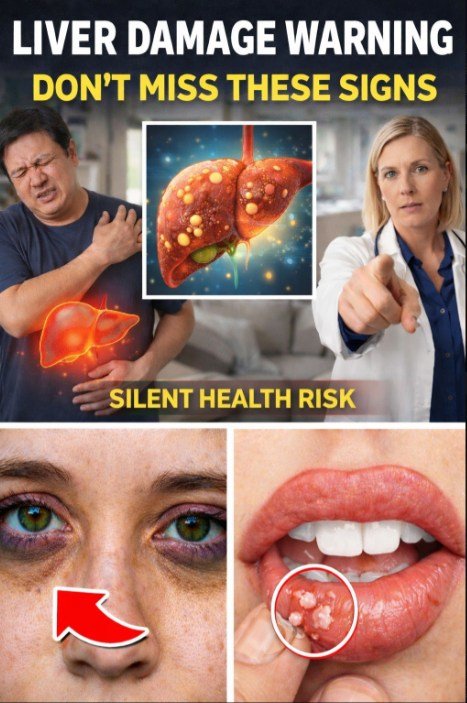
Here are 9 important signs that should not be ignored:
1. Persistent Fatigue and Weakness
Ongoing tiredness that does not improve with rest can be one of the earliest signs of reduced liver function.
2. Yellowing of Skin or Eyes (Jaundice)
A buildup of bilirubin may cause yellow discoloration of the skin and eyes, often linked with serious liver dysfunction.
3. Dark Urine and Pale Stool
Changes in urine and stool color can indicate that the liver is not processing waste properly.
4. Swelling in the Abdomen or Legs
Fluid buildup (ascites or edema) may occur when the liver struggles to regulate proteins and fluid balance.
5. Easy Bruising or Bleeding
The liver produces clotting factors. When it is damaged, even minor injuries may lead to unusual bruising or prolonged bleeding.
6. Loss of Appetite and Unexplained Weight Loss
A declining liver can affect digestion and metabolism, leading to reduced appetite and weight loss.
7. Nausea or Frequent Vomiting
Toxin buildup in the body may cause ongoing digestive discomfort.
8. Confusion, Memory Problems, or Brain Fog
In advanced cases, toxins like ammonia can affect brain function, a condition known as hepatic encephalopathy.
9. Itchy Skin Without a Rash
Persistent itching may occur due to bile salt buildup in the bloodstream, often seen in liver disease.
When These Signs Matter Most
These symptoms are more concerning when they:
- Persist for weeks
- Occur together
- Worsen over time
- Are combined with alcohol use, hepatitis infection, or metabolic disease
Final Thoughts
Serious liver conditions such as Cirrhosis often develop slowly, and early symptoms can be easy to overlook. However, noticing patterns like fatigue, jaundice, swelling, or confusion early can make a significant difference in treatment outcomes.
If any of these signs are present consistently, a medical evaluation is important rather than self-diagnosis.