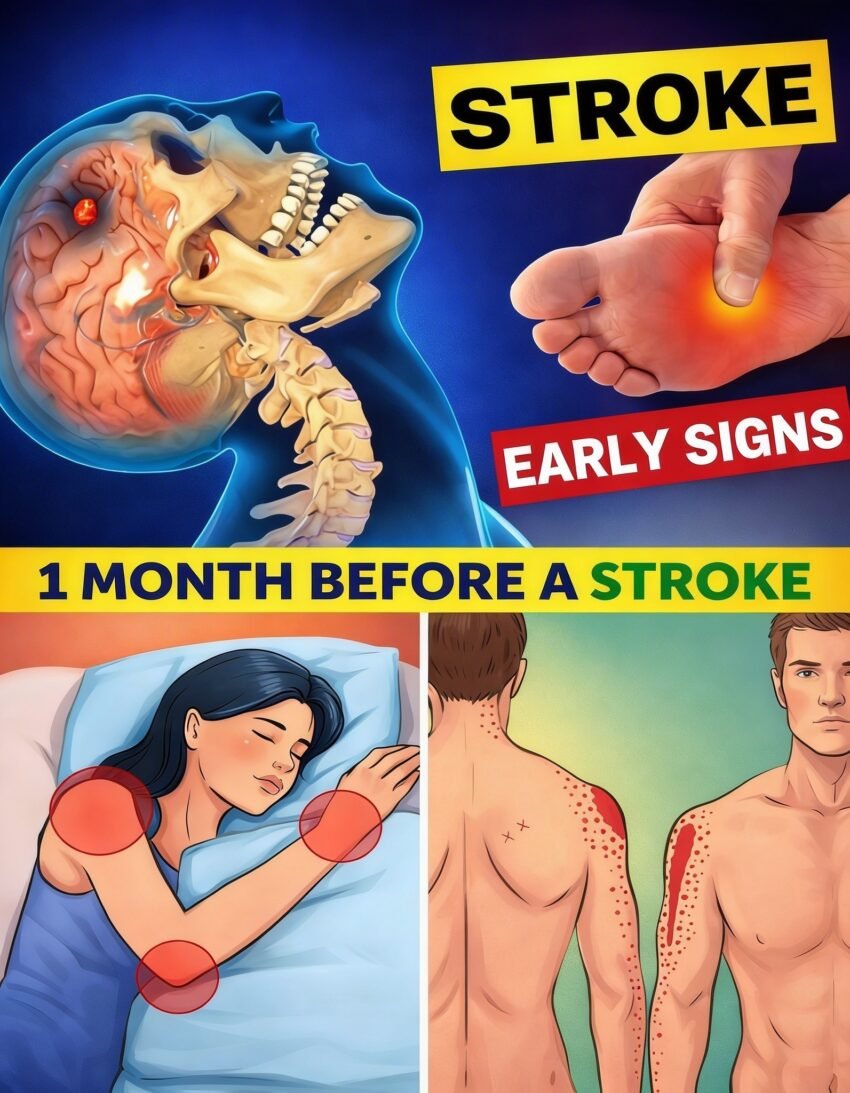
8 Warning Signs of Stroke (and What “One Month Before” Really Means) + 9 Evidence-Based Prevention Tips
A stroke usually happens suddenly, but in some cases the body may show warning signs in the days or weeks beforehand. These are most often related to a transient ischemic attack (TIA), sometimes called a “mini-stroke.” A TIA causes temporary symptoms that resolve, but it can be an important warning that a full stroke may follow.
There is no scientifically defined set of symptoms that reliably appear exactly one month before a stroke, but there are recognized early warning signs that should never be ignored.
8 Possible Early Warning Signs of Stroke
1. Sudden weakness or numbness on one side
- Face, arm, or leg weakness
- Often affects only one side of the body
2. Brief speech difficulty
- Slurred speech
- Trouble finding words
- Confusion when speaking or understanding others
3. Temporary vision problems
- Blurred vision
- Double vision
- Sudden loss of vision in one eye
4. Sudden dizziness or balance issues
- Loss of coordination
- Trouble walking straight
- Feeling unusually unsteady
5. Short episodes of confusion
- Difficulty understanding simple tasks
- Sudden mental “fog”
6. Unexplained severe headache
- Especially sudden and intense
- More common in hemorrhagic strokes
7. Tingling or numbness that comes and goes
- Often mistaken for fatigue or nerve compression
- May affect face or limbs
8. Transient ischemic attack (TIA)
- Stroke-like symptoms that resolve within minutes or hours
- No permanent damage, but high risk warning sign
- Requires urgent medical evaluation
Important clarification about “one month before stroke”
- Symptoms do not follow a fixed timeline
- Some people experience a TIA days or weeks before a stroke
- Others have no warning at all
- Any sudden neurological symptom should be treated as urgent, regardless of timing
9 Evidence-Based Ways to Help Prevent Stroke
Stroke prevention is mainly about managing cardiovascular risk factors.
1. Control blood pressure
- The single most important preventable risk factor
- High blood pressure damages blood vessels over time
2. Manage diabetes
- High blood sugar increases vascular damage
- Good glucose control reduces long-term risk
3. Lower LDL cholesterol
- Reduces plaque buildup in arteries
- Often managed with diet and medication if needed
4. Stop smoking
- Smoking significantly increases stroke risk
- Damages blood vessels and promotes clot formation
5. Maintain regular physical activity
- Improves circulation and heart health
- Helps control weight, blood pressure, and glucose
6. Follow a heart-healthy diet
- Emphasize fruits, vegetables, whole grains, lean protein
- Limit processed foods, trans fats, and excess salt
7. Limit alcohol intake
- Excess alcohol raises blood pressure and stroke risk
- Binge drinking is especially harmful
8. Treat heart rhythm disorders
- Atrial fibrillation greatly increases clot-related stroke risk
- May require medication or medical procedures
9. Maintain a healthy weight and sleep pattern
- Obesity increases stroke risk factors
- Poor sleep (including sleep apnea) is strongly linked to stroke risk
Key takeaway
- Stroke warning signs can appear suddenly or intermittently, but they do not reliably follow a “one-month warning schedule.”
- The most important red flag is any sudden neurological change, even if it resolves quickly.
- Prevention is focused on controlling vascular risk factors rather than relying on early symptom prediction.
If you want, I can also provide:
- A simple “FAST” stroke emergency checklist
- Differences between stroke, TIA, and migraine symptoms
- Or a personal stroke risk assessment checklist used in clinics