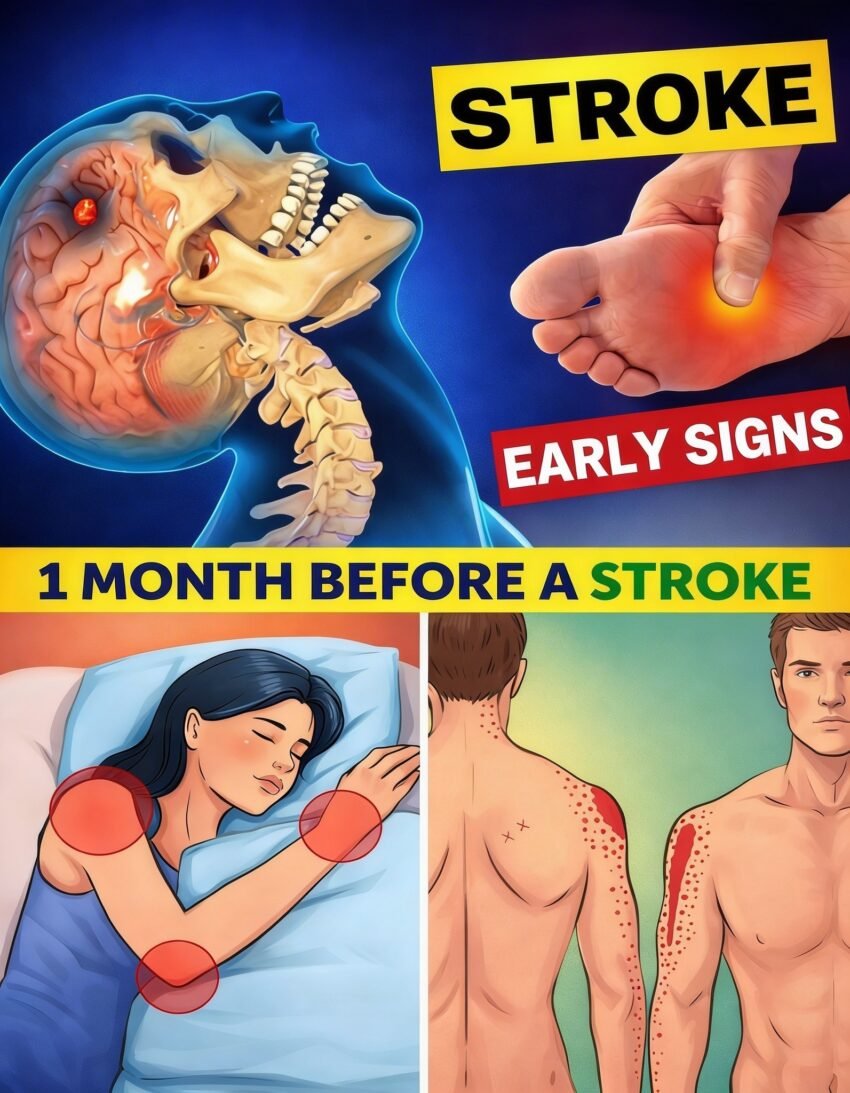
What doctors do recognize is that some people experience warning events (especially a TIA—mini-stroke) or subtle risk signals in the days to weeks before a major stroke. These can be early warning signs that something is wrong with blood flow to the brain.
⚠️ Stroke Warning Signs (May Occur Days–Weeks Before or Suddenly)
These are possible early or intermittent signs, especially if they come and go:
1. Sudden numbness or weakness
- Face, arm, or leg—often on one side
- May last minutes (possible TIA)
2. Brief speech problems
- Slurred speech
- Trouble finding words
- Confusion while talking
3. Temporary vision issues
- Blurred or double vision
- Loss of vision in one eye
4. Sudden dizziness or loss of balance
- Trouble walking straight
- Feeling unsteady without reason
5. Unexplained severe headache
- Especially “worst headache of life”
- More common in hemorrhagic stroke
6. Short episodes of confusion
- Sudden difficulty understanding simple things
7. Numbness or tingling that comes and goes
- Especially in face or limbs
8. Mini-stroke (TIA) symptoms
- Symptoms like stroke but disappear within minutes to hours
- This is a major red flag before a full stroke
🧠 Why these happen
Most strokes are linked to:
- Blocked blood flow (ischemic stroke)
- Burst blood vessel (hemorrhagic stroke)
A related condition, TIA, is often the strongest warning sign that a full stroke may follow within days or weeks.
🚨 FAST emergency check (don’t ignore)
If symptoms appear suddenly, use:
- Face drooping
- Arm weakness
- Speech difficulty
- Time to call emergency help immediately
Even if symptoms disappear, it still needs urgent evaluation.
🛡️ 9 Ways to Help Prevent Stroke
1. Control blood pressure
- Most important prevention step
- High BP is the #1 risk factor
2. Manage blood sugar (diabetes)
- Keeps blood vessels from damage
3. Lower cholesterol
- Reduces artery blockages
4. Stop smoking
- Smoking significantly increases stroke risk
5. Stay physically active
- At least 30 minutes most days
6. Eat a heart-healthy diet
- More fruits, vegetables, whole grains
- Less salt, fried, and processed food
7. Maintain healthy weight
- Reduces strain on heart and vessels
8. Limit alcohol
- Excess increases blood pressure and stroke risk
9. Treat underlying conditions
- Atrial fibrillation
- Heart disease
- Sleep apnea
🧠 Key takeaway
A stroke usually doesn’t give a clear “one-month countdown,” but repeated mini-stroke symptoms (TIAs) or sudden neurological changes are urgent warning signs and should never be ignored.
If you want, I can also explain:
- Difference between stroke vs TIA in simple terms
- Early stroke symptoms specific to sleep or morning hours
- Or a checklist to assess personal stroke risk at home