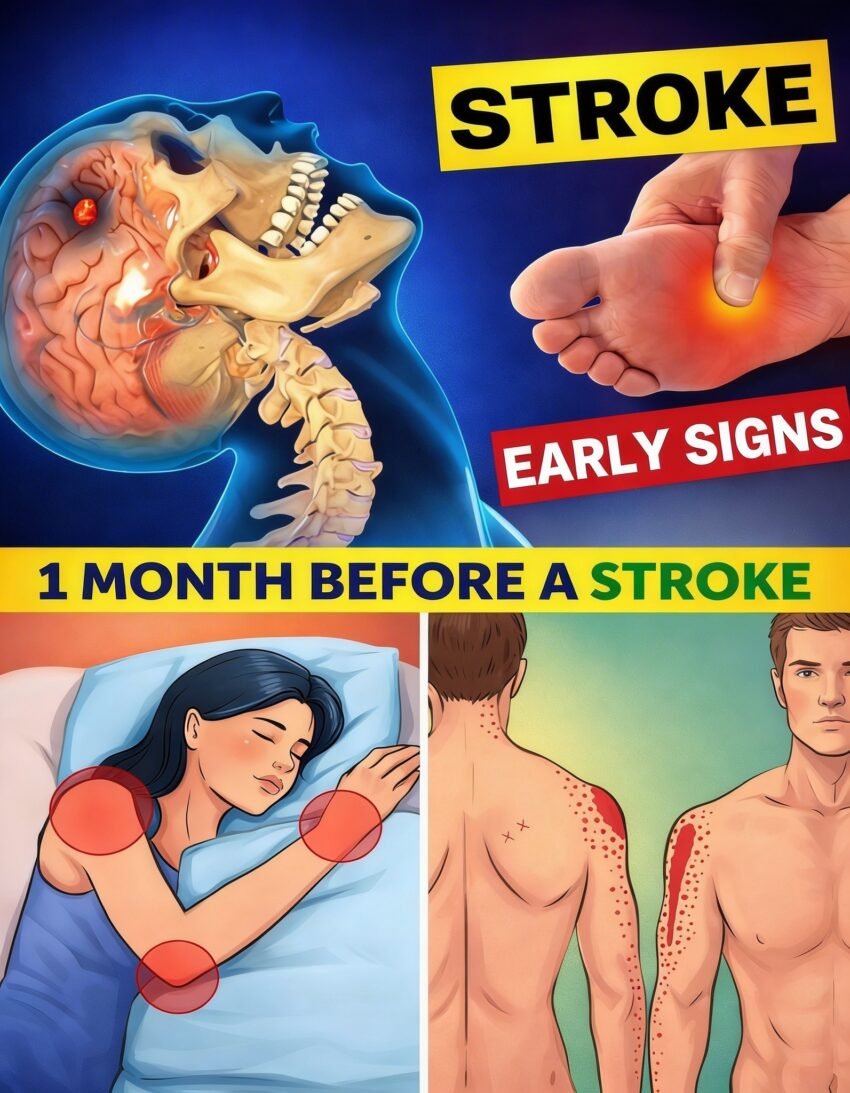
That headline makes it sound like strokes give a clear “one-month warning.” In reality, it’s not that predictable. What can happen is brief, early warning episodes—often Transient ischemic attack (TIAs)—that may occur days or weeks before a full stroke. These symptoms are often mild and temporary, which is why they get ignored.
A stroke itself (such as an Ischemic stroke) usually comes on suddenly.
8 Possible Early Warning Signs (Often Overlooked)
1) Sudden weakness or numbness (especially one side)
- Arm, leg, or face feels weak or “heavy”
- May last minutes and then disappear
2) Brief speech problems
- Slurred speech or trouble finding words
- Can come and go quickly
3) Temporary vision issues
- Blurred or double vision
- Sudden loss of vision in one eye
4) Short episodes of dizziness or loss of balance
- Feeling unsteady without clear reason
- May be mistaken for fatigue or dehydration
5) Sudden severe headache (less common but important)
- Especially if different from usual headaches
- More typical in bleeding-type strokes, but still a warning sign
6) Sudden confusion or mental fog
- Trouble understanding or responding
- Often subtle and easily dismissed
7) Facial drooping (mild or temporary)
- One side of the face may look uneven
- May only be noticeable when smiling
8) Short-lived coordination problems
- Dropping objects
- Trouble with fine movements
🚨 Critical point
Even if symptoms go away within minutes, they are not harmless. A TIA is a serious warning that a major stroke risk is elevated in the near future.
9 Practical Tips to Help Prevent Stroke
1) Control blood pressure
High blood pressure (Hypertension) is the biggest risk factor.
2) Manage cholesterol
Medications like Atorvastatin may be prescribed to reduce risk.
3) Stay physically active
- Walking, light exercise, or strength training improves circulation
4) Eat a heart-healthy diet
- More fruits, vegetables, whole grains
- Less salt, sugar, and processed foods
5) Quit smoking
- Smoking damages blood vessels and increases clot risk
6) Limit alcohol
- Excess alcohol raises blood pressure and stroke risk
7) Maintain a healthy weight
- Reduces strain on the heart and blood vessels
8) Manage blood sugar
- Important for people with or at risk of diabetes
9) Take medications as prescribed
- Blood pressure meds, blood thinners, or statins only work if taken consistently
🧠 Bottom line
- There is no guaranteed “one-month warning,” but short, temporary symptoms can signal danger
- Early action can prevent a major stroke
- Long-term prevention depends on consistent lifestyle and medical management
If you want, I can show you a simple daily routine that reduces stroke risk within weeks or explain how to do a quick at-home stroke check in under 30 seconds.