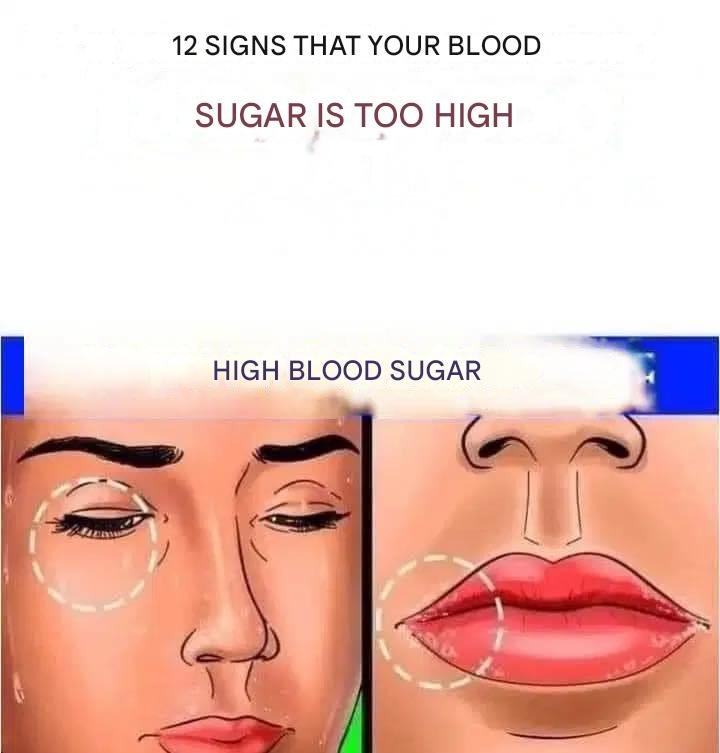
12 Signs That Your Blood Sugar Is Too High
Introduction
High blood sugar, medically known as Hyperglycemia, occurs when there is too much glucose in the bloodstream. It is most commonly associated with diabetes, but it can also happen in people who are undiagnosed or under stress, illness, or poor diet control.
Recognizing the early warning signs is essential to prevent serious complications.
1. Frequent Urination
Excess sugar in the blood forces the kidneys to work harder, leading to increased urination, especially at night.
2. Excessive Thirst
As your body loses fluids through frequent urination, you may feel constantly thirsty, even after drinking water.
3. Constant Hunger
Despite eating regularly, your cells may not be getting enough glucose for energy, leading to persistent hunger.
4. Fatigue and Weakness
When your body cannot properly use glucose, energy levels drop, causing tiredness and lack of strength.
5. Blurred Vision
High blood sugar can affect the lenses of your eyes, leading to temporary vision problems or blurred sight.
6. Slow Healing Wounds
Cuts, infections, and sores may take longer to heal due to poor circulation and weakened immune response.
7. Frequent Infections
High blood sugar creates an environment where bacteria and fungi thrive, increasing the risk of infections, especially in the skin and urinary tract.
8. Dry Mouth and Skin
Dehydration caused by fluid loss can lead to dry mouth and itchy or flaky skin.
9. Tingling or Numbness in Hands and Feet
Prolonged high blood sugar can damage nerves, leading to sensations like tingling, burning, or numbness.
10. Unexplained Weight Loss
In some cases, especially with uncontrolled diabetes, the body starts breaking down fat and muscle for energy, causing sudden weight loss.
11. Headaches and Difficulty Concentrating
Fluctuating glucose levels can affect brain function, leading to headaches, confusion, or trouble focusing.
12. Fruity-Smelling Breath
In severe cases, high blood sugar can lead to a dangerous condition called Diabetic Ketoacidosis. One of its warning signs is breath that smells sweet or fruity.
When to Seek Medical Help
Seek immediate care if you experience:
- Persistent high blood sugar readings
- Vomiting or abdominal pain
- Rapid breathing
- Confusion or drowsiness
These may indicate a serious complication.
Final Thoughts
High blood sugar is not always obvious at first, but your body often sends clear signals when something is wrong. Paying attention to these signs and acting early can prevent long-term complications and protect your overall health.