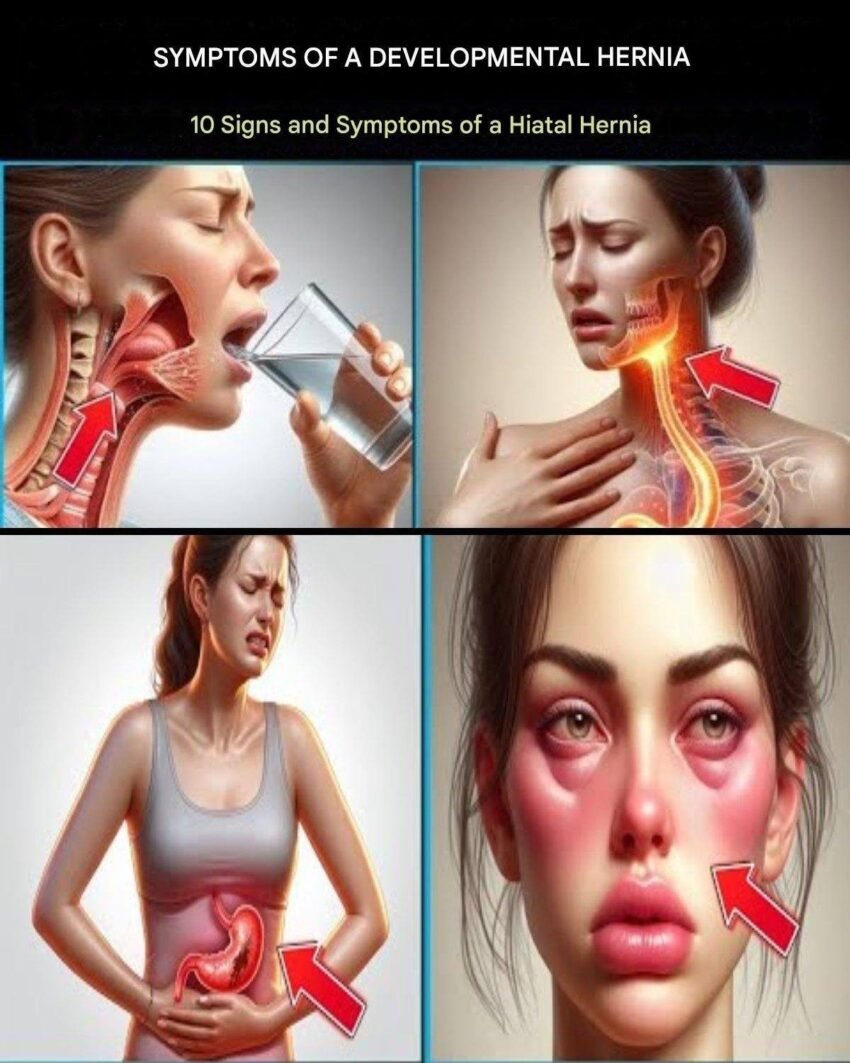
A hiatal hernia happens when part of the stomach pushes up through the diaphragm into the chest area. Many people have it without knowing, but when symptoms occur, they are usually related to acid reflux and digestion.
Here are 10 common signs and symptoms of hiatal hernia:
1) Heartburn (most common symptom)
A burning feeling in the chest, especially after eating or when lying down.
2) Acid reflux
Stomach acid moving back into the throat, causing a sour or bitter taste.
3) Chest discomfort or pain
Can feel similar to heart-related pain, especially after heavy meals.
4) Difficulty swallowing
Feeling like food is stuck in the throat or chest.
5) Frequent burping or belching
Increased gas and pressure in the upper stomach.
6) Bloating after eating
Feeling full or swollen in the upper abdomen.
7) Nausea
Sometimes especially after large meals.
8) Regurgitation
Food or liquid coming back up into the mouth.
9) Shortness of breath (in larger hernias)
Pressure on the diaphragm can make breathing feel uncomfortable.
10) Worse symptoms when lying down or bending
Symptoms often increase at night or after bending over.
Important note
Many of these symptoms overlap with GERD (acid reflux disease), and not everyone with a hiatal hernia has symptoms.
When to see a doctor
Seek medical help if you have:
- Severe or persistent chest pain
- Difficulty swallowing food
- Vomiting blood or black stools
- Unexplained weight loss
Simple lifestyle tips that help
- Eat smaller meals
- Avoid lying down right after eating
- Reduce spicy, fatty, and acidic foods
- Elevate head while sleeping
- Maintain a healthy weight
If you want, I can also explain how hiatal hernia is diagnosed and treated (medication vs surgery) or how to manage it naturally at home.