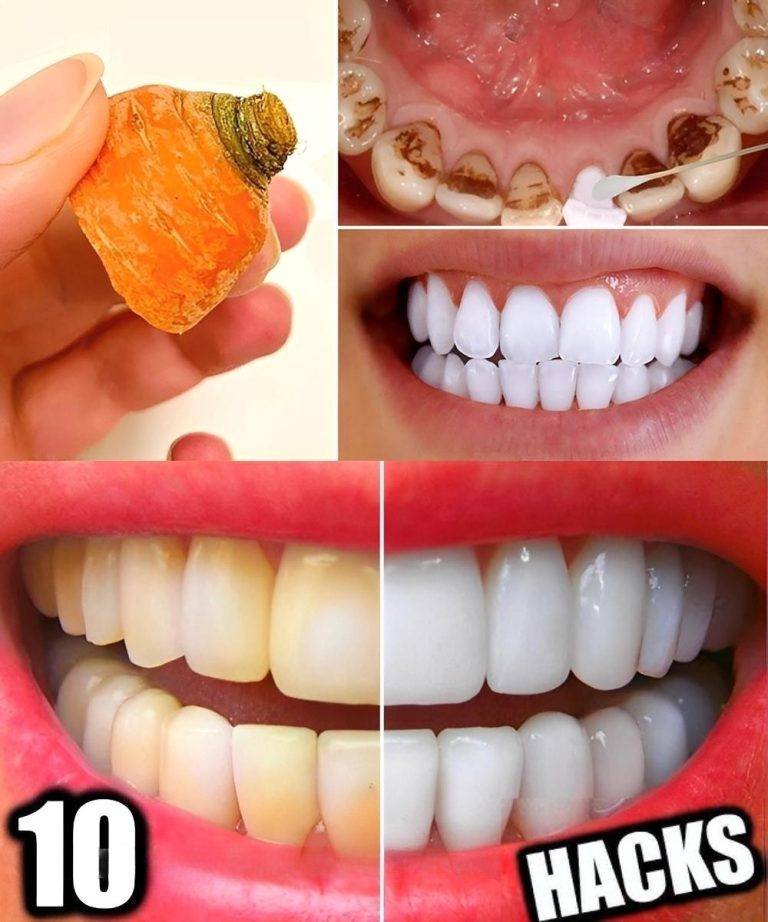
10 Natural “Hacks” to Whiten Teeth at Home — What Actually Works (and What Doesn’t)
Introduction
Teeth whitening is one of the most searched “home remedy” topics online. Many claims suggest you can whiten teeth dramatically in just a few days. In reality, true enamel whitening is slow and limited without professional treatment.
Some home methods can reduce surface stains, but they do not truly bleach enamel like dental treatments do.
Below are 10 commonly mentioned natural methods, along with what science actually says about them.
1. Baking soda brushing
Baking soda is mildly abrasive and can remove surface stains.
How it works:
- Helps scrub off plaque and stains
Limitations:
- Does not change tooth color internally
- Overuse can damage enamel
2. Hydrogen peroxide rinse (low concentration)
Often used in diluted form in mouth rinses.
Effect:
- Light surface stain reduction
- Mild whitening over time
Caution:
- Should be properly diluted
- Overuse can irritate gums
3. Oil pulling (coconut oil)
Swishing oil in the mouth is an ancient practice.
Effect:
- May reduce bacteria and plaque
- Slight improvement in cleanliness
Reality:
- No strong evidence of true whitening
4. Activated charcoal
Promoted as a stain remover.
Effect:
- May remove some surface discoloration
Risk:
- Can be abrasive and wear enamel if used often
5. Apple cider vinegar (very diluted)
Sometimes used for stain removal.
Effect:
- Acid may help remove stains temporarily
Risk:
- Highly acidic and can erode enamel
6. Strawberries and baking soda mix
Contains malic acid (mild stain remover).
Effect:
- Minimal and temporary
Reality:
- Not a reliable whitening method
7. Brushing after coffee/tea
Prevents new stains from setting.
Effect:
- Helps maintain whiter appearance over time
Best practice:
- Rinse mouth with water first before brushing
8. Eating crunchy fruits and vegetables
Foods like apples and carrots can help clean teeth mechanically.
Effect:
- Mild plaque removal
- Supports oral hygiene
9. Good oral hygiene routine
The most effective “natural” method.
Includes:
- brushing twice daily
- flossing
- fluoride toothpaste
Effect:
- Prevents new stains and buildup
10. Avoiding staining foods and drinks
Common culprits:
- coffee
- tea
- red wine
- smoking or tobacco
Effect:
- Prevents yellowing over time
Important reality check
- No natural method can safely whiten teeth significantly in 3 days
- Most “instant whitening hacks” only remove surface stains
- True whitening requires either dental treatments or time + consistent hygiene
What actually works fastest (dentist-supported options)
- Professional whitening treatments
- Whitening toothpaste (gradual effect)
- Dentist-prescribed gels or strips
Conclusion
Home remedies can help improve brightness slightly by removing surface stains, but they do not deliver dramatic whitening in a few days. The safest and most effective approach is consistent oral hygiene combined with professional dental care when needed.
If you want, I can also show you a safe 7-day routine to noticeably improve tooth brightness without damaging enamel.