1. Diet and Beverages:
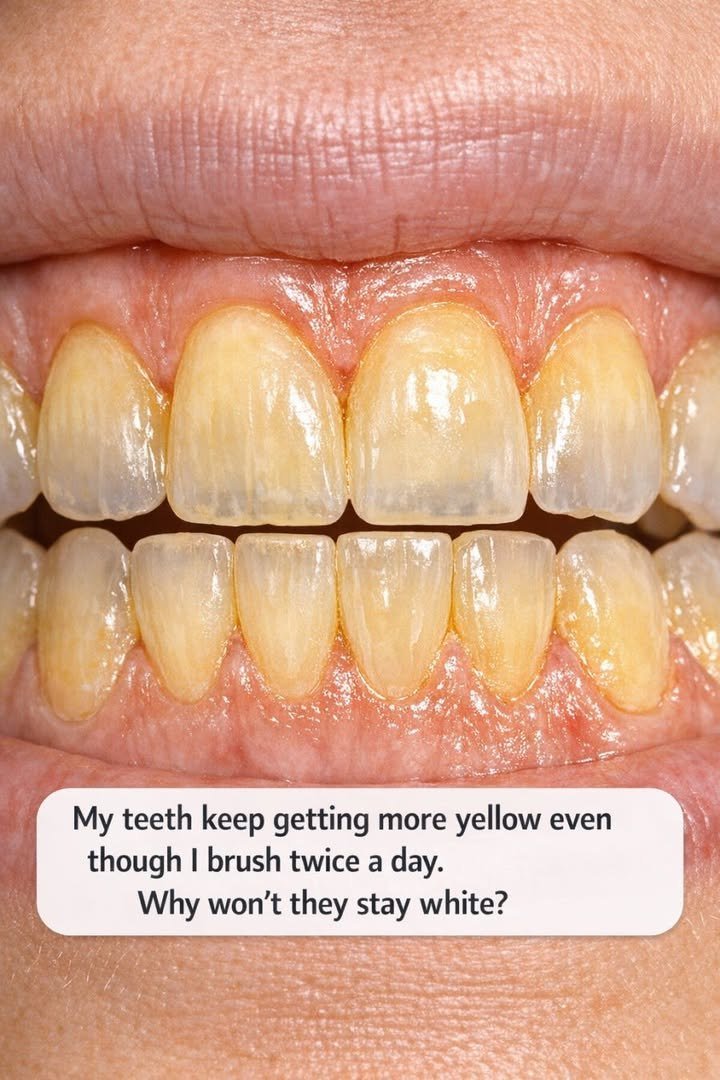
Some foods and drinks can stain your teeth over time. Even if you brush regularly, these substances can contribute to the yellowing of your teeth.
- Coffee, tea, red wine, and soda: These beverages contain compounds like tannins and chromogens that can cling to your teeth and cause stains.
- Curry, tomato-based sauces, or berries: Some foods, especially those rich in pigments, can also cause staining.
Solution:
- Try to reduce consumption of staining foods and beverages. Drink through a straw to minimize contact with your teeth, and rinse your mouth with water after consuming them.
- Whitening toothpaste: Look for a toothpaste with mild abrasives or a whitening formula to help lift surface stains. However, be cautious not to overuse abrasive toothpaste, as it could wear down enamel over time.
2. Aging and Enamel Wear:
As we age, the enamel (the outer layer of your teeth) naturally wears down, exposing the yellowish dentin underneath. Even if you’re brushing regularly, enamel erosion is a natural part of the aging process.
Solution:
- Enamel-repair toothpaste: Some toothpaste products claim to help remineralize or protect enamel. These can be beneficial for slowing down enamel wear.
- Professional teeth whitening: A dentist can provide professional whitening treatments that can penetrate deeper into the tooth to brighten them.
3. Poor Brushing Technique or Toothbrush:
Sometimes, even brushing twice a day may not be enough if your technique isn’t thorough, or if you’re using an ineffective toothbrush.
- Hard toothbrush bristles: Using a toothbrush with bristles that are too hard could damage your enamel and lead to yellowing.
- Improper brushing technique: If you’re not brushing for at least 2 minutes, or not reaching all surfaces of your teeth, you may leave behind plaque and food particles that cause staining.
Solution:
- Switch to a soft-bristled toothbrush and make sure to brush for at least 2 minutes. Consider using an electric toothbrush for a more effective clean.
- Brush all surfaces of your teeth, including the back and the chewing surfaces, and gently massage your gums.
4. Plaque and Tartar Build-Up:
If you’re brushing regularly but still notice yellowing, there could be plaque (a sticky film of bacteria) or tartar (hardened plaque) on your teeth. Plaque can cause a yellowish appearance, and once it hardens into tartar, it can only be removed by a dentist.
Solution:
- Regular dental cleanings: Even with great brushing habits, plaque and tartar can build up over time. It’s important to visit the dentist every 6 months for a professional cleaning.
5. Genetics:
Some people are genetically predisposed to have teeth that are naturally more yellow, due to thicker or more pigmented dentin. In these cases, even with perfect dental care, it may be harder to achieve a completely white smile.
Solution:
- If your natural tooth color is on the yellower side, you might consider professional whitening treatments for a brighter smile.
6. Medications and Medical Conditions:
Certain medications can cause tooth discoloration, especially antibiotics like tetracycline, which can cause yellow or brown staining. Medical conditions such as acid reflux or dry mouth can also contribute to yellowing teeth by reducing saliva flow or increasing acid exposure.
Solution:
- If you believe your medication is causing tooth discoloration, talk to your doctor about possible alternatives or whether teeth whitening treatments are safe for you.
7. Smoking or Tobacco Use:
If you smoke or use tobacco, the tar and nicotine can easily stain your teeth, even if you brush regularly. Over time, tobacco stains can turn your teeth a deep yellow or even brown.
Solution:
- Quit smoking or using tobacco: The best way to prevent staining from tobacco is to stop using it. If you’re looking for teeth-whitening options, consider professional whitening treatments.
8. Overuse of Whitening Products:
While whitening toothpaste or over-the-counter whitening strips can help, overusing them can sometimes cause your teeth to become more sensitive or even lead to discoloration due to enamel damage.
Solution:
- Use whitening products sparingly, and always follow the instructions carefully. If you want to whiten your teeth more effectively, consider professional treatments by a dentist, who can guide you on the best options.
What You Can Do to Prevent Yellowing:
- Drink plenty of water: Rinsing your mouth with water after meals can help wash away food particles and reduce staining.
- Chew sugar-free gum: This stimulates saliva production, which helps protect your teeth from staining and decay.
- Eat teeth-friendly foods: Foods like apples, carrots, and celery can help naturally clean your teeth and reduce plaque buildup.
- Consider professional teeth whitening: If over-the-counter options aren’t giving you the results you want, a dentist-administered whitening treatment can offer more effective results.
Conclusion:
If your teeth keep getting more yellow despite brushing twice a day, the cause could range from dietary choices to natural aging processes. It’s important to look at your overall oral care routine, diet, and health conditions. If the problem persists, it may be worth visiting your dentist for a thorough checkup and professional cleaning or whitening options.
A combination of good brushing habits, regular professional cleanings, and proper whitening techniques can help you maintain a bright smile!