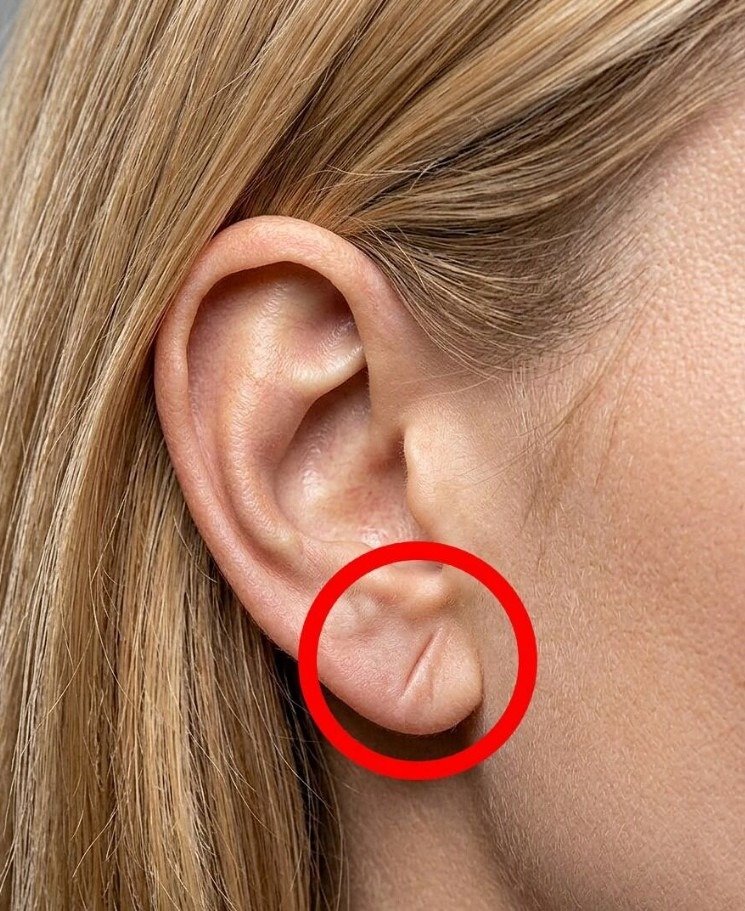
“If this sign appears in your ear, it is a warning that you have cancer…” are typically designed to create alarm and get clicks. They usually refer to a vague physical feature that is then exaggerated into a serious diagnosis.
Below is a clear explanation of what such claims are usually referring to and what the medical evidence actually says.
What the “Ear Sign” Usually Refers To
Most of these articles are talking about a diagonal crease on the earlobe, often called Frank’s sign.
This is a line that runs diagonally across the earlobe and has been studied in relation to certain health conditions.
It is important to understand that it is not a diagnosis tool.
What Medical Research Actually Suggests
Some studies have found a possible association between earlobe creases and cardiovascular problems. These include:
- Coronary artery disease
- Atherosclerosis (narrowing of arteries)
However:
- The connection is not consistent across all studies
- Many people with the crease never develop heart disease
- Many people with heart disease do not have the crease
So it is considered a possible correlation, not a cause or reliable warning sign.
Does It Mean Cancer?
There is no strong scientific evidence linking an ear crease or similar ear changes directly to cancer.
Cancer diagnosis requires:
- Imaging tests
- Blood tests
- Biopsy (in some cases)
Not visual signs alone.
So claims suggesting an ear sign “means cancer” are misleading.
Why These Claims Spread Online
Articles like this often:
- Simplify complex medical research
- Ignore uncertainty in scientific studies
- Turn weak correlations into dramatic warnings
This creates fear but not useful medical insight.
When an Ear Change Should Be Checked
While most ear creases are harmless, you should consult a doctor if you notice:
- Sudden pain or swelling
- Discharge or bleeding
- A growing lump or lesion
- Hearing loss or persistent ringing
These symptoms matter far more than cosmetic crease patterns.
Conclusion
A crease or visible change in the ear is not a reliable warning sign of cancer or any single disease.
At most, some studies suggest a weak association between certain ear creases and heart disease risk, but it is not diagnostic and should never be used alone to judge health.
If you are concerned about any physical change, the only meaningful step is a proper medical evaluation—not viral headlines.