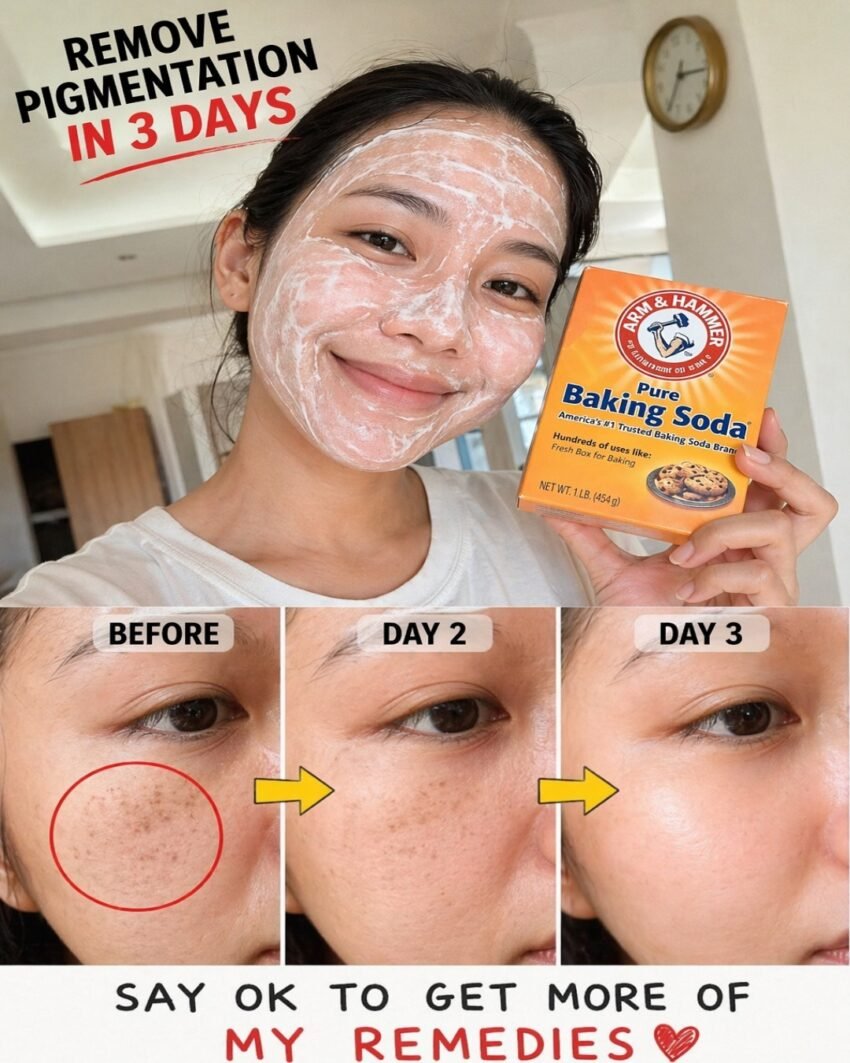
Here’s what science and skin specialists generally say about it.
🧪 What baking soda does on skin
Baking soda (Sodium bicarbonate) is:
- strongly alkaline (high pH ~8–9)
- mildly abrasive (can act like a scrub)
- able to absorb oils and reduce surface acidity
That sounds useful, but your skin is designed to be slightly acidic.
🧴 Possible short-term “benefits”
Some people report temporary improvements:
1. Oil reduction
It can absorb surface oil, making skin feel “cleaner.”
2. Mild exfoliation
Its grainy texture may remove dead skin cells.
3. Odor control
Because it neutralizes acids, it can reduce body odor temporarily.
⚠️ Hidden risks dermatologists warn about
1. Disrupts skin barrier
Healthy skin has a protective “acid mantle” (pH ~4.5–5.5). Baking soda raises pH, which can:
- weaken the skin barrier
- increase dryness and irritation
2. Causes dryness and flaking
Frequent use strips natural oils, leading to:
- tightness
- peeling
- sensitivity
3. Can trigger irritation or burning
Especially on:
- sensitive skin
- broken or acne-prone skin
- face and underarms
4. May worsen acne or eczema
Because it disrupts the barrier, it can aggravate conditions like:
- eczema
- rosacea
- inflammatory acne
5. Not microbiome-friendly
Your skin has a natural microbiome that protects against infection. High pH can disturb this balance.
🧠 Dermatology consensus
Most dermatologists agree:
- occasional accidental use is not dangerous
- regular use on face or body is not recommended
In other words: it’s more of a “DIY hack with trade-offs” than a true skincare treatment.
🧭 Safer alternatives
Depending on what people use it for:
- Oil control → salicylic acid or gentle cleansers
- Exfoliation → lactic acid or mild enzyme exfoliants
- Odor control → aluminum-free deodorants or clinical antiperspirants
- Brightening → niacinamide or vitamin C
🚫 Bottom line
Baking soda can give a temporary “clean” feeling, but it often comes at the cost of skin barrier damage. For occasional use it’s usually fine, but as a skincare routine it’s not recommended by dermatologists.
If you want, I can break down which natural skincare trends are actually evidence-based vs internet myths—there are a lot of surprises in that list.