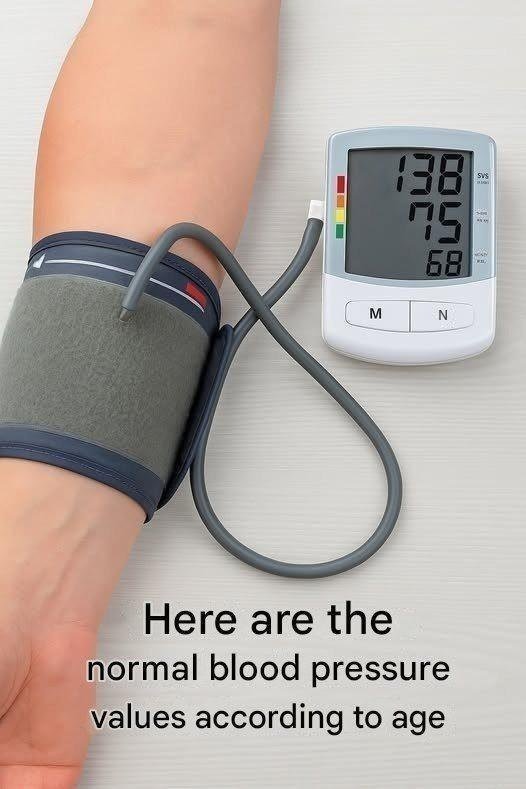
Normal Blood Pressure Values According to Age
Blood pressure refers to the force of blood pushing against the walls of the arteries. It is recorded as two numbers:
- Systolic (top number): Pressure when the heart beats
- Diastolic (bottom number): Pressure when the heart rests
It is measured in mmHg (millimeters of mercury).
Below are general normal blood pressure ranges by age group. These are average guidelines and may vary slightly depending on health organizations and individual conditions.
Infants (0–12 months)
- Normal range: 70–100 / 50–65 mmHg
Blood pressure is naturally low in babies because their circulatory system is still developing.
Toddlers (1–5 years)
- Normal range: 80–110 / 50–80 mmHg
BP gradually increases as the child grows.
Children (6–12 years)
- Normal range: 90–120 / 55–80 mmHg
At this stage, values begin approaching adult levels.
Teenagers (13–18 years)
- Normal range: 100–120 / 60–80 mmHg
By late teens, blood pressure is usually similar to adults.
Adults (18–59 years)
- Normal range: 90–120 / 60–80 mmHg
A typical healthy reading is considered around 120/80 mmHg or lower.
- Elevated: 120–129 / less than 80
- High blood pressure (hypertension): 130/80 mmHg or higher
Older Adults (60+ years)
- Normal range: around 110–130 / 60–80 mmHg
Slightly higher systolic pressure is common with aging due to stiffer arteries, but consistently high readings should be checked.
Important Notes
- One reading is not enough for diagnosis; multiple readings are needed.
- Blood pressure varies throughout the day (stress, activity, diet, medication).
- “Normal” can differ slightly depending on individual health conditions.
When to Seek Medical Advice
You should consult a healthcare professional if:
- Blood pressure is consistently above 140/90 mmHg
- You experience dizziness, chest pain, or shortness of breath
- There is a sudden drop in blood pressure with fainting
Conclusion
Normal blood pressure changes with age, but for most adults, staying close to 120/80 mmHg is considered healthy. Regular monitoring helps prevent complications like heart disease and stroke.
If you want, I can also make a simple chart image-style guide or explain how to lower high blood pressure naturally.