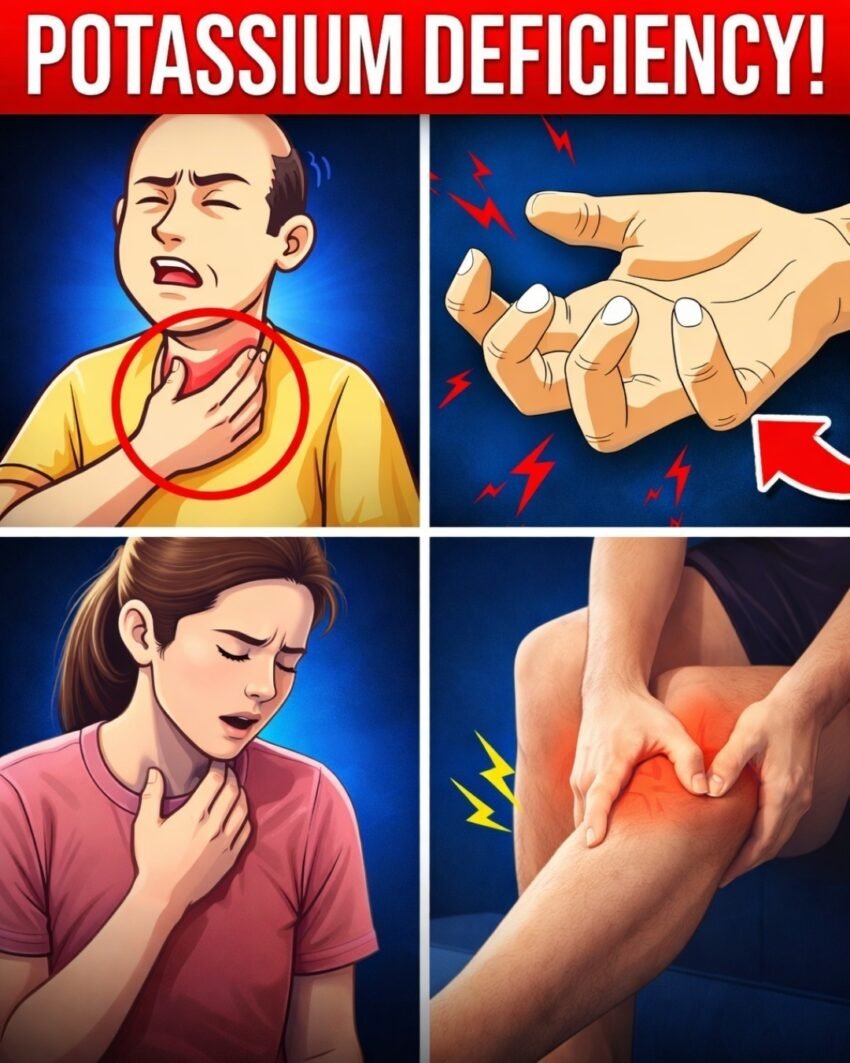
Low potassium is called Hypokalemia. It can be serious—but you cannot diagnose it reliably just from a list of symptoms, because many of them are non-specific and overlap with other conditions.
What potassium actually does
Potassium is an essential electrolyte that helps with:
- muscle contraction (including the heart)
- nerve signaling
- fluid balance
Possible signs of low potassium (real but non-specific)
Mild to moderate symptoms
- muscle weakness
- fatigue
- muscle cramps or twitching
- constipation
- feeling “off” or low energy
More serious symptoms (need medical attention)
- heart palpitations or irregular heartbeat
- significant muscle paralysis or severe weakness
- fainting or severe dizziness
In severe cases, Hypokalemia can affect heart rhythm, which is why it is medically important.
Important reality check
Those “11 warning signs” videos are misleading because:
- None of these symptoms are specific to potassium deficiency
- Fatigue, cramps, or weakness can come from dehydration, magnesium deficiency, stress, or many illnesses
- You cannot confirm potassium levels without a blood test
Common real causes of low potassium
Doctors usually look for:
- vomiting or diarrhea
- diuretic medications (“water pills”)
- poor dietary intake (less common alone)
- kidney issues
- hormonal imbalances
How it is actually diagnosed
Only a blood test can confirm Hypokalemia. Sometimes an ECG is also used if heart symptoms are present.
Safe correction (when needed)
Treatment depends on severity:
- dietary potassium (bananas, beans, potatoes, spinach)
- oral supplements (doctor-guided)
- IV potassium in hospital (severe cases only)
Bottom line
The symptoms listed in these videos are too general to mean potassium deficiency on their own. True Hypokalemia is confirmed by testing, not symptom checklists.
If you want, I can show you:
- foods with real potassium content ranked
- or how potassium, magnesium, and sodium imbalance often get confused (this is very common).