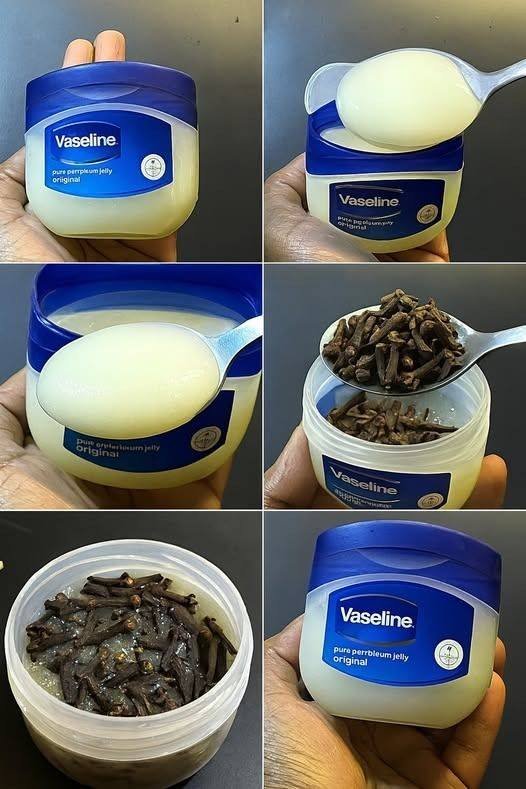
Let’s break down the ingredients and how they are commonly used:
1. Cloves: A Natural Remedy
Cloves are often used for oral care, particularly in traditional medicine. They contain eugenol, a compound that has antiseptic and pain-relieving properties. Cloves are sometimes recommended for alleviating tooth pain, particularly in cases of toothache, and they can also be used to reduce bacteria in the mouth.
Common Uses:
- Tooth pain: Applying clove oil directly to the painful area can temporarily relieve discomfort due to its numbing effect.
- Antiseptic properties: Cloves have natural antibacterial properties, making them useful in homemade mouthwashes or oral hygiene remedies.
- Freshening breath: Chewing on whole cloves can help with bad breath.
2. Petroleum Jelly: A Skin Protectant
Petroleum jelly (also known as Vaseline) is a well-known skin protectant. It forms a barrier on the skin to help lock in moisture and prevent further irritation. However, it is generally used for external skin care, such as treating dry skin, minor burns, and cuts.
Common Uses:
- Moisturizing dry skin: Helps lock in moisture and prevent chafing.
- Soothing minor burns or cuts: Acts as a barrier to keep the wound moist and reduce scabbing.
- Protecting skin from harsh elements: Often used in cold weather to prevent chapped skin.
3. What Happens When You Mix Cloves with Petroleum Jelly?
Some people claim that mixing cloves with petroleum jelly has benefits, like relieving tooth pain, soothing irritated skin, or even promoting a fresh-smelling mouth. Here’s a look at potential uses:
Potential Benefits:
- Topical application for tooth pain: Some people suggest mixing clove powder with petroleum jelly and applying it to the gums for toothache relief. While clove oil itself can numb pain, the petroleum jelly would create a barrier, potentially making the clove oil more effective by keeping it in place longer. However, this might not be the best method for oral health, as petroleum jelly is not meant to be ingested or used inside the mouth.
- Moisturizing skin with antiseptic properties: If applied to the skin, the mixture could help soothe minor skin irritations, and the antibacterial properties of cloves might aid in preventing infection in minor cuts or abrasions.
Risks to Consider:
- Not for oral use: Petroleum jelly is not meant for internal use. If used inside the mouth or near the gums, it could pose health risks, particularly if swallowed or absorbed. It is always important to exercise caution when applying substances to areas that are not specifically intended for such use.
- Cloves and skin irritation: Although cloves have beneficial properties, they can also cause irritation in sensitive skin. It’s a good idea to test a small amount on your skin first to ensure you don’t have an adverse reaction.
4. When Should You Use This Remedy?
If you’re thinking about trying this at home, here are a few things to keep in mind:
- For tooth pain: If you’re experiencing a toothache, applying clove oil directly (without petroleum jelly) might be a better, more straightforward solution. You can also find clove oil in many pharmacies or health stores.
- For skin irritation: Mixing cloves with petroleum jelly could potentially help with small, external skin irritations, but be cautious. Always test for irritation first and avoid using on open wounds.
5. Conclusion
While cloves and petroleum jelly might have individual benefits, mixing them together should be done with care. For oral care, there are more effective, safer methods, such as using clove oil directly on the affected area, rather than petroleum jelly, which is not designed for internal use.
Always consult with a healthcare professional or dentist before trying unconventional remedies, especially when it comes to sensitive areas like your mouth or gums.
Would you like to know more about safe, natural remedies for oral health or skin care?