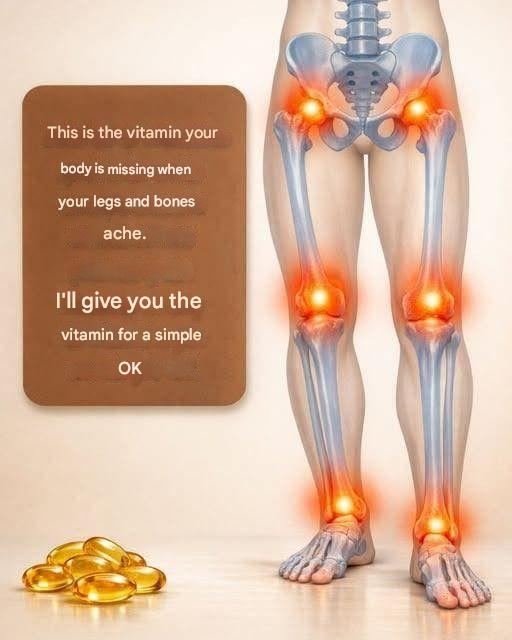
If you’re experiencing leg and bone pain, it could be due to a vitamin deficiency, and one common culprit is Vitamin D. Vitamin D plays a crucial role in bone health and muscle function, and a lack of it can lead to muscle weakness, joint pain, and bone-related issues.
Why Vitamin D is Important for Your Bones and Muscles
- Bone Health: Vitamin D helps your body absorb calcium, which is essential for strong bones. Without enough Vitamin D, your bones can become weak and more prone to fractures or conditions like osteoporosis.
- Muscle Function: Vitamin D also supports muscle function. A deficiency can cause muscle weakness and pain, particularly in the legs, hips, and lower back.
Signs You Might Be Lacking Vitamin D:
- Bone and Joint Pain: Pain or discomfort, particularly in the legs, hips, or lower back, is a common sign of Vitamin D deficiency.
- Fatigue and Weakness: Chronic tiredness and muscle weakness can occur if you don’t have enough Vitamin D.
- Frequent Illnesses: Vitamin D supports the immune system, so a deficiency could make you more prone to colds or infections.
- Mood Changes: Low Vitamin D has been linked to depression and mood swings.
- Difficulty Walking or Standing: Severe deficiency can cause issues with movement or balance.
How to Get More Vitamin D:
- Sunlight: Your skin produces Vitamin D when exposed to sunlight. Spending about 10-30 minutes outside each day can help boost your levels, depending on your skin type and location.
- Food Sources: Some foods are rich in Vitamin D, including:
- Fatty fish (like salmon, mackerel, and sardines)
- Egg yolks
- Fortified foods (such as fortified milk, orange juice, and cereals)
- Mushrooms exposed to UV light
- Supplements: If you’re unable to get enough Vitamin D from sunlight or food, supplements can help. It’s best to check with a doctor before taking supplements, as too much Vitamin D can be harmful.
Other Vitamins That Can Help with Bone and Muscle Pain:
- Vitamin C: Essential for collagen formation and bone health, Vitamin C helps with tissue repair and prevents pain caused by weak bones.
- Magnesium: This mineral supports muscle and bone health and can help reduce muscle cramps or spasms.
- Calcium: Works with Vitamin D to support strong bones.
When to See a Doctor
If you suspect you have a Vitamin D deficiency, it’s a good idea to consult a healthcare professional. A blood test can confirm the deficiency, and your doctor can recommend the best course of action, whether through dietary changes, sunlight exposure, or supplements.
Conclusion
If your legs and bones are hurting, Vitamin D could be the missing link. Ensuring you’re getting enough of this essential nutrient can help relieve pain, strengthen bones, and support muscle function. Whether through sun exposure, diet, or supplements, maintaining healthy Vitamin D levels is crucial for overall bone and muscle health.