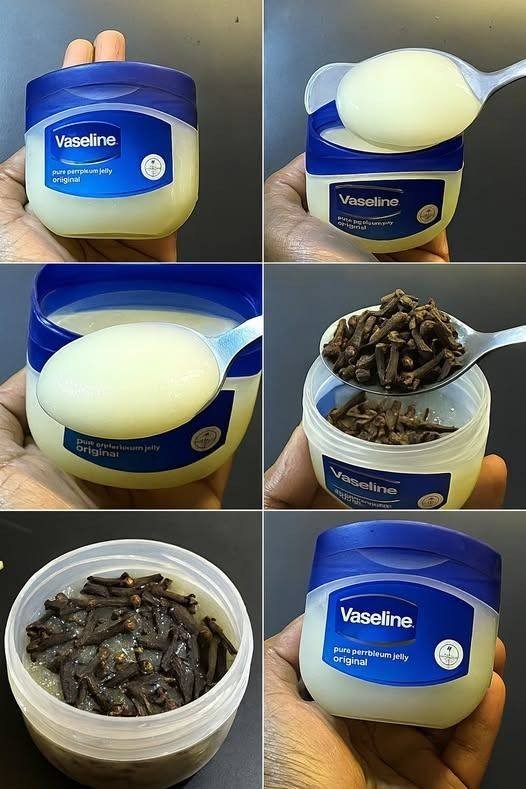
Here’s the grounded science.
🌿🧴 What the mixture actually is
- Cloves contain eugenol (a potent aromatic compound with mild antiseptic and analgesic effects)
- Petroleum jelly (Petroleum jelly) is an occlusive moisturizer that locks water into the skin
So you’re essentially mixing:
- a biologically active spice extract
- with a barrier-forming ointment
👍 Possible (limited) benefits
1. Temporary soothing effect
Clove oil components (especially eugenol) can create a mild numbing sensation. That’s why cloves are sometimes used in dental pain remedies.
2. Occlusive hydration
Petroleum jelly helps prevent water loss, which can:
- soften dry skin
- support healing of minor cracks
3. Mild antimicrobial activity
Clove compounds may inhibit some microbes in lab settings—but that doesn’t automatically translate into safe or effective skincare use.
⚠️ Real risks people ignore
1. Skin irritation or burning
Clove is a strong essential oil component, not meant for undiluted skin use. It can cause:
- redness
- burning sensation
- contact dermatitis
2. Allergic reactions
Some people develop sensitivity to eugenol after repeated exposure.
3. Not safe for acne or facial use
Petroleum jelly is generally safe, but combining it with irritants can:
- trap irritants against the skin
- worsen breakouts in some people
4. No standardized dosage
DIY mixing = unpredictable concentration. That’s a major issue in dermatology.
🧠 What dermatologists would say
- Petroleum jelly alone is medically useful for dryness and wound protection
- Clove oil is not recommended for routine skin application without dilution and guidance
- Mixing them at home is not a recognized or evidence-based treatment
🚫 Bottom line
This is not a “secret skincare hack.” It’s a DIY mixture that:
- may feel soothing briefly
- but carries a real risk of irritation
- and has no proven long-term skin benefits
🧭 Safer alternatives depending on goal
- Dry skin → plain petroleum jelly or ceramide creams
- Acne → salicylic acid or benzoyl peroxide
- Anti-inflammatory soothing → niacinamide or aloe-based formulations
If you want, I can go through other viral “natural hacks” and separate what actually works vs what only feels like it works—there are a lot of myths like this floating around.