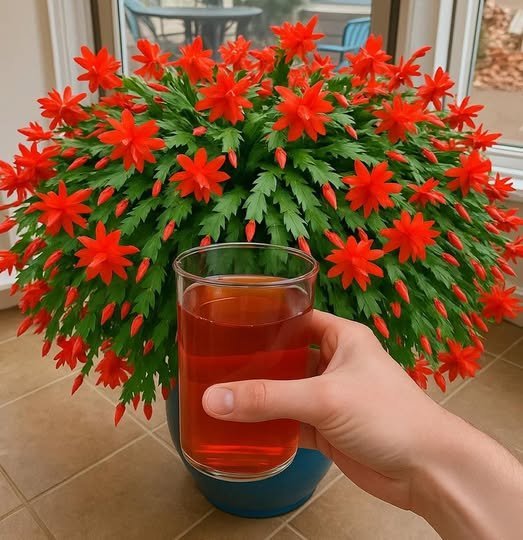
A Christmas cactus (Schlumbergera) is naturally a seasonal bloomer, so the idea of getting it to bloom “year-round” goes against its biology. However, you can extend flowering periods and encourage multiple blooming cycles with the right conditions. The key is understanding what actually triggers blooms: light cycles, temperature changes, and stress balance.
Here are the most effective, science-based tricks gardeners use.
🌗 1. Control light like a “season switch”
The biggest bloom trigger is short-day conditions.
To stimulate flowering:
- Give 12–14 hours of complete darkness daily for 6–8 weeks
- Avoid even small light exposure at night (streetlights can disrupt it)
- During the day, provide bright but indirect light
This mimics winter conditions, which is what tells the plant to form buds.
🌡️ 2. Use cooler temperatures to trigger buds
Schlumbergera sets buds best when nights are cool.
Ideal range:
- 10–15°C at night
- 18–21°C during the day
Warm indoor conditions year-round are one of the main reasons plants refuse to rebloom.
🚫 3. Don’t overwater (this is a common mistake)
These are epiphytes, not desert cacti.
Watering rules:
- Water when the top 2–3 cm of soil is dry
- Reduce watering slightly before bloom period
- Never let roots sit in water
Too much water = leafy growth, not flowers.
🌿 4. “Mild stress” encourages flowering
Slight stress signals reproduction in plants.
Helpful stressors:
- Slightly tighter pot (root-bound conditions)
- Reduced nitrogen fertilizer before blooming season
- Consistent but not excessive care (avoid overfeeding)
Important: stress should be controlled, not extreme.
🌱 5. Fertilize correctly (timing matters more than amount)
To encourage blooms:
- Use a balanced or low-nitrogen fertilizer (e.g., 5-10-10) during spring/summer
- Stop fertilizing about 4–6 weeks before expected bloom induction
Too much nitrogen = lots of green growth, fewer flowers.
✂️ 6. Prune after flowering (this is underrated)
Pruning helps branching, and more branches = more flower tips next season.
- Trim 1–2 segments off each stem after blooming
- Don’t prune during bud formation (you’ll remove future flowers)
🌸 7. Rotate bloom cycles (the realistic “year-round” trick)
You can’t force continuous flowering, but you can stagger blooms:
- Keep multiple plants in different light cycles
- Induce blooming at different times (early vs late fall trigger)
- This creates an “always blooming” effect in a collection
⚠️ What doesn’t work (despite internet claims)
- Constant fertilizer boosting → reduces blooms
- Frequent repotting → delays flowering
- Artificial grow lights 24/7 → prevents bud formation
- “Special blooming sprays” → mostly marketing, not biology-based
🧭 Bottom line
You can’t realistically make a single Christmas cactus bloom all year, because its flowering is tied to seasonal light and temperature cues. But you can:
- reliably trigger blooms multiple times per year in ideal conditions
- extend bloom duration
- or stagger multiple plants for continuous color
If you want, I can give you a step-by-step “8-week bloom induction schedule” that gardeners use to time flowers precisely for holidays or events.