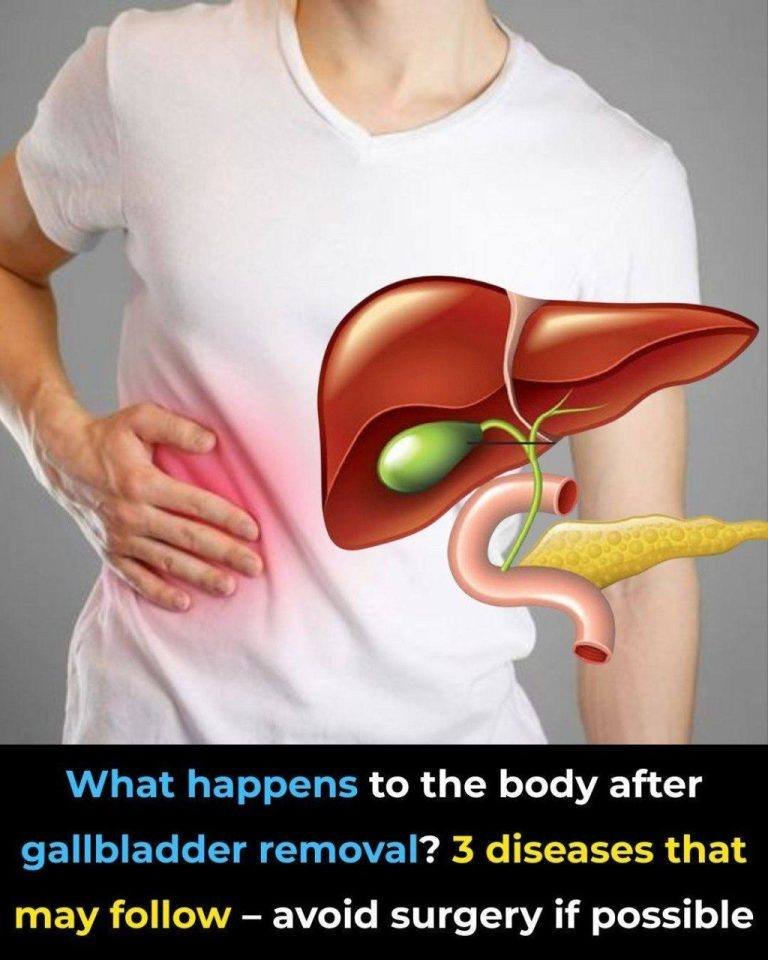
What Happens to the Body After Gallbladder Removal?
Understanding the Real Effects and Risks
The headline you shared leans toward fear-based messaging. While Cholecystectomy does change how your body handles bile, it is generally a safe and common procedure. Many people live normal, healthy lives without a gallbladder.
How the Body Changes After Gallbladder Removal
The gallbladder’s main job is to store and concentrate bile, a fluid that helps digest fats. After removal:
- The liver still produces bile
- Instead of being stored, bile flows continuously into the small intestine
- Fat digestion still occurs, but sometimes less efficiently
Some people notice temporary digestive changes, while others feel no difference at all.
Common Short-Term Effects
After surgery, it’s normal to experience:
- Mild diarrhea
- Bloating or gas
- Difficulty digesting fatty meals
These symptoms usually improve over time as the body adapts.
3 Conditions That May Develop (But Are Not Guaranteed)
1. Postcholecystectomy Syndrome
A small percentage of people continue to have symptoms like abdominal pain, bloating, or diarrhea.
Reality: This is often manageable with diet changes or medication.
2. Bile Reflux
Without a gallbladder, bile may occasionally flow back into the stomach.
Reality: This is less common than acid reflux and can usually be treated.
3. Chronic Diarrhea
Continuous bile flow can irritate the intestines in some individuals.
Reality: Typically mild and controllable through diet (e.g., reducing fatty foods).
Should You Avoid Surgery If Possible?
Not necessarily. Surgery is often recommended when there are serious issues like:
- Painful gallstones
- Infection or inflammation
- Blocked bile ducts
Delaying needed treatment can lead to complications such as pancreatitis or severe infection.
That said, if symptoms are mild, doctors may suggest non-surgical options first, such as dietary changes or medication.
When Surgery Is the Right Choice
A Cholecystectomy is typically advised when:
- Symptoms are frequent or severe
- Complications are likely or already present
- Quality of life is significantly affected
In these cases, the benefits of surgery usually outweigh the risks.
Bottom Line
The claim that gallbladder removal inevitably leads to serious disease is misleading. While some people experience digestive changes, most adapt well and remain healthy. Surgery should not be avoided out of fear alone—it should be based on medical need and professional advice.
If you’re considering this procedure, discussing your specific condition with a healthcare provider is the safest way to decide.