Let’s break it down so you can see what’s real and what’s marketing-style exaggeration.
The claim being made
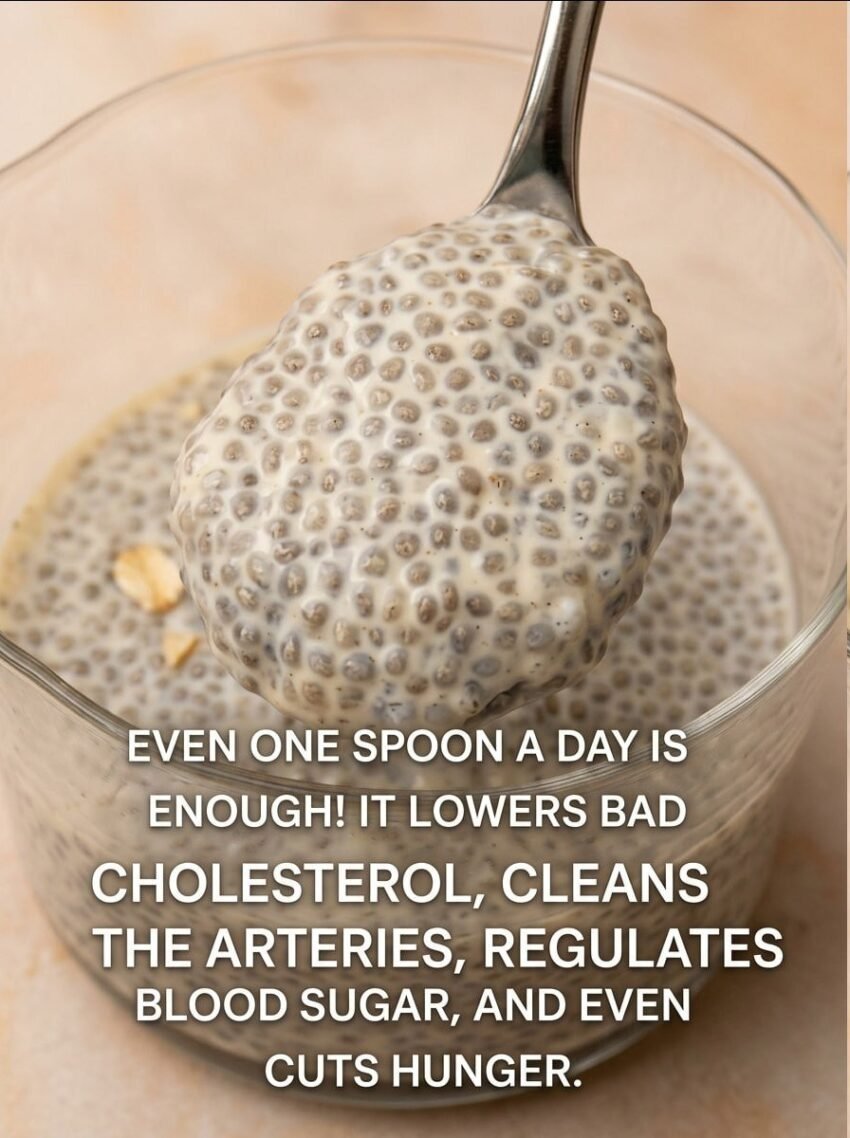
“One spoonful a day lowers bad cholesterol, cleans arteries, regulates blood sugar, and suppresses hunger”
This is typically used for oils, seeds, or herbal mixtures online—but it combines multiple health claims that require very different, long-term biological effects.
1. “Lowers bad cholesterol”
Some foods can modestly improve cholesterol, for example:
- Soluble fiber (oats, psyllium)
- Nuts and seeds
- Olive oil in a balanced diet
But:
- The effect is gradual and small per serving
- It does not happen instantly from one spoonful
- It works only as part of an overall diet pattern
2. “Cleans arteries”
This is a misleading phrase.
Arteries are not “cleaned out” by food. What actually happens is:
- Long-term diet changes may reduce cholesterol buildup risk
- Inflammation may be lowered over time
- Plaque already formed is not simply washed away
So the idea of a single ingredient “cleaning arteries” is not medically accurate.
3. “Regulates blood sugar”
Some foods can help with glucose control, especially if they contain:
- Fiber
- Healthy fats
- Protein
For example:
- Chia seeds
- Flaxseed
- Nuts
But:
- They help modulate spikes, not “regulate blood sugar” on their own
- They are not a replacement for diabetes management
4. “Suppresses hunger”
This part is partially true depending on the food.
Foods high in:
- Fat (like oils or nut butters)
- Fiber (like seeds or oats)
can increase fullness temporarily.
But:
- The effect is short-term
- It depends on the rest of your meal
- It does not cause meaningful long-term appetite control by itself
The bigger issue with claims like this
These statements usually:
- Take small real effects and exaggerate them
- Ignore diet context and portion size
- Suggest a “shortcut” instead of lifestyle change
That’s not how metabolism or cardiovascular health works.
What actually works (evidence-based)
For cholesterol, blood sugar, and appetite:
- Consistent fiber intake (vegetables, legumes, whole grains)
- Regular physical activity
- Balanced protein intake
- Healthy fat sources (olive oil, nuts, fish)
- Weight management if needed
Bottom line
There is no single spoonful of any ingredient that can:
- Clean arteries
- Dramatically lower cholesterol
- Regulate blood sugar
- Control hunger long-term
Real health improvements come from consistent dietary patterns over time, not one daily “miracle” dose.
If you want, tell me what ingredient this claim was referring to, and I can explain its real effects specifically and honestly.