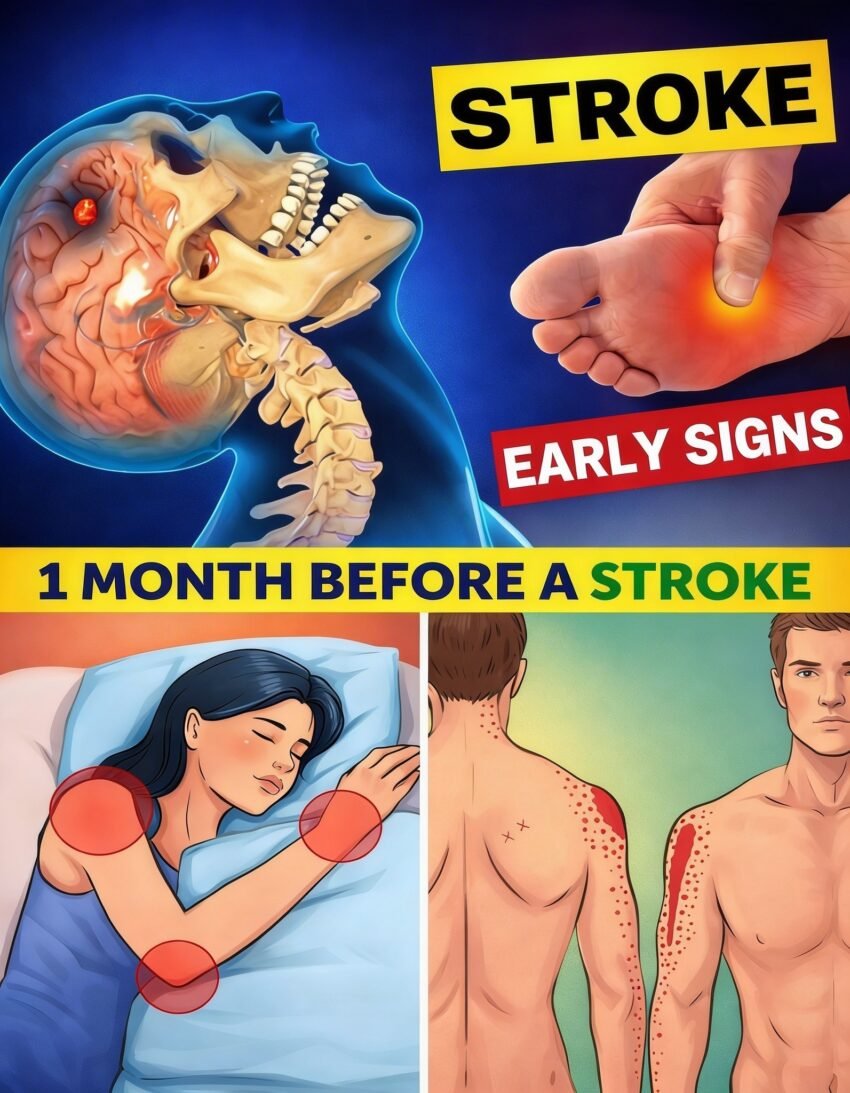
A stroke is a medical emergency, and it usually happens suddenly. However, some people experience warning signs days or weeks before, often due to a mini-stroke (transient ischemic attack, TIA) or reduced blood flow to the brain.
Stroke
Below are 8 warning signs that may appear before a stroke and 9 proven ways to reduce your risk.
⚠️ 8 Warning Signs That May Appear Before a Stroke
1. Sudden numbness or weakness
- Especially in the face, arm, or leg
- Often on one side of the body
2. Temporary speech problems
- Slurred speech
- Trouble finding words
- Difficulty understanding others
3. Brief vision problems
- Blurred vision
- Loss of vision in one or both eyes
- “Curtain-like” vision loss
4. Sudden dizziness or loss of balance
- Feeling unsteady while walking
- Difficulty coordinating movements
5. Severe or unusual headache
- Sudden, intense headache with no clear cause
- Sometimes described as “worst headache”
6. Confusion or mental fog
- Difficulty concentrating
- Sudden disorientation
7. Tingling sensations
- Pins-and-needles feeling in face, arm, or leg
- Especially if one-sided
8. Short-lasting episodes (TIA signs)
- Symptoms appear suddenly and disappear within minutes or hours
- This is a major warning signal that a full stroke risk is high
🚨 Important reality
These symptoms don’t always appear a full month before.
They often happen hours to days before, especially in the form of a TIA. Any of them should be treated seriously.
🛡️ 9 Tips to Help Prevent Stroke
1. Control blood pressure
- The #1 risk factor
- Aim for healthy levels through diet, exercise, and medication if needed
2. Manage blood sugar
- Prevent or control diabetes
- Avoid long-term blood vessel damage
3. Lower cholesterol
- Reduce fatty plaque buildup in arteries
- Eat more fiber (vegetables, oats, fruits)
4. Stay physically active
- At least 30 minutes of walking or light exercise daily
- Improves circulation and heart health
5. Eat a heart-healthy diet
- More fruits, vegetables, whole grains
- Less salt, sugar, and saturated fats
6. Quit smoking
- Smoking damages blood vessels and increases clot risk
7. Limit alcohol
- Excess alcohol increases blood pressure and stroke risk
8. Maintain a healthy weight
- Reduces strain on heart and blood vessels
9. Manage stress and sleep
- Chronic stress raises blood pressure
- Poor sleep increases cardiovascular risk
🧠 Simple takeaway
- Stroke warning signs often involve sudden changes in speech, vision, strength, or balance
- Even brief or disappearing symptoms can be serious
- Prevention focuses heavily on blood pressure, lifestyle, and circulation health
If you want, I can also give you a simple “FAST test” guide to recognize stroke instantly or a daily routine to lower stroke risk after age 50–70.