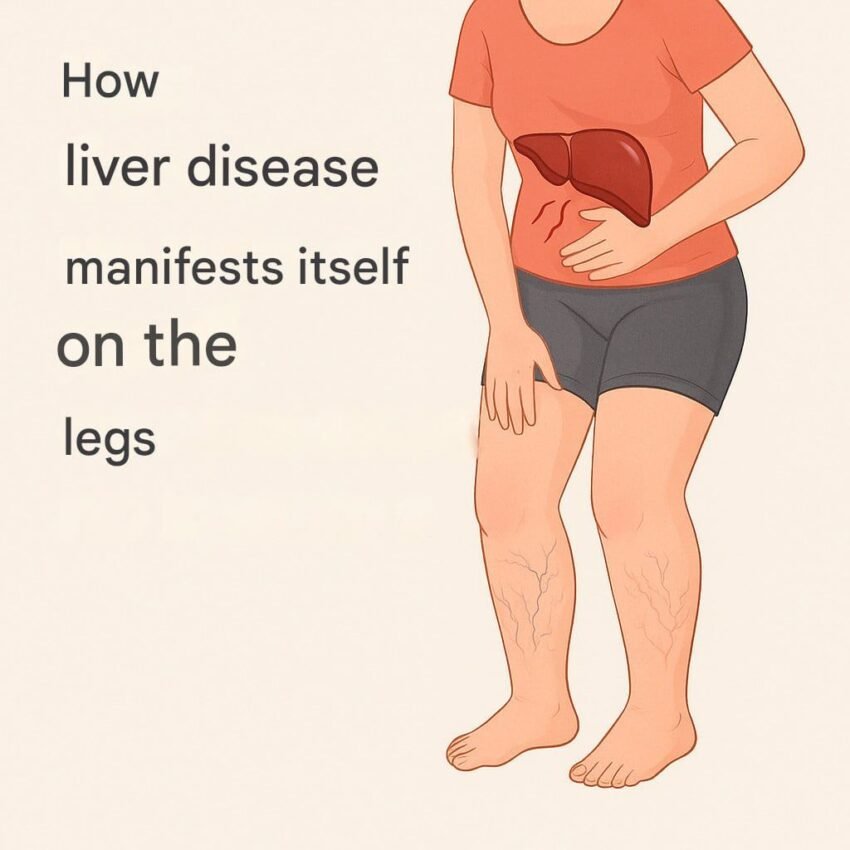
Here are 5 ways your legs might signal liver trouble:
1. Swelling in legs and ankles
Persistent puffiness (especially by evening) can be due to fluid buildup.
- Often linked to advanced liver problems like Cirrhosis
- Why it happens: The liver can’t make enough proteins (like albumin), so fluid leaks into tissues
- What to do: Reduce salt, elevate legs, and get medical evaluation
2. Severe itching (especially lower legs)
Unexplained itching without a rash can point to bile flow problems.
- Seen in conditions like Cholestasis
- Why it happens: Bile salts build up in the bloodstream
- What to do: Don’t ignore persistent itching—this often needs lab testing
3. Easy bruising on legs
Bruises appearing from minor bumps (or no clear cause) can signal clotting issues.
- The liver produces clotting factors—damage affects this
- What to do: Check liver function and avoid unnecessary blood thinners unless prescribed
4. Muscle wasting (thin, weak legs)
Legs may become noticeably thinner and weaker over time.
- Common in chronic liver disease and malnutrition
- What to do: Nutritional support, protein intake, and supervised exercise
5. Restless legs or cramps at night
Frequent cramps or an urge to move the legs can be associated with toxin buildup.
- Sometimes seen in liver dysfunction affecting metabolism
- What to do: Hydration, mineral balance, and medical review
Other red flags to watch with these
If leg symptoms come with:
- Yellowing of eyes/skin (jaundice)
- Dark urine or pale stools
- Fatigue, nausea, or loss of appetite
…it’s more urgent to get checked.
Bottom line
Your legs can hint at liver issues, but they’re just part of the picture. Conditions like Cirrhosis or Cholestasis need proper diagnosis with blood tests and imaging—not guesswork.
If you’re noticing any of these signs, it’s worth getting evaluated early—liver problems are much easier to manage when caught sooner.