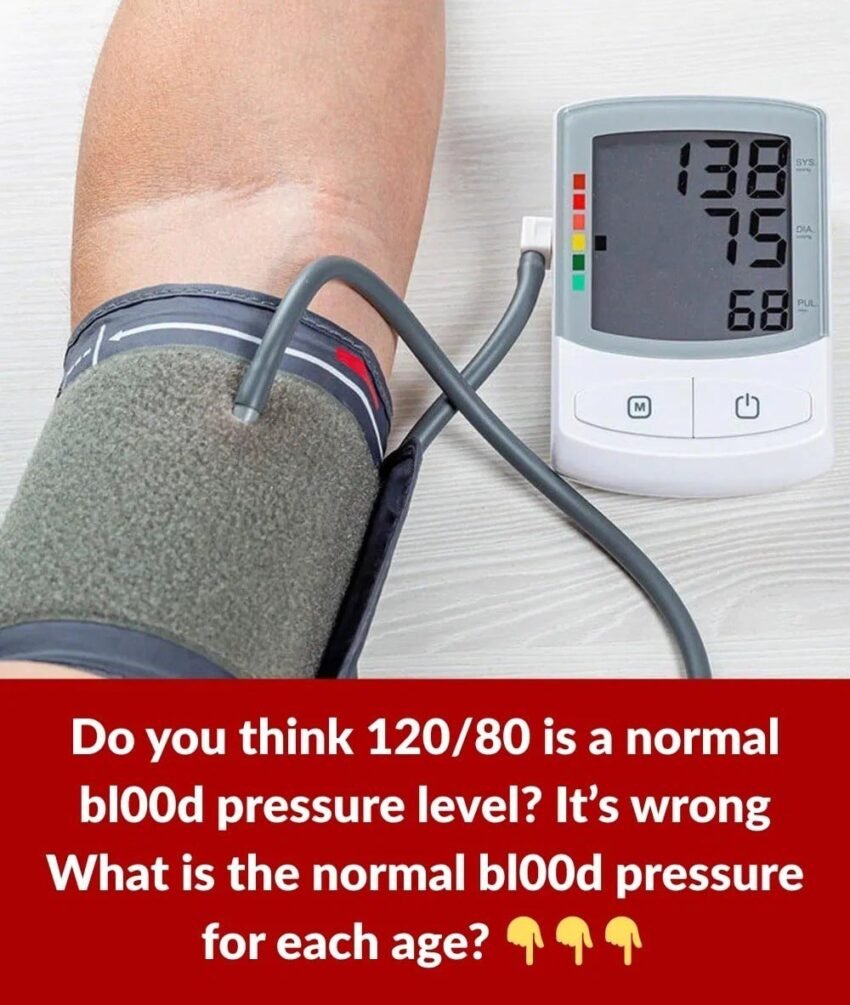
The idea that “everyone has made this mistake” is just attention-grabbing wording. Blood pressure isn’t usually defined as a completely different “normal” for every age—rather, there’s a general healthy range for adults, with only small shifts in children and older adults.
The key condition to understand here is Hypertension, which is when pressure stays consistently above healthy levels.
What Is Normal Blood Pressure?
Blood pressure is written as:
- Systolic (top number): pressure when the heart beats
- Diastolic (bottom number): pressure when the heart rests
General Adult Range
- Normal: below 120/80 mmHg
- Elevated: 120–129 / below 80
- High (Hypertension): 130/80 or higher Hypertension
This standard is used for most adults regardless of age.
Blood Pressure by Age (Typical Ranges)
Children
- Varies significantly with height and age
- Rough guide:
- 1–5 years: ~80–110 / 50–80
- 6–12 years: ~90–120 / 60–80
Children are not diagnosed using fixed adult numbers.
Teenagers (13–19)
- Around: 100–125 / 60–80
- Closer to adult ranges as they mature
Adults (20–59)
- Ideal: below 120/80
- Many healthy adults naturally fall between:
- 110–130 systolic
- 70–85 diastolic
Older Adults (60+)
- Often slightly higher due to artery stiffness:
- Common range: 120–140 / 70–90
- However, doctors still aim to keep it below 130/80 if possible depending on health
Important Reality Check
- There is no “safe high blood pressure by age” that should be ignored
- Age can slightly shift averages, but it does not make high blood pressure normal
- Risk of Hypertension increases with age, but it still requires management
When Blood Pressure Becomes Dangerous
Seek medical advice if:
- Consistently above 140/90
- Sudden spikes above 180/120
- Symptoms like headache, chest pain, dizziness, or vision changes
Bottom Line
- “Normal” blood pressure for most people is around 120/80 or lower
- Small variations exist with age, especially in children and older adults
- But high blood pressure is never something to ignore as “normal aging”
If you want, I can also explain how to lower blood pressure naturally or how to measure it correctly at home.