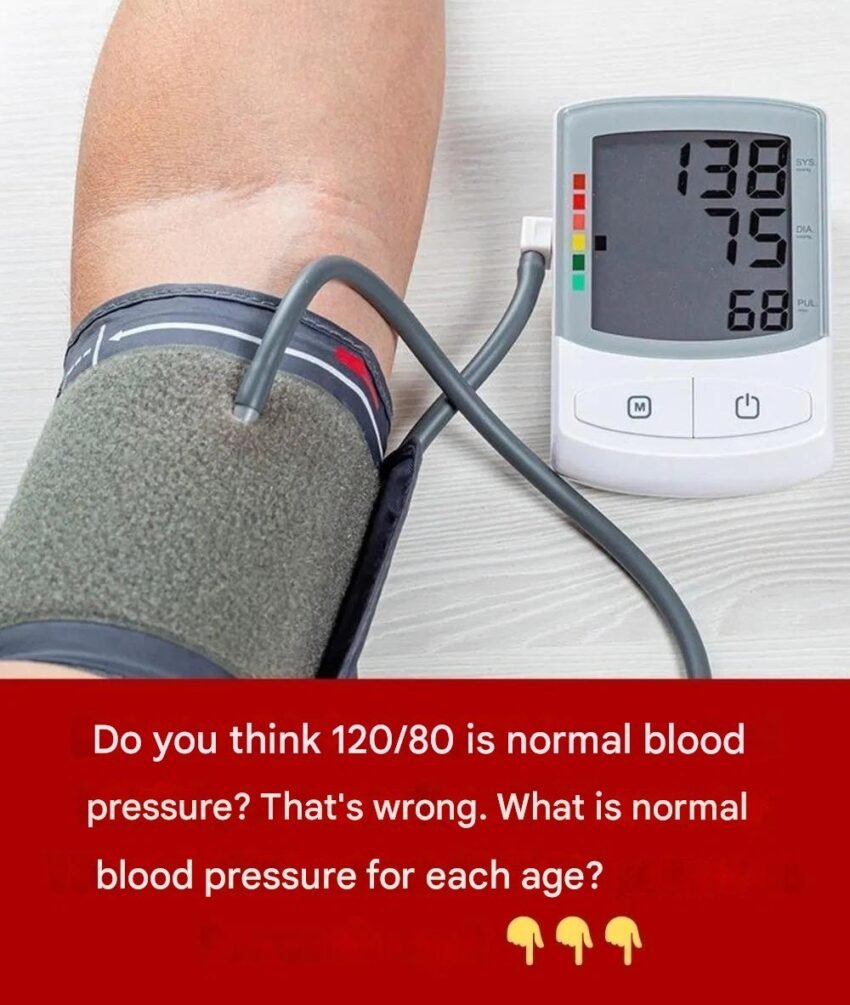
Blood pressure isn’t strictly “one normal number per age,” especially in adults. Modern guidelines mostly use the same target ranges for adults, while children use age/height percentiles.
Here’s a clear breakdown:
🧑⚕️ Adults (18+ years)
Most guidelines (e.g., American Heart Association) use:
- Normal: less than 120/80 mmHg
- Elevated: 120–129 / less than 80
- High blood pressure (Stage 1): 130–139 / 80–89
- High blood pressure (Stage 2): 140+ / 90+
- Hypertensive crisis: 180+/120+ (urgent)
👉 Key point: Normal does NOT increase with age anymore in modern medicine.
👶 Children & teens (approximate ranges)
For kids, “normal” depends on age, sex, and height percentiles, but general averages are:
Infants (0–12 months)
- ~70–100 / 50–65 mmHg
Toddlers (1–5 years)
- ~90–105 / 55–70 mmHg
School-age (6–12 years)
- ~95–110 / 60–75 mmHg
Teenagers (13–17 years)
- ~105–120 / 65–80 mmHg
🧓 Older adults (65+)
- Still considered normal: <120/80
- Many doctors accept slightly higher readings depending on health:
- Sometimes up to 130–139 systolic may be tolerated in frail older adults
But generally:
- Lower is not automatically better if it causes dizziness or falls
⚠️ Important reality check
- Blood pressure naturally fluctuates during the day (stress, caffeine, activity)
- A diagnosis of hypertension is not based on one reading
- Repeated measurements over time are required
👍 Simple takeaway
- Adults: ideal is ~120/80 or lower
- Kids: varies by age (higher in older children, lower in infants)
- “Normal BP increases with age” → outdated idea
If you want, I can also tell you:
- how to measure BP correctly at home
- or what causes sudden high readings even in healthy people