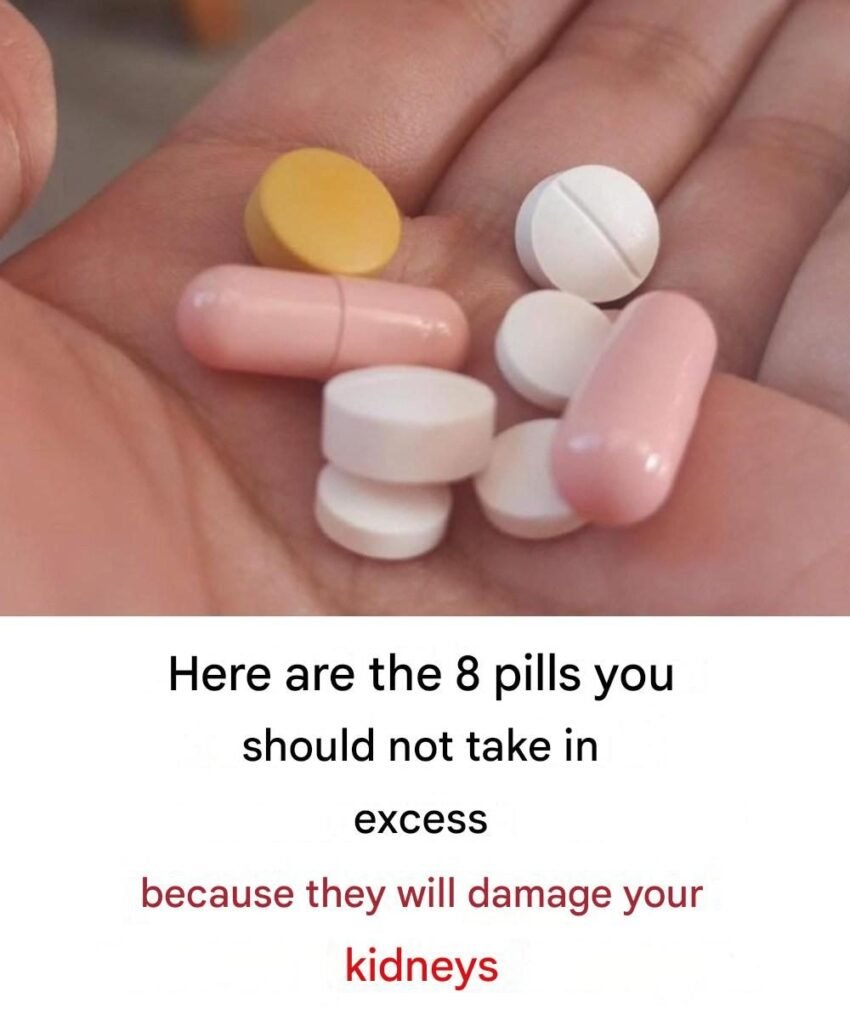
The idea of “eight pills you should never take” is a bit alarmist. Many medicines can affect the kidneys if misused, taken in high doses, or used in people with existing kidney problems—but they are often safe when used correctly under medical guidance.What matters is dose, duration, and your individual risk (age, dehydration, diabetes, blood pressure, existing kidney disease).Here are 8 types of medications that can potentially harm the kidneys if not used carefully:
💊 1. NSAIDs (common painkillers)
Examples:
- Ibuprofen
- Diclofenac
Risks:
- Reduce blood flow to the kidneys
- Higher risk with dehydration, older age, or long-term use
💊 2. Certain antibiotics
Examples:
- Gentamicin
- Vancomycin
Risks:
- Can be directly toxic to kidney cells (especially at high doses)
💊 3. Proton pump inhibitors (PPIs)
Examples:
- Omeprazole
Risks:
- Long-term use linked to kidney inflammation and possible chronic issues
💊 4. Some blood pressure meds (in specific situations)
Examples:
- Lisinopril
Risks:
- Usually protective—but can affect kidney function if dehydrated or combined with other drugs
💊 5. Diuretics (“water pills”)
Examples:
- Furosemide
Risks:
- Can cause dehydration and electrolyte imbalance, stressing kidneys
💊 6. Contrast dyes (used in scans)
Not a pill, but important:
- Used in CT scans or angiography
Risks:
- Can temporarily or sometimes permanently affect kidney function
💊 7. Lithium (psychiatric medication)
Examples:
- Lithium
Risks:
- Long-term use can affect kidney function if not monitored
💊 8. Certain antiviral drugs
Examples:
- Acyclovir
Risks:
- Can crystallize in kidneys if hydration is poor
⚠️ Important reality check
These medications are not “bad” or banned:
- Many are life-saving or essential
- Problems usually happen with overuse, high doses, or lack of monitoring
A key condition related to medication-related harm is Acute kidney injury.
🧠 How to protect your kidneys
- Stay well hydrated
- Avoid mixing medications without advice
- Don’t overuse painkillers
- Get regular blood tests if on long-term meds
- Tell your doctor about all drugs and supplements
🧾 Bottom line
There aren’t “8 pills you should never take,” but there are medications that require caution—especially if you have kidney risks. Used properly, most are safe and beneficial.
If you want, I can check your specific medications and tell you if they pose any kidney risk.