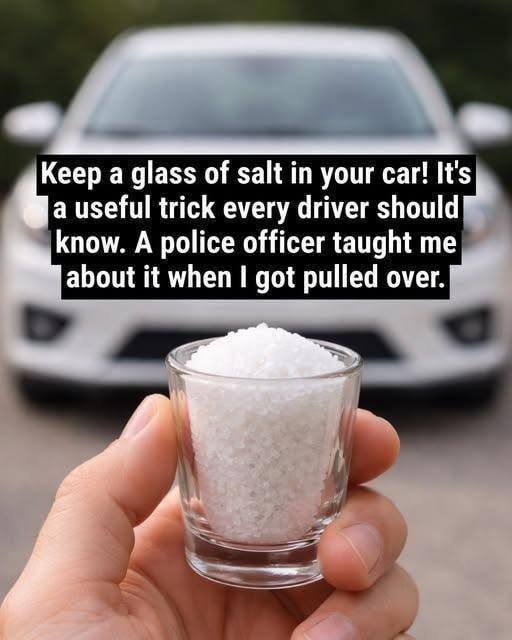
That “keep a glass of salt in your car” story is one of those viral tips that sounds clever, but it’s usually misleading or exaggerated. There is no general driving safety or police-recommended need to keep an open glass of salt in your car.
What people usually claim it does vs reality:
🧂 Common claims (and what’s actually true)
1. “Prevents fog on windows”
- ❌ Not reliably true
- Salt does not safely prevent windshield fog
- Better solutions: air conditioning, defrost setting, or proper anti-fog products
2. “Absorbs moisture in the car”
- ⚠️ Partly true but impractical
- Salt can absorb some moisture in controlled setups
- But an open glass can spill, attract pests, and corrode surfaces
Safer alternatives:
- Silica gel packs
- Commercial moisture absorbers
3. “Helps in emergencies (ice, traction, etc.)”
- ❌ Not useful inside the car
- Salt only helps on external icy surfaces when spread on roads—not stored in a cup inside a vehicle
⚠️ Why this is not a good idea
Keeping open salt in your car can:
- Spill and damage interior surfaces
- Absorb moisture unevenly and become useless
- Create a mess or attract dust and pests
🚗 What actually helps drivers
Better, evidence-based items to keep in your car:
- Spare water bottle
- Phone charger
- First aid kit
- Tire inflator or sealant
- Emergency flashlight
- Reflective triangle
🧠 Bottom line
The idea that a police officer “taught a salt trick” is likely a misinterpreted or exaggerated viral story. Salt is useful in many ways—but not as a general in-car safety hack.
If you want, I can share real police-recommended car safety hacks that actually work in emergencies—those are much more useful and practical.