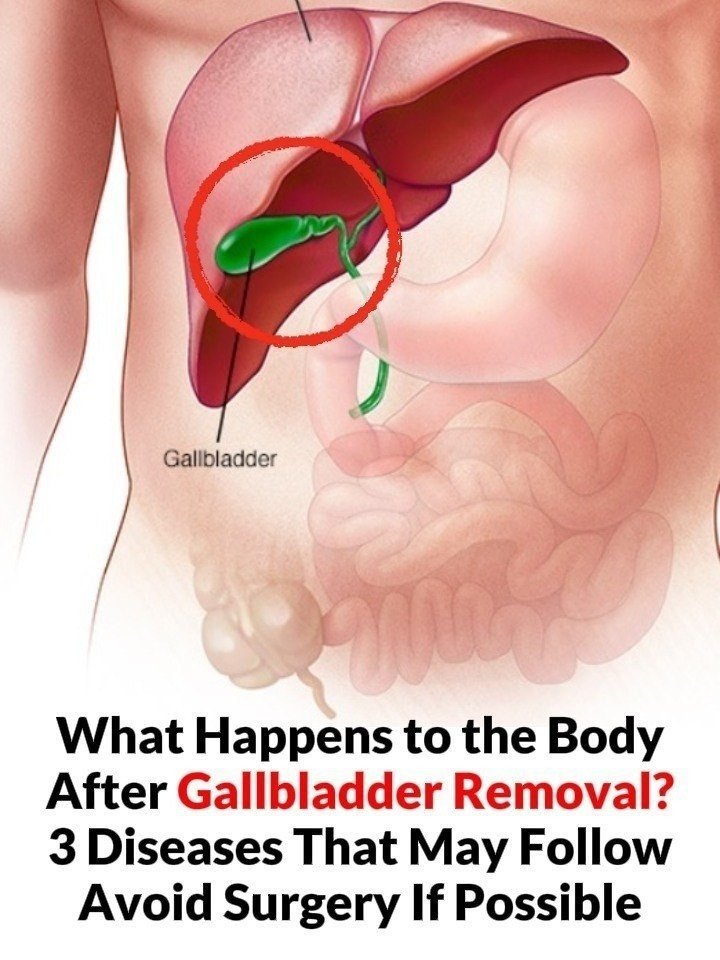
Here are 3 conditions that can occur after gallbladder removal:
1) Postcholecystectomy diarrhea
Some people develop:
- Frequent loose stools
- Urgency after eating (especially fatty meals)
- Bloating or cramping
This happens because bile flows directly into the intestines, which can irritate the bowel.
It often improves over time or with dietary adjustments.
2) Bile reflux gastritis
Instead of just stomach acid, bile flows backward into the stomach.
Possible symptoms:
- Burning upper abdominal pain
- Nausea or vomiting (sometimes bile-colored)
- Bitter taste in the mouth
- Ongoing indigestion
This is less common but can be persistent in some individuals.
3) Postcholecystectomy syndrome
This is a broad term describing ongoing symptoms after surgery, which may include:
- Abdominal pain
- Indigestion
- Gas and bloating
- Nausea
- Fatty food intolerance
Sometimes it’s due to bile flow changes, but in other cases it may be from:
- Small bile duct stones
- Sphincter of Oddi dysfunction
- Other digestive issues unrelated to the gallbladder itself
🧠 Important reassurance
Most people do not develop serious long-term problems after surgery. The body usually adapts well within weeks to months.
🥗 Helpful habits after gallbladder removal
- Eat smaller, more frequent meals
- Limit very fatty or fried foods early on
- Gradually reintroduce fats
- Stay hydrated
- Add fiber slowly to reduce diarrhea
🚨 When to see a doctor
- Persistent severe abdominal pain
- Jaundice (yellow skin/eyes)
- Ongoing diarrhea that doesn’t improve
- Fever or worsening symptoms
🧾 Bottom line
After gallbladder removal, most issues are related to how bile flows continuously into the gut, and the three main concerns are:
- Diarrhea
- Bile reflux
- Ongoing digestive discomfort
If you want, I can also explain:
- What foods are best after gallbladder surgery
- Or how long digestion usually takes to normalize
- Or signs something more serious (like bile duct issues) might be going on