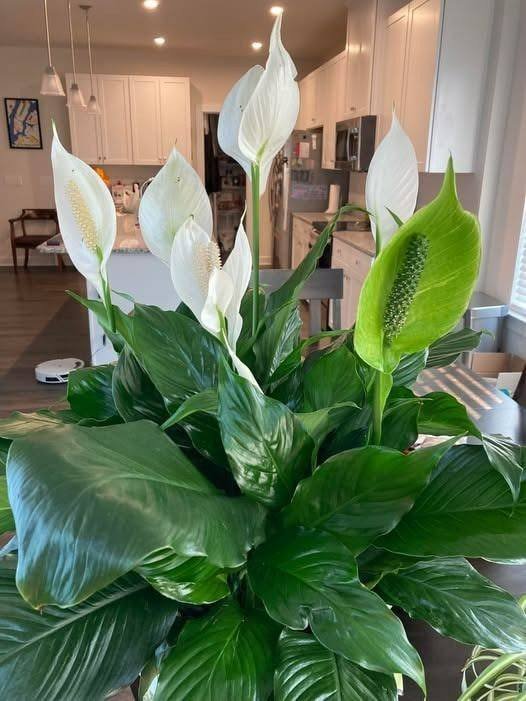
A Peace Lily can be a bit dramatic—it will grow leaves happily, but flowers only show up when its conditions are just right. If you want more blooms, it’s less about tricks and more about dialing in a few key basics.
Here’s how to get your peace lily flowering more reliably and beautifully:
🌿 1. Give it bright, indirect light (most important)
Peace lilies will survive in low light—but they won’t bloom well there.
- Best: bright room with filtered sunlight
- Avoid: direct harsh sun (burns leaves)
- Too little light = lots of leaves, no flowers
💧 2. Water consistently (don’t overdo it)
They like moisture, but not soggy soil.
- Water when top 1–2 inches of soil feel dry
- Drooping leaves usually mean “I’m thirsty”
- Always empty excess water from the saucer
🌡️ 3. Keep temperatures steady
Flowers are sensitive to stress.
- Ideal: 18–27°C (65–80°F)
- Avoid cold drafts, heaters, or sudden changes
🌱 4. Feed it the right fertilizer (this is key for blooms)
Use a balanced fertilizer or one slightly higher in phosphorus.
- Feed every 4–6 weeks in spring and summer
- Too much nitrogen = lots of leaves, fewer flowers
🪴 5. Repot only when necessary
Peace lilies actually bloom better when slightly root-bound.
- Repot every 1–2 years
- If it’s in a huge pot, it may focus on roots instead of flowers
✂️ 6. Remove spent flowers properly
Old blooms drain energy.
- Cut faded flowers at the base
- This encourages new flowering cycles
🌫️ 7. Increase humidity
They come from tropical environments.
- Mist occasionally
- Or place near a tray of water + pebbles
- Dry air can reduce blooming
🧠 8. Reduce stress factors
Plants under stress won’t flower.
Avoid:
- Overwatering
- Frequent relocation
- Cold drafts
- Very dark corners
🧾 Bottom line
The key to more flowers in a Peace lily is:
👉 Bright indirect light + consistent watering + light feeding + stable environment
If you want, I can also show:
- Why your peace lily stopped blooming
- How to fix yellow leaves
- Or a simple monthly care schedule for nonstop flowers