Why Magnesium Is Recommended in Medicine: What the Claims Get Right and Wrong
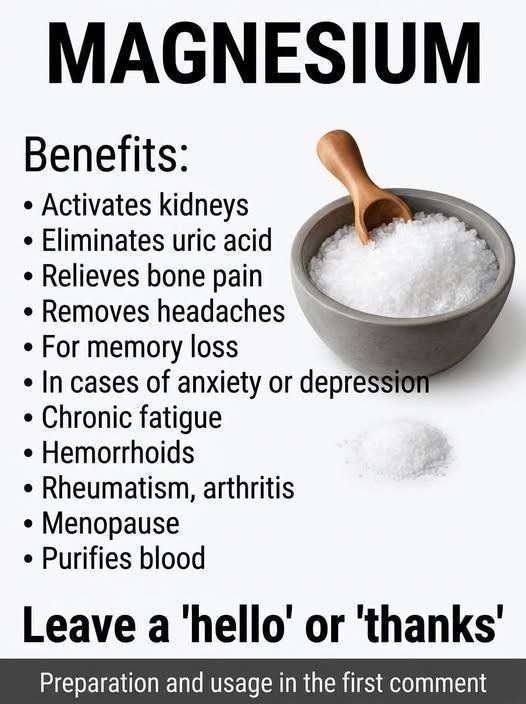
You may have seen posts suggesting that “Chinese doctors recommend magnesium for most patients” or that it is a kind of universal health secret. This is misleading. Magnesium is indeed an important mineral in human health, but its use in medicine is based on specific clinical needs rather than nationality, tradition, or general recommendation for everyone.
This article explains what magnesium actually does, when doctors recommend it, and what is often exaggerated in viral health content.
What Magnesium Does in the Body
Magnesium is an essential mineral involved in hundreds of biochemical reactions. It plays a role in:
- Muscle contraction and relaxation
- Nerve signaling
- Heart rhythm regulation
- Blood pressure control
- Energy production
- Bone health
- Glucose metabolism
Because of these functions, magnesium deficiency can affect multiple body systems.
Why Doctors Recommend Magnesium
Medical professionals may recommend magnesium supplementation or treatment in specific situations, including:
1. Confirmed magnesium deficiency
This can occur due to:
- Poor dietary intake
- Gastrointestinal disorders affecting absorption
- Chronic alcoholism
- Certain medications such as diuretics or proton pump inhibitors
Symptoms may include muscle cramps, fatigue, tremors, or irregular heartbeat.
2. Muscle cramps and neuromuscular symptoms
Magnesium is sometimes used when patients experience:
- Frequent muscle cramps
- Muscle twitching
- Restless legs symptoms
Evidence is mixed, but it may help in individuals with low magnesium levels.
3. Cardiovascular conditions
In clinical settings, magnesium may be used for:
- Certain types of abnormal heart rhythms
- Support in blood pressure management
- Acute hospital treatments under medical supervision
It is not a universal heart treatment but has specific indications.
4. Migraine prevention
Some patients with migraines may benefit from magnesium supplementation. Research suggests it may help reduce frequency in certain individuals, particularly those with low levels.
5. Constipation treatment
Certain forms of magnesium (such as magnesium citrate or magnesium hydroxide) are used as osmotic laxatives to relieve constipation by drawing water into the intestines.
Magnesium in Traditional Chinese Medicine vs Modern Medicine
The claim that “Chinese doctors recommend magnesium” often confuses two very different systems:
Traditional Chinese Medicine (TCM)
- Focuses on herbal formulations, diet, and balance concepts such as yin and yang
- Does not typically frame treatment around isolated nutrients like magnesium
- May indirectly include minerals through food and herbs, but not as a standardized supplement strategy
Modern Chinese hospitals
- Follow evidence-based medicine similar to Western healthcare systems
- Magnesium is used when clinically indicated, just as it is worldwide
Therefore, magnesium use is not unique to China or Chinese medical practice.
Can Everyone Take Magnesium?
No. Magnesium supplementation is not universally recommended.
It may not be appropriate or should be medically supervised in cases such as:
- Kidney disease (risk of magnesium buildup)
- Use of certain heart or blood pressure medications
- Normal magnesium levels with no symptoms or risk factors
Excess intake from supplements can cause:
- Diarrhea
- Low blood pressure
- Irregular heartbeat in severe cases
- Electrolyte imbalance
Dietary Sources of Magnesium
For most people, magnesium is best obtained through food rather than supplements. Common sources include:
- Leafy green vegetables
- Nuts and seeds
- Whole grains
- Legumes
- Fish such as salmon
- Dark chocolate in moderation
A balanced diet is usually sufficient for healthy individuals.
Why Magnesium Claims Go Viral
Posts suggesting magnesium is a universal cure or a special medical secret tend to spread because they:
- Oversimplify complex medical decisions
- Mix traditional medicine with modern science
- Turn a common nutrient into a “hidden solution” narrative
- Encourage engagement through curiosity and urgency
However, real medical use is more precise and individualized.
Key Takeaway
Magnesium is an essential and useful mineral in medicine, but:
- It is not a universal recommendation for all patients
- It is used based on specific medical conditions
- It is not uniquely prescribed by Chinese doctors
- Most people get enough from a normal diet
The correct medical approach is targeted use based on need, not general supplementation for everyone.