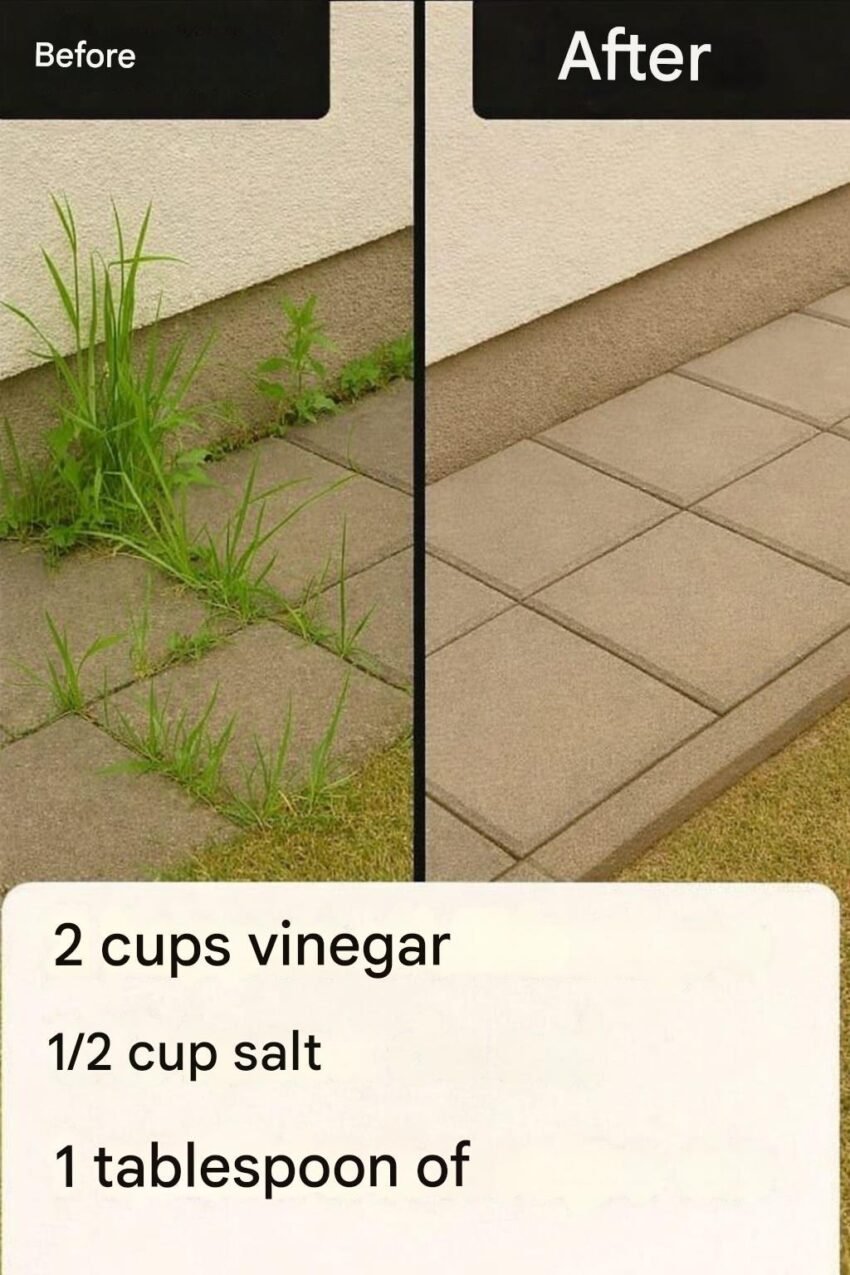
A lot of “DIY weed killers” are effective on small weeds, but they are non-selective, meaning they can also damage soil health and any nearby plants you want to keep.
Below are safe, commonly used homemade options and how they actually work.
🌿 Homemade Herbicide Options (Safe & Common Methods)
1. Vinegar-based weed killer (most popular)
Ingredients:
- 1 liter white vinegar (5% acidity; stronger horticultural vinegar works better if available)
- 1–2 tablespoons dish soap
How it works:
- Vinegar’s acetic acid dries out plant leaves
- Soap helps it stick to the plant surface
How to use:
- Spray directly on weeds on a hot, sunny day
- Avoid spraying nearby grass or plants
Important limitation:
- Only kills top growth, not deep roots
- Weeds may grow back
2. Salt solution (very strong, but risky)
Ingredients:
- 1 cup salt
- 2 cups hot water
- Optional: a little dish soap
How it works:
- Salt dehydrates plants and disrupts water absorption
Warning (important):
- Salt can ruin soil for months or years
- Nothing may grow in treated soil afterward
Use only for:
- Cracks in driveways
- Stone paths
- Areas where you want permanent plant loss
3. Boiling water (simplest method)
How it works:
- Extreme heat destroys plant cells instantly
How to use:
- Carefully pour boiling water directly on weeds
Best for:
- Sidewalk cracks
- Driveways
- Small isolated weeds
Limitations:
- Kills only what it touches
- No soil damage (so it’s safer than salt or chemicals)
4. Vinegar + salt + soap (strong mix)
Ingredients:
- 1 liter vinegar
- 2 tablespoons salt
- 1 tablespoon dish soap
Effect:
- Stronger burn on leaves + some root damage
Caution:
- Can still damage soil like salt alone
- Use only in non-plant areas
🌱 What actually works best (important reality)
Homemade herbicides are:
- Good for small, young weeds
- Weak against deep-rooted weeds (dandelions, Bermuda grass, etc.)
For long-term control, professionals rely on:
- Mulching
- Hand removal of roots
- Ground cover plants
- Selective herbicides (targeted chemicals)
⚠️ Safety and environmental notes
- Do not spray near edible crops
- Avoid windy days (drift damage)
- Do not overuse salt-based mixes
- Keep away from pets until dry
- Never mix random household chemicals (can create toxic fumes)
🧠 Bottom line
If you want something “super effective”:
- Vinegar works fast but temporarily
- Salt works strongly but permanently damages soil
- Boiling water is safest for small areas
There is no truly perfect homemade herbicide that is both powerful, selective, and soil-safe at the same time.
If you want, tell me where you’re trying to use it (garden, driveway, farm edges, etc.), and I can suggest the most effective method for that exact situation.