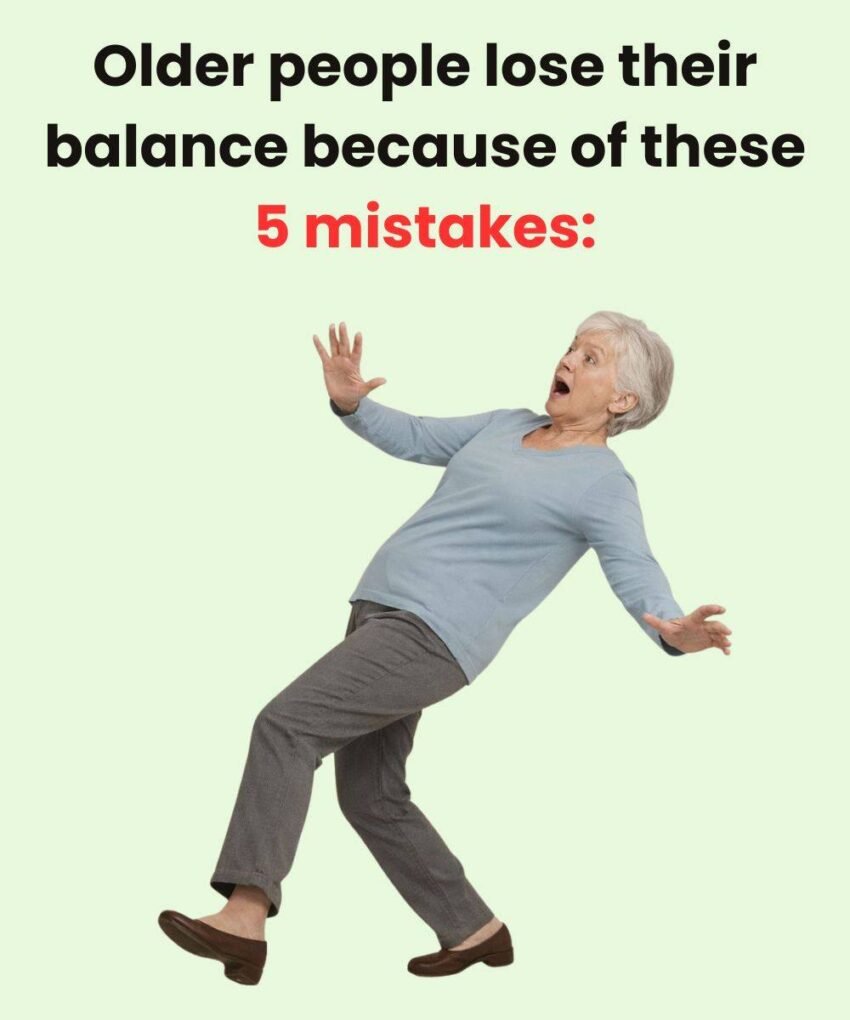
Common Mistakes That Affect Balance in Older Adults
Balance problems in older adults are often blamed on “aging,” but in many cases they are caused or worsened by everyday habits, medical issues, or environmental factors. The good news is that many of these risks are preventable.
1. Not staying physically active
Lack of movement leads to weaker muscles and slower reflexes.
Why it matters:
- Weak legs reduce stability
- Poor core strength affects posture
- Inactivity increases fall risk
2. Poor footwear choices
Shoes play a major role in stability.
Common mistakes:
- Wearing loose slippers indoors
- Using worn-out or slippery soles
- Walking barefoot on smooth floors
3. Ignoring medication side effects
Some medicines can affect balance.
Examples include:
- Blood pressure medications
- Sleeping tablets
- Anti-anxiety medicines
These may cause dizziness or low blood pressure.
4. Dehydration
Not drinking enough fluids can cause:
- Lightheadedness
- Low blood pressure
- Weakness
Older adults are especially at risk because thirst signals decrease with age.
5. Vision problems that are not corrected
Good vision helps the brain maintain balance.
Issues include:
- Outdated eyeglass prescriptions
- Cataracts
- Poor lighting at home
6. Not treating inner ear problems
The inner ear controls balance.
Problems may cause:
- Vertigo
- Unsteady walking
- Sudden dizziness
7. Unsafe home environment
Many falls happen at home due to preventable hazards.
Examples:
- Loose rugs
- Cluttered walkways
- Slippery bathroom floors
- Poor lighting
8. Standing up too quickly
This can cause a sudden drop in blood pressure.
What happens:
- Dizziness
- Brief blackout feeling
- Loss of balance
9. Poor nutrition
Deficiencies can weaken muscles and nerves.
Key nutrients:
- Vitamin D
- Vitamin B12
- Protein
10. Not using walking aids when needed
Avoiding support tools can increase risk.
Examples:
- Refusing a cane or walker when necessary
- Not using handrails on stairs
11. Ignoring early warning signs
Small symptoms often come before falls.
Warning signs:
- Frequent stumbling
- Mild dizziness
- Feeling unsteady while walking
12. Sitting for long periods
Long inactivity reduces circulation and muscle strength.
Effects:
- Stiff joints
- Weaker legs
- Reduced balance control
Conclusion
Balance problems are rarely caused by one factor alone. They usually result from a combination of weakness, medical issues, lifestyle habits, and home safety risks. Many of these problems can be improved with small daily changes and proper medical attention when needed.